Solar Panels Placed Over Crops Could Significantly Improve Farmworker Comfort and Safety
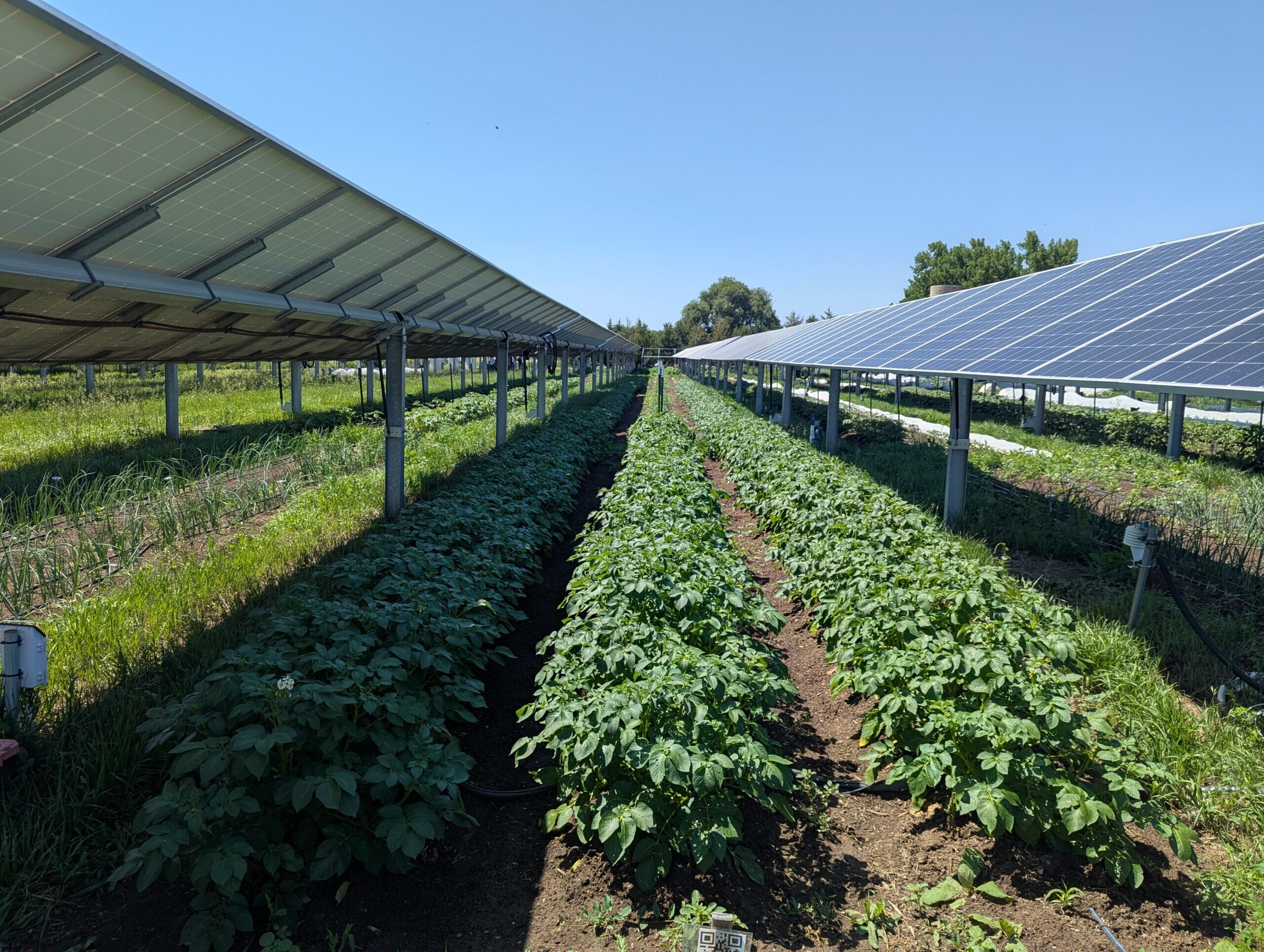
Putting solar panels above agricultural crops, a system known as agrivoltaics, is gaining attention not just for producing clean energy and food on the same land, but also for something far more human: making farm work safer and more comfortable. New research presented at the American Geophysical Union’s 2025 Annual Meeting in New Orleans highlights how these systems can meaningfully reduce heat stress for farmworkers, a group that faces some of the most dangerous working conditions in a warming world.
The study was led by Talitha Neesham-McTiernan, a human-environment researcher at the University of Arizona, and draws on four years of fieldwork, interviews, and environmental measurements conducted at Jack’s Solar Garden, an agrivoltaic farm near Longmont, Colorado. While agrivoltaics are often discussed in terms of land efficiency, water savings, or crop yields, this research shifts the focus squarely onto farmworkers’ bodies, health, and day-to-day experiences.
What Agrivoltaics Actually Look Like on Farms
Agrivoltaic systems involve solar panels mounted at or above head height, spaced carefully so crops can still receive sunlight through the gaps. Unlike traditional ground-mounted solar arrays, these setups allow people, plants, and sometimes animals to operate underneath.
At farms like Jack’s Solar Garden, rows of crops grow beneath wide stretches of solar panels that cast moving bands of shade throughout the day. This design doesn’t just generate electricity. It also reduces direct solar radiation, slows water evaporation from soil, and can even trap warmth near the ground during cooler months, which may benefit certain crops.
These systems are already known to help protect plants from sun damage and drought stress. What Neesham-McTiernan noticed, however, was something rarely discussed in scientific literature: both farmworkers and researchers were deliberately working in the shade whenever possible, especially during the hottest parts of the day.
Why Farmworker Heat Stress Is a Serious Issue
Farmworkers are among the most heat-vulnerable workers in the United States. Studies show they are around 35 times more likely to die from heat-related illness than non-agricultural workers. Long hours of physical labor under direct sunlight, limited access to shade, and rising temperatures driven by climate change all contribute to this risk.
Despite these dangers, discussions around sustainable agriculture often focus on efficiency, yields, or resource use, while worker well-being remains largely overlooked. This research set out to change that by directly asking farmworkers how agrivoltaic systems affected their daily lives.
What Farmworkers Reported Under Solar Panels
The research team interviewed seven full-time farmworkers at Jack’s Solar Garden, comparing their experiences under agrivoltaic systems with those on traditional open-field farms. The feedback was remarkably consistent.
The most important benefit, by far, was shade. Workers described how removing the constant direct heat from the sun made a noticeable difference in how their bodies felt throughout the day. On conventional farms, intense heat can become unbearable by mid-morning. Under solar panels, that heat load was significantly reduced.
Another major benefit involved drinking water. With solar panels overhead, workers could place water bottles in shaded areas where they stayed cool all day. On open farms, water often heats up quickly, making hydration less effective and less appealing during extreme heat.
Workers also reported less overall exhaustion by the end of the day. Reduced fatigue meant they had more energy for personal lives outside work and recovered more quickly before the next shift. Even the simple knowledge that shade was always nearby helped reduce mental stress, which can compound physical strain during hot conditions.
Some benefits were small but meaningful. Workers mentioned leaning against the metal support beams of the panels to briefly rest and take weight off their bodies. This kind of physical relief would never show up in temperature data alone, yet it clearly improved daily comfort.
Measuring Heat Stress With Real Data
To support worker testimonies, the research team collected detailed environmental measurements across the farm. They tracked air temperature, humidity, wind speed, and solar radiation, combining these factors into a widely used heat stress metric called wet bulb globe temperature (WBGT).
WBGT is commonly used in occupational safety to determine when outdoor work becomes dangerous and when breaks or work stoppages are required. The results were striking.
Under agrivoltaic panels, WBGT values were up to 5.5 degrees Celsius (about 10 degrees Fahrenheit) lower than in open fields. This difference can mean the shift from stop-work conditions to situations where workers can continue with regular breaks.
Over the course of a single day, a growing season, or an entire working life, this reduction in heat stress becomes extremely significant. Even small improvements, when repeated daily, can reduce long-term health risks.
The study also found that human experience and sensor data don’t always align perfectly. Sometimes workers felt certain areas were hotter than measurements suggested. Rather than seeing this as a flaw, the researchers argue it highlights the importance of combining quantitative data with lived experience to fully understand heat stress.
Jack’s Solar Garden as a Research Site
Jack’s Solar Garden is one of the most prominent agrivoltaic sites in the United States. The farm spans 24 acres and includes a 1.2-megawatt solar array installed on a family-owned property. It functions as both a working farm and a research hub, hosting collaborations with universities and national laboratories.
The site grows a variety of crops beneath the panels and serves as a real-world testing ground for how agrivoltaics affect plants, energy production, soil, and now, farmworker well-being.
Why This Research Matters Beyond One Farm
While the findings are promising, the researchers are careful to note that agrivoltaics are not a universal solution. These systems may not work everywhere, and their benefits can vary by climate, crop type, and farm design.
That said, as extreme heat becomes more common, the need for practical, scalable tools to protect farmworkers is becoming urgent. Shade structures, hydration strategies, and scheduling changes all help, but agrivoltaics offer a unique option that combines worker protection, food production, and renewable energy in a single system.
The research team plans to expand their work into other regions and climates to see how these benefits translate elsewhere. They also hope to collect more physiological and health data, moving beyond comfort and environmental metrics to directly measure impacts on workers’ bodies over time.
The Bigger Picture of Agrivoltaics
Beyond worker comfort, agrivoltaics are increasingly studied for their ability to improve land-use efficiency, reduce water demand, and support climate-resilient agriculture. By allowing farms to produce both food and electricity on the same land, these systems challenge the idea that renewable energy and agriculture must compete for space.
This study adds an essential human dimension to that conversation. Protecting farmworkers is not just a labor issue. It’s a food security issue. Without healthy workers, food systems cannot function.
As climate change continues to push temperatures higher, solutions that center human health alongside sustainability goals may become some of the most important innovations in agriculture.
Research reference:
https://agu.confex.com/agu/agu25/meetingapp.cgi/Paper/XXXXXX (AGU 2025 Annual Meeting abstract on agrivoltaics and farmworker heat stress)