Stomata In-Sight System Lets Scientists Watch How Plants Breathe in Real Time
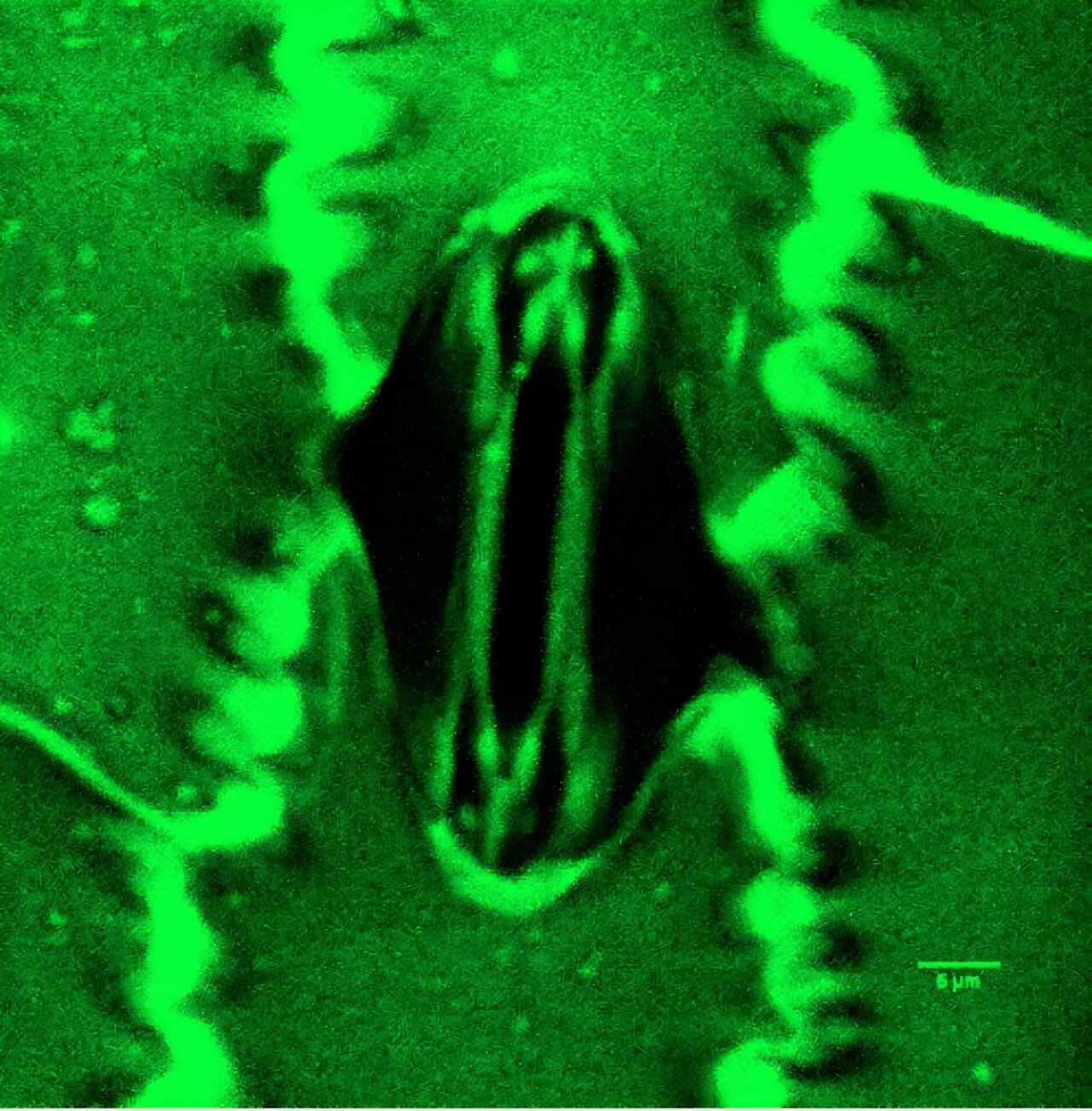
For centuries, scientists have understood that plants “breathe” through microscopic pores on their leaves called stomata. These tiny openings act like adjustable valves, opening and closing to let carbon dioxide enter the leaf for photosynthesis while allowing water vapor to escape into the atmosphere. This balancing act is critical for plant survival, crop productivity, and even global climate patterns.
Now, researchers at the University of Illinois Urbana-Champaign have developed a powerful new system that allows scientists to directly observe this process as it happens. The tool, called Stomata In-Sight, makes it possible to watch stomata open and close in real time while simultaneously measuring how much gas a leaf is exchanging with its environment.
The work, published in the journal Plant Physiology in 2025, represents a major technical leap in plant science. For the first time, researchers can link what they see under a microscope to what the leaf is actually doing physiologically, all under carefully controlled environmental conditions.
What Are Stomata and Why Do They Matter?
Stomata, a term derived from the Greek word for “mouths,” are microscopic pores found mostly on the surfaces of leaves. Each stoma is surrounded by specialized guard cells that swell or shrink to open or close the pore. When stomata open, carbon dioxide enters the leaf and fuels photosynthesis. At the same time, water vapor escapes, a process known as transpiration.
This trade-off between carbon gain and water loss makes stomata one of the most important control points in plant biology. Too much water loss can stress or kill a plant, especially during drought. Too little gas exchange limits growth and productivity. On a global scale, stomata influence crop yields, freshwater use, and even atmospheric carbon dioxide levels.
Understanding exactly how stomata behave, and how that behavior changes under different environmental conditions, has long been a goal for plant scientists.
The Long-Standing Technical Challenge
Until now, researchers faced a frustrating choice. They could either see stomata or measure their function, but rarely both at the same time.
Some traditional approaches involved making physical impressions of leaf surfaces, similar to taking a dental mold. While useful, these methods only captured static snapshots and could not show stomata in motion. Other techniques used microscopes to observe live leaves, but without precise control over temperature, humidity, light, or carbon dioxide levels. Meanwhile, gas-exchange instruments could measure how much CO₂ and water a leaf exchanged, but without revealing what individual stomata were doing to produce those numbers.
Because stomata respond rapidly to changes in light, temperature, humidity, and atmospheric CO₂, this separation between structure and function limited how much scientists could truly understand.
Inside the Stomata In-Sight System
The Stomata In-Sight platform solves this problem by combining three advanced technologies into a single integrated system.
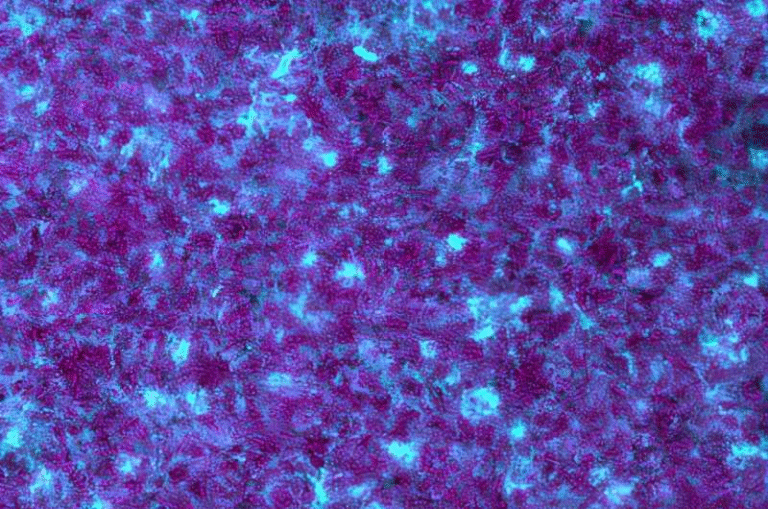
First, it uses live confocal microscopy, a laser-based imaging technique that produces detailed, three-dimensional images of living cells. This allows researchers to see individual stomata opening and closing without cutting or damaging the leaf.
Second, the system incorporates high-precision leaf gas exchange sensors. These instruments measure exactly how much carbon dioxide the leaf absorbs and how much water vapor it releases, in real time.
Third, everything is housed within a carefully designed environmental control chamber. Scientists can precisely adjust light intensity, temperature, humidity, and carbon dioxide concentration, effectively simulating real-world conditions such as drought, heat stress, or elevated CO₂.
By synchronizing these components, researchers can directly connect microscopic stomatal movements with whole-leaf gas exchange data. In demonstration experiments, the team used Zea mays (maize) and captured high-resolution time-lapse images showing individual stomata gradually closing while gas exchange measurements changed in parallel.
Why This Matters for Agriculture
Water availability is the single most limiting factor for agricultural production worldwide. Crops must constantly balance growth against water loss, and stomata sit at the center of that balance.
With Stomata In-Sight, scientists can now study how stomatal number, size, and behavior influence photosynthetic efficiency and water use. This opens the door to identifying genetic traits that produce more water-efficient crops, sometimes described as “smarter” plants. Such crops could maintain productivity while using less water, making them better suited for drought-prone regions and a changing climate.
The system also helps researchers understand how environmental stressors affect stomatal behavior on very short time scales, something that was previously difficult or impossible to measure directly.
Beyond the Immediate Discovery
The implications of this work extend beyond crop breeding. Stomata play a role in regulating Earth’s climate by controlling how much water vapor and carbon dioxide plants exchange with the atmosphere. Improving our understanding of stomatal dynamics can refine climate models and improve predictions about ecosystem responses to rising temperatures and CO₂ levels.
The system also offers a new benchmark for studying plant physiology. By linking anatomy, behavior, and function in one setup, it provides a more complete picture of how plants interact with their environment.
Extra Context: How Stomata Respond to the Environment
Stomata are incredibly sensitive structures. Light usually triggers stomatal opening, allowing photosynthesis to ramp up during the day. High humidity encourages stomata to stay open, while dry air promotes closure to conserve water. Elevated carbon dioxide levels can cause stomata to partially close, since less opening is needed to capture sufficient CO₂.
Hormones such as abscisic acid play a major role during drought, signaling guard cells to close stomata rapidly. The ability to observe these responses directly, under controlled conditions, makes the Stomata In-Sight system especially powerful for studying plant stress physiology.
The Research Team Behind the Work
The system was developed by Joseph D. Crawford, Dustin Mayfield-Jones, Glenn A. Fried, Nicolas Hernandez, and Andrew D. B. Leakey. The researchers are affiliated with the Department of Plant Biology and the Institute for Genomic Biology at the University of Illinois Urbana-Champaign. Their interdisciplinary approach brought together expertise in plant physiology, imaging technology, and environmental control systems.
Looking Ahead
The Stomata In-Sight system represents a clear step forward in how scientists study plant function. By removing the barrier between seeing and measuring, it allows for more precise, data-rich experiments that were previously out of reach. As researchers apply this tool to more plant species and stress scenarios, it is likely to become a cornerstone technique in plant biology and agricultural research.
In a world facing increasing water scarcity and climate uncertainty, tools that deepen our understanding of how plants manage their resources are more important than ever.
Research paper:
https://academic.oup.com/plphys/article/199/4/kiaf600/8325470