The Secrets of the Invasive Short-Spined Thrips and Why Scientists Are Paying Close Attention
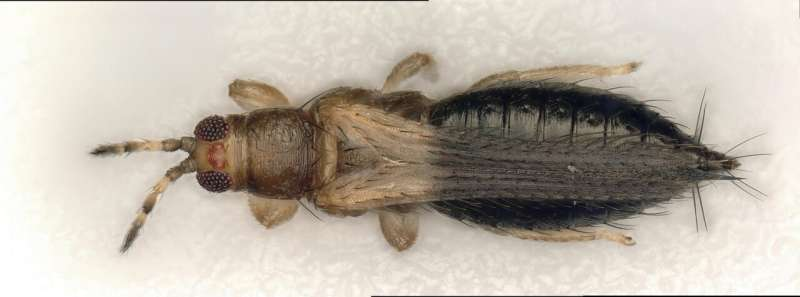
Lush home gardens, ornamental landscapes, commercial nurseries, and food farms across the world are facing a growing threat from a pest so small it often goes unnoticed until the damage is done. The short-spined thrips, scientifically known as Thrips parvispinus, has earned a reputation as one of the most destructive invasive insects affecting both ornamental plants and food crops. A recent scientific study has now revealed exactly why this insect has become so successful—and what can be done to control it.
This groundbreaking research was conducted by scientists at the University of Florida Institute of Food and Agricultural Sciences (UF/IFAS) and published in the Journal of Economic Entomology. The study delivers the most detailed biological profile of the short-spined thrips to date, offering crucial insights for growers, researchers, and agricultural regulators worldwide.
A Tiny Insect with a Massive Impact
Despite its microscopic size, the short-spined thrips causes outsized economic damage. It feeds on a wide range of plants, including popular ornamentals such as gardenias, hibiscus, and mandevillas, as well as essential vegetable crops like peppers, beans, and eggplants. Feeding damage leads to leaf distortion, scarring, reduced photosynthesis, and in severe cases, plant death. For commercial growers, this translates into lost revenue, rejected shipments, and rising pest management costs.
The pest has spread rapidly across South Florida, where warm temperatures and year-round plant availability provide ideal conditions. From there, it has expanded its reach across the Americas and into parts of Asia, alarming agricultural communities globally.
Why South Florida Is a Perfect Match
One of the most important findings of the UF/IFAS study is how closely the thrips’ biology aligns with South Florida’s climate. Researchers discovered that at an average temperature of 27°C (80.6°F), which is common in the region, the short-spined thrips completes its entire life cycle in less than 13 days. This rapid development allows populations to explode in a very short time.
At this temperature, the insect also reaches its highest reproductive rate, helping explain why infestations can become overwhelming before growers even realize there is a problem. Short cold fronts do little to slow it down, as the thrips can tolerate brief exposure to temperatures around 10°C (50°F).
However, the study also revealed a key vulnerability. The insect struggles to survive prolonged cold temperatures below 5°C (41°F). This suggests that while South Florida provides year-round suitability, northern regions may see natural population reductions during winter—unless the thrips is protected inside greenhouses, where warm conditions persist.
Reproduction That Fuels Rapid Spread
Another alarming discovery involves the insect’s reproductive strategy. Female short-spined thrips are capable of producing male offspring without mating, a process known as parthenogenesis. This means a single female can establish a new population entirely on her own.
This trait dramatically increases the risk of spread, especially through plant shipments. It also raises serious concerns about pesticide resistance. If a female carries resistance traits, she can pass them on directly to her offspring, making chemical control increasingly difficult over time.
A Breakthrough Discovery Beneath the Soil
For the first time, scientists documented that the short-spined thrips pupates in soil, burrowing to an average depth of about one inch. This finding represents a major shift in how the pest can be managed.
Previously, control efforts focused almost entirely on the plant canopy, where feeding occurs. Knowing that part of the life cycle happens underground opens the door to soil-based control methods, including beneficial nematodes, predatory mites, and rove beetles. Targeting both the plant and soil stages simultaneously could significantly reduce overall populations.
Survival Depends on Live Plants
The study also confirmed that the short-spined thrips cannot survive long without access to live plant tissue. When deprived of plants and given alternatives such as pollen or honey water, the insects survived less than one day.
This finding highlights the importance of strict sanitation practices, especially in nurseries and greenhouses. Removing unsold plants, clearing plant debris, and leaving production areas plant-free for short periods may drastically reduce thrips numbers. While this strategy still needs large-scale testing, the biological evidence strongly supports its effectiveness.
What This Means for Integrated Pest Management
Taken together, these discoveries provide the first complete biological roadmap for designing Integrated Pest Management (IPM) programs specifically tailored to the short-spined thrips. Instead of relying solely on pesticides, growers can now combine:
- Climate-based risk assessments
- Soil and canopy treatments
- Sanitation practices
- Biological control agents
This approach is more sustainable, more effective, and better suited for long-term management of an invasive species that adapts quickly.
Extra Insight: Why Thrips Are So Hard to Control
Thrips as a group are notoriously difficult pests. Their small size allows them to hide in plant crevices, buds, and flowers. Many species develop pesticide resistance rapidly due to short life cycles and high reproduction rates. They also feed by piercing plant cells, which not only damages tissue but can also transmit plant viruses in some species.
The short-spined thrips stands out because it combines polyphagous feeding, rapid reproduction, soil pupation, and climate adaptability—a rare and dangerous mix that explains its invasive success.
Looking Ahead
Researchers are now working to identify the most effective biological control agents and determine how these can be combined with selective chemical treatments. The goal is not just to suppress current infestations, but to prevent future outbreaks as the pest continues to expand its range.
For growers, regulators, and scientists, this study marks a turning point. Understanding how the short-spined thrips lives, feeds, reproduces, and survives is the first step toward stopping it.
Research paper:
https://academic.oup.com/jee/article/118/1/toaf336/8385298