Tropical Forests Are Growing Deeper Roots to Cope With Climate Change and Increasing Drought
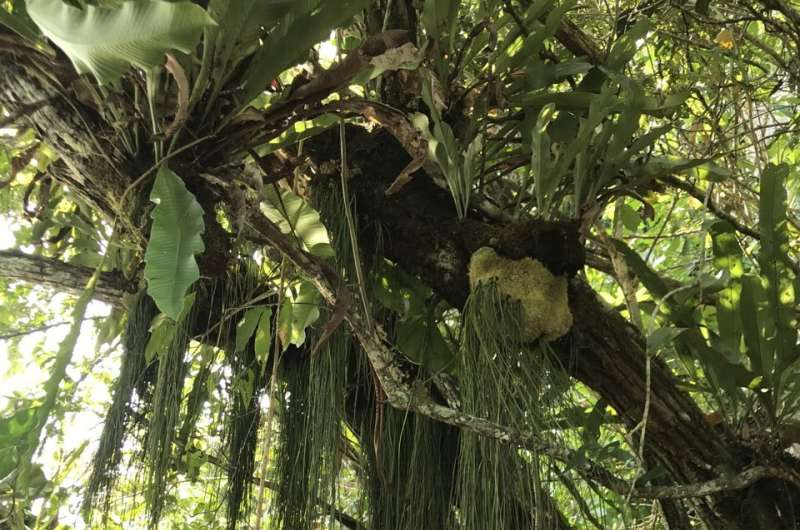
Tropical forests are facing a growing challenge as climate change brings longer dry seasons and more frequent, intense droughts. These forests play a crucial role in storing carbon and regulating Earth’s climate, so understanding how they respond to environmental stress is more important than ever. New research from Colorado State University offers fresh insight into how tropical forests may be adjusting below the surface — literally — by changing the way their roots grow.
Scientists studying tropical forests in Panama have found that some trees respond to drying conditions by developing longer and deeper root systems, allowing them to access water stored deeper in the soil. This adaptation could help certain trees survive droughts, although it does not fully counteract the damage caused by water stress.
What the Researchers Studied
The study was led by Colorado State University professor Daniela Cusack along with Ph.D. researcher Amanda Longhi Cordeiro. Their work focused on how tree roots respond to drying soils in four lowland tropical forests across Panama, each with different environmental conditions.
Rather than studying leaves or tree trunks, the research zeroed in on fine roots, which are small, thin roots responsible for absorbing water and nutrients. These fine roots are critical for tree health and play a major role in soil carbon storage, since dead roots eventually become part of the soil’s organic carbon pool.
To simulate real-world climate change, the team examined forests exposed to chronic drying rather than short, isolated droughts. This approach better reflects the long-term changes many tropical regions are already experiencing due to reduced rainfall and shifting weather patterns.
What Happens to Roots During Drought
The findings reveal a mixed picture. As surface soils dry out, trees produce far fewer fine roots in the upper layers of soil, sometimes down to depths of one meter. This decline represents a loss of carbon to the forest ecosystem, because fine roots normally contribute large amounts of organic matter to the soil.
At the same time, the researchers observed that some trees responded by extending their roots deeper into the soil, where moisture levels remain higher even during dry periods. This shows that tropical forest roots have a degree of flexibility, allowing certain species to adapt their growth patterns when water becomes scarce.
However, this deeper root growth does not fully compensate for what is lost near the surface. The total increase in deep root biomass is relatively small compared to the extensive die-off of roots in shallow soil layers.
A Partial Lifeline for Forests
The researchers describe this deeper rooting as a potential “rescue effect” for tropical forests. By accessing deep water reserves, some trees may be able to survive longer periods of drought, which could help maintain forest structure and function during dry years.
Still, the scientists emphasize that the extent of this rescue effect remains uncertain. Not all tree species are equally capable of growing deeper roots, and the overall carbon balance of the forest may still decline if surface root loss continues.
In other words, deeper roots may help individual trees cope, but they are not a silver bullet for protecting tropical forests from climate change.
Why Roots Matter for Carbon Storage
Tropical forests store some of the largest carbon reserves on the planet, both above ground in trees and below ground in soils. Roots play a surprisingly important role in this system. When fine roots die, they contribute organic carbon to the soil, helping lock carbon away for long periods.
When drought suppresses fine root production near the surface, less carbon enters the soil, potentially weakening the forest’s role as a carbon sink. Over time, this could affect how much carbon tropical forests are able to store and how much carbon dioxide remains in the atmosphere.
The study highlights that changes below ground may have just as much impact on climate feedbacks as visible changes above ground, such as tree mortality or reduced canopy cover.
How the Research Was Done
The team used a combination of long-term field experiments and detailed root observations to track how roots responded to drying conditions. By comparing different forest types across Panama, the researchers were able to see how root behavior varied depending on local soil properties, climate, and forest structure.
Importantly, the study examined roots down to one meter below the soil surface, providing a much deeper view than many previous studies, which often focus only on the topsoil.
This depth-focused approach revealed that while surface roots are highly vulnerable to drought, deeper soil layers may act as refuges for water, allowing some trees to adapt rather than perish.
What This Means for Tropical Forests
The results suggest that tropical forests may be more adaptable than previously thought, at least in some respects. Root flexibility could help certain forests persist under increasing dryness, reducing their immediate vulnerability to drought.
At the same time, the study makes it clear that adaptation has limits. The loss of surface roots represents a significant carbon cost, and deeper rooting alone cannot fully replace that loss. If drying trends continue or intensify, even deep soil moisture may eventually decline.
This raises important questions about how long tropical forests can continue to function as major carbon sinks under ongoing climate change.
Why Long-Term Studies Are Essential
One of the key takeaways from this research is the need for long-term studies. Root systems change slowly, and the full consequences of altered root growth may take decades to emerge. Short-term experiments may miss these deeper, more gradual shifts.
The researchers stress that understanding how roots respond over time is essential for predicting future forest resilience, ecosystem function, and carbon storage. These insights are also critical for improving climate models, which often underestimate or oversimplify belowground processes.
Additional Insight: Roots and Climate Change
Roots are one of the least visible but most important parts of forest ecosystems. Beyond water uptake, they interact with soil microbes, fungi, and nutrients, forming complex underground networks. In tropical forests, roots often partner with mycorrhizal fungi, which can enhance water and nutrient absorption and may play a role in drought resilience.
Climate change affects these underground relationships as well. As soils dry, microbial activity can change, potentially altering nutrient availability and carbon cycling. Root responses, therefore, sit at the center of a much larger ecological web.
Understanding these processes helps scientists predict not only how forests survive droughts, but also how climate change may reshape ecosystems from the ground up.
The Bigger Picture
This research underscores a critical point: tropical forests are not passive victims of climate change. They are dynamic systems capable of adjustment, even under stress. But adaptation does not mean immunity.
Deeper roots offer hope, but they also highlight the delicate balance tropical forests must maintain to survive in a warming, drying world. Protecting these forests remains essential, not just for biodiversity, but for the stability of Earth’s climate itself.
Research paper:
https://doi.org/10.1111/nph.70751