University of Illinois Research Shows How Smarter Harvesting and Nutrient Management Can Boost Bioenergy Crop Profits
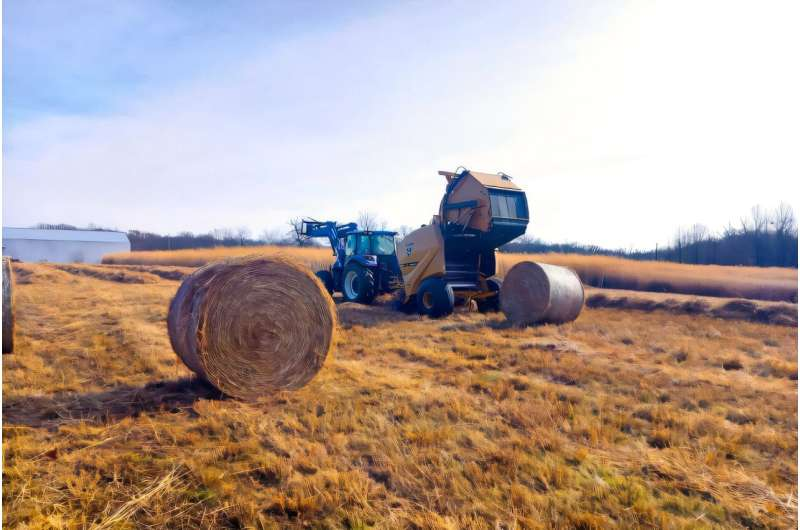
Meeting the United States’ ambitious targets for sustainable aviation fuel (SAF) will require a major expansion of purpose-grown bioenergy crops. While scientists already know a great deal about how crops like switchgrass and Miscanthus grow and how their biomass can be converted into fuel, there has been a persistent gap when it comes to one crucial question: how can farmers grow and manage these crops in a way that is truly profitable over the long term?
New research from the University of Illinois Urbana-Champaign takes a deep dive into this challenge. Through two detailed studies, researchers examined how harvest methods and nutrient management strategies affect both the economics and environmental footprint of bioenergy crop production. The findings offer practical, data-driven guidance that could make biomass crops more attractive to growers while supporting national clean energy goals.
Why Harvesting and Nutrients Matter for Bioenergy Crops
Purpose-grown perennial grasses are attractive for bioenergy because they can produce large amounts of biomass with relatively low inputs. However, farming decisions still play a huge role in determining whether growers can make money.
Harvesting alone can account for 60–80% of total production costs for switchgrass. At the same time, long-lived crops like Miscanthus gradually remove nutrients from the soil every time biomass is harvested. If those nutrients are not replenished properly, yields can decline over time.
The Illinois research team focused on answering two key questions:
- Which harvesting methods make the most sense under different field conditions?
- How does nutrient management affect long-term productivity in aging Miscanthus stands?
Comparing Harvest Methods for Switchgrass
The first study examined switchgrass harvesting, looking closely at both economic and environmental outcomes. Researchers analyzed data from 125 commercial-scale sites in Virginia, covering a wide range of field sizes and biomass yields. This large dataset allowed them to evaluate real-world farming conditions rather than small experimental plots.
Two harvesting approaches were compared:
- Stepwise harvesting, where mowing, raking, baling, and roadsiding are done as separate operations.
- Integrated harvesting, where specialized equipment combines mowing and raking into a single pass.
At first glance, integrated harvesting seems like the obvious choice. Fewer passes across the field should mean less fuel use, lower labor requirements, and reduced greenhouse gas emissions. But the study revealed that the reality is more nuanced.
For smaller fields (under 3 hectares or about 10 acres) and lower-yield conditions (less than 3.2 tons per acre), the integrated method performed better. In these situations, it reduced greenhouse gas emissions by about 9% and energy use by about 5% compared to the stepwise approach.
However, when field size and yield increased, the balance shifted. For larger fields with high biomass yields, the traditional stepwise method proved more efficient. It reduced harvesting costs to $37.70 per ton and achieved the lowest greenhouse gas emissions under those conditions.
Importantly, these cost estimates assumed farmers were using their own machinery and equipment, which reflects how many commercial operations actually function.
The key takeaway is that there is no single “best” harvesting method. Instead, the most efficient approach depends on field size, yield, and local conditions. This study provides the first clear, evidence-based framework to help growers make those decisions with both profits and sustainability in mind.
Understanding Yield Decline in Miscanthus
The second study focused on Miscanthus × giganteus, a high-yielding perennial grass widely promoted for bioenergy. Miscanthus is known for its long lifespan, often remaining productive for decades. Still, researchers have observed a gradual decline in biomass yield after about 10 years, and the reasons behind this decline were not fully understood.
The Illinois team analyzed data from a long-term Miscanthus trial that included different nitrogen fertilization rates and timings. They focused on two components of yield:
- Tiller density, or the number of stems per area
- Tiller mass, or the weight of each individual stem
During the early years after establishment, both tiller density and tiller mass increased steadily, especially when nitrogen was applied. By around the fourth year, stands reached peak productivity.
Over time, however, a pattern emerged. As biomass was harvested year after year, tiller mass declined first, while tiller density continued to increase until the stand became physically saturated. Once no more space was available for new stems, overall biomass yield depended almost entirely on tiller mass.
This finding is important because it shows that tiller mass is the most sensitive indicator of long-term productivity, particularly in aging stands.
The Role of Nutrient Depletion Beyond Nitrogen
Nitrogen management turned out to be a major factor, but it was not the whole story. Every harvest removes nutrients locked inside plant biomass. Over many years, this process can significantly deplete soil fertility.
When researchers analyzed soils from mature Miscanthus fields, they found substantial deficits in phosphorus and potassium, two nutrients essential for photosynthesis and overall plant health. These shortages likely contribute to reduced tiller mass and declining yields, even when nitrogen is managed carefully.
The study highlights the need for balanced nutrient management, not just nitrogen fertilization. Long-term Miscanthus productivity depends on maintaining adequate levels of nitrogen, phosphorus, and potassium in the soil.
Why This Research Matters for Bioenergy and SAF
These findings arrive at a critical time. The push for sustainable aviation fuel is accelerating, and bioenergy crops are expected to play a major role in meeting future demand. But growers will only adopt these crops at scale if they make economic sense.
By showing how harvesting strategies can be tailored to specific field conditions, and how nutrient management can prevent long-term yield decline, this research directly addresses the profitability barrier that has slowed adoption.
Beyond economics, the studies also demonstrate how smarter management can reduce energy use and greenhouse gas emissions, strengthening the environmental case for bioenergy crops.
A Broader Look at Switchgrass and Miscanthus
Switchgrass and Miscanthus are often grouped together, but they have different strengths. Switchgrass is native to North America and highly adaptable, making it suitable for a wide range of soils and climates. Miscanthus, on the other hand, is known for its exceptionally high yields and efficient use of water and sunlight.
Both crops offer additional environmental benefits, including carbon sequestration, reduced soil erosion, and improved soil structure compared to annual crops. When managed correctly, they can contribute to a more resilient and sustainable agricultural system.
Final Thoughts
The University of Illinois Urbana-Champaign studies make one thing clear: management decisions matter. Harvest timing, equipment choice, and nutrient strategies can significantly influence both profits and environmental outcomes for bioenergy growers.
By providing detailed, long-term data, this research moves the bioenergy conversation beyond theory and into practical guidance that farmers can actually use. As demand for sustainable fuels grows, insights like these will be essential for turning bioenergy crops into a viable and widely adopted solution.
Research papers referenced:
Optimizing bioenergy biofuel harvest: a comparative analysis of stepwise and integrated methods for economic and environmental sustainability
https://doi.org/10.1016/j.biortech.2025.133288
Soil fertility management for sustainable Miscanthus × giganteus production: Increased tiller weight from nitrogen management explains yield gains in aged miscanthus
https://doi.org/10.1016/j.biombioe.2025.108394