A New Carbon-Negative Construction Material From WPI Absorbs CO₂ and Sets in Just Hours
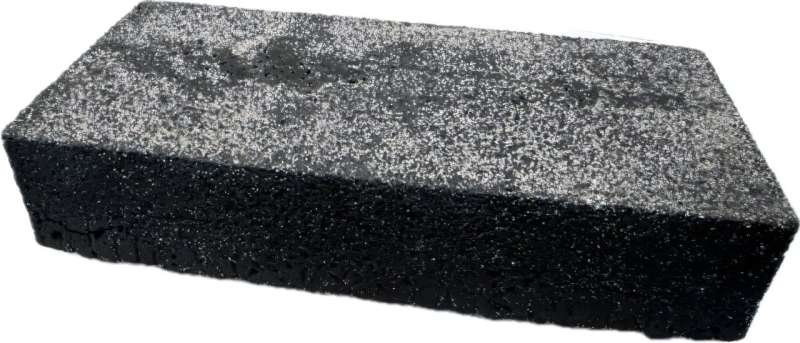
Researchers at Worcester Polytechnic Institute (WPI) have developed a carbon-negative construction material that could significantly change how we think about building in a climate-constrained world. The material, called enzymatic structural material (ESM), is designed to be strong, durable, recyclable, and—most importantly—to capture carbon dioxide instead of emitting it during production. The research has been published in the high-impact scientific journal Matter, highlighting its potential importance for the future of sustainable construction.
What Makes This Material Different From Concrete
Concrete is everywhere. It is the most widely used construction material on Earth, forming the backbone of modern infrastructure. However, producing concrete comes at a huge environmental cost. Cement manufacturing alone is responsible for nearly 8% of global CO₂ emissions, largely because it requires extremely high temperatures and energy-intensive chemical reactions.
ESM takes a fundamentally different approach. Instead of relying on heat-heavy industrial processes, the WPI team developed a bioinspired, low-energy method that actually removes carbon dioxide from the atmosphere during material formation. While traditional concrete emits around 330 kilograms of CO₂ per cubic meter, producing one cubic meter of ESM sequesters more than 6 kilograms of CO₂. That shift from carbon-intensive to carbon-negative production is what makes this development stand out.
How Enzymatic Structural Material Is Made
The process behind ESM is both elegant and scientifically clever. The researchers use a naturally inspired enzyme that accelerates the conversion of carbon dioxide into solid mineral carbonate particles. These particles act as the core building blocks of the material.
Once formed, the mineral particles are bound together using a capillary suspension technique, a method that allows solid particles to lock into a stable structure with only a small amount of liquid. This creates a rigid, load-bearing material without the need for high temperatures or extended curing times.
One of the most striking advantages of ESM is how quickly it sets. Traditional concrete can take weeks to fully cure. ESM, by contrast, can be molded into structural shapes and cured within hours, all under mild environmental conditions. This rapid formation opens the door to faster construction timelines and more efficient manufacturing processes.
Strength, Durability, and Practical Performance
Sustainability alone is not enough for a building material to succeed. It also has to perform well structurally, and this is where ESM shows strong promise. According to the researchers, the material demonstrates high strength, durability, and tunable mechanical properties. By adjusting the formulation and processing conditions, engineers can tailor the strength of ESM for different structural applications.
Another important feature is repairability. Unlike concrete, which often requires full replacement when damaged, ESM can be repaired and reprocessed. This could significantly reduce long-term construction costs and minimize the amount of material that ends up in landfills.
The material is also designed to be recyclable, aligning with circular economy principles. Instead of demolishing and discarding old components, ESM structures could potentially be broken down and reused, extending the lifecycle of construction materials.
Where ESM Could Be Used
ESM is not intended to replace every use of concrete overnight, but it is well-suited for a range of real-world applications. The researchers point to roof decks, wall panels, and modular building components as especially promising use cases. These elements often benefit from rapid production, consistent quality, and reduced weight.
The material’s quick curing time and low-energy production also make it attractive for disaster relief and emergency construction. In situations where infrastructure needs to be rebuilt quickly, a material that can be produced locally, molded rapidly, and set within hours could make a meaningful difference.
Beyond emergency use, ESM could play a role in affordable housing, climate-resilient buildings, and low-carbon urban development. Because the process relies on renewable biological inputs and avoids extreme heat, it aligns well with global efforts to create carbon-neutral and carbon-negative infrastructure.
Why Carbon-Negative Materials Matter
The construction sector is one of the hardest industries to decarbonize. Buildings last for decades, and the materials used to create them lock in emissions long before anyone moves in. Carbon-negative materials like ESM offer a way to reverse that equation, turning buildings into long-term carbon storage systems instead of emission sources.
If even a small percentage of global construction shifted to materials that actively capture carbon, the cumulative impact could be substantial. Instead of asking how to reduce harm, this approach asks how construction can actively contribute to climate solutions.
The Science Behind Enzymes and Carbon Capture
Enzymes play a crucial role in many natural processes, including how organisms regulate carbon in oceans and soils. By borrowing from these biological systems, the WPI team demonstrates how biochemistry can intersect with civil engineering in practical ways.
The enzyme used in ESM accelerates reactions that would otherwise occur very slowly under normal conditions. This allows carbon dioxide to be mineralized efficiently without massive energy input. It is a reminder that some of the most effective climate solutions may come from working with nature rather than against it.
Challenges and the Road Ahead
While ESM is promising, it is still at the research and development stage. Before it can be widely adopted, the material will need to undergo long-term durability testing, exposure studies, and full structural certification. Building codes, safety standards, and large-scale manufacturing processes will also need to be addressed.
Scaling up production while maintaining consistency and affordability is another key challenge. However, the fact that ESM can be produced under mild conditions suggests that industrial scaling may be more feasible than with many other experimental materials.
A Glimpse Into the Future of Construction
ESM represents a broader shift in materials science, where performance, sustainability, and environmental responsibility are no longer treated as separate goals. By combining carbon capture, rapid curing, structural strength, and recyclability, this new material offers a glimpse of what future construction could look like.
As cities expand and climate pressures intensify, innovations like enzymatic structural material highlight how research institutions can contribute tangible solutions to global problems. While more work remains before ESM becomes a common sight on construction sites, its development is a clear sign that the future of building does not have to come at the planet’s expense.
Research paper:
https://doi.org/10.1016/j.matt.2025.102564