Florida State University Researchers Create a New Magnetic Material With Twisting Atomic Spins
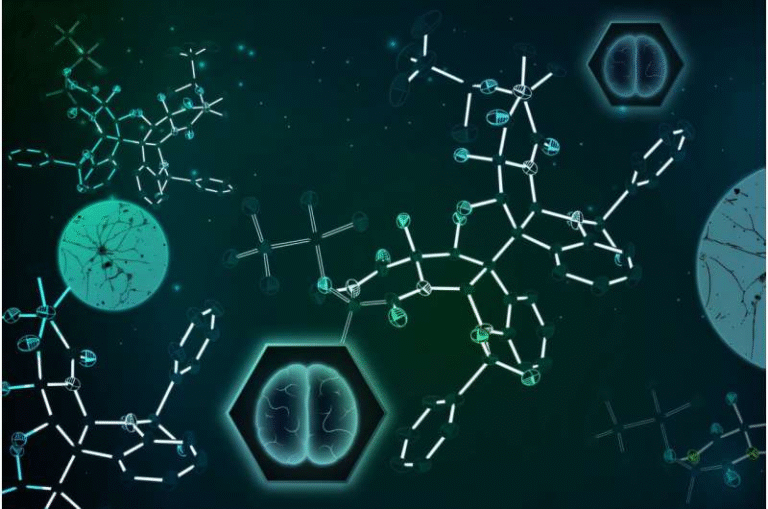
Researchers at Florida State University (FSU) have developed a brand-new crystalline material that displays highly unusual magnetic behavior, opening up promising possibilities for next-generation data storage, energy-efficient electronics, and quantum computing technologies. The discovery centers on how atomic spins arrange themselves inside the material, forming intricate swirling patterns rather than the simple alignments seen in conventional magnets.
The study, published in the Journal of the American Chemical Society, demonstrates that when two chemically similar materials with different crystal structures are combined, they can give rise to an entirely new structure with unexpected and complex magnetic properties. This work highlights a powerful new strategy for designing advanced materials by carefully navigating chemical and structural boundaries.
Understanding Atomic Spins and Magnetism
To appreciate why this discovery matters, it helps to understand how magnetism works at the atomic level. Atoms in magnetic materials behave like extremely small magnets due to a property called atomic spin. Each spin can be visualized as a tiny arrow indicating the direction of an atom’s magnetic field.
In traditional magnets, such as those found in hard drives, smartphones, and everyday electronics, these spins tend to align in orderly ways—either pointing in the same direction or in opposite directions. When large numbers of spins align collectively, they create the familiar magnetic behavior we rely on in modern technology.
What makes the newly discovered material remarkable is that its spins do not follow these simple patterns. Instead, they organize into repeating swirling formations, often referred to as spin textures. These textures give rise to magnetic properties that are fundamentally different from those of conventional magnets.
Creating Magnetism Through Structural Competition
The FSU research team took an innovative approach to material design by focusing on structural frustration. This occurs when two competing crystal structures are forced to coexist, making it impossible for either structure to dominate fully.
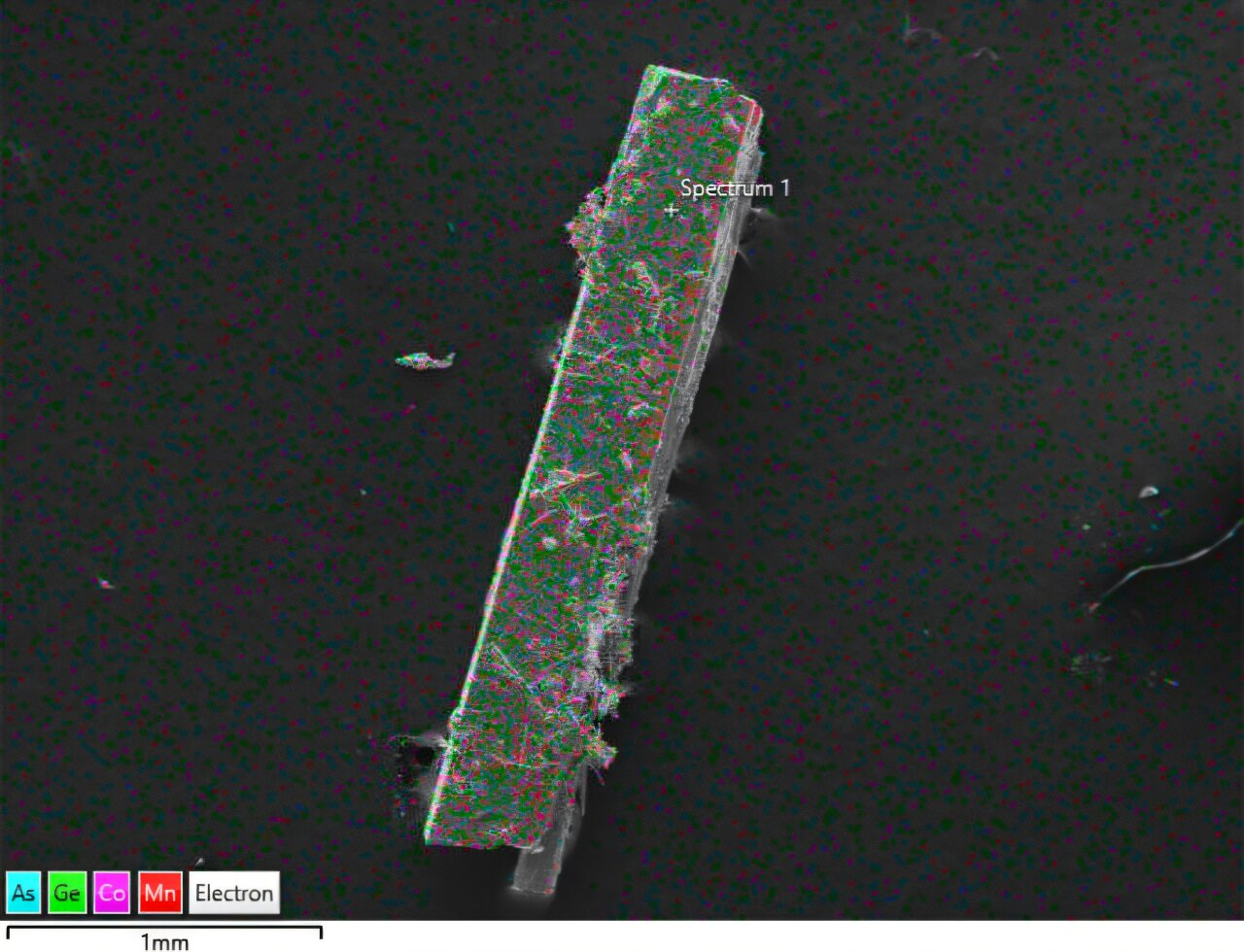
In this case, the researchers combined two intermetallic compounds that are chemically very similar but structurally distinct. Both compounds contained manganese and cobalt, but one used germanium while the other used arsenic. These two elements sit next to each other on the periodic table, making them chemically compatible, yet they favor different crystal symmetries.
When the compounds were mixed and allowed to solidify, the competing structural preferences created instability at the boundary between the two compositions. Rather than settling into one known structure or the other, the material formed a new crystalline phase altogether.
This structural instability did not stop at the atomic lattice. It extended into the magnetic interactions between atoms, causing the spins to twist and bend into highly organized but unconventional arrangements.
Discovery of Skyrmion-Like Spin Textures
Upon examining the crystals, the researchers observed that the atomic spins formed cycloidal patterns, meaning the spins rotate smoothly in repeating waves. These patterns are closely related to skyrmion-like spin textures, which are tiny, vortex-like magnetic structures that have become a major focus of modern physics and materials science.
Skyrmions are especially interesting because they are topologically protected, meaning their structure is very stable and resistant to disruption. This stability makes them excellent candidates for use in advanced technologies, where reliable control over magnetic states is crucial.
To confirm the presence of these skyrmion-like textures, the team conducted single-crystal neutron diffraction experiments using the TOPAZ instrument at the Spallation Neutron Source at Oak Ridge National Laboratory. This U.S. Department of Energy facility allows scientists to probe magnetic structures deep inside materials with exceptional precision.
The neutron diffraction data, combined with advanced data analysis and machine-learning tools, enabled the researchers to map out the complex magnetic structure with high confidence.
Why This Magnetic Material Matters
The discovery has several important implications for future technologies. One major application lies in data storage. Skyrmion-like spin textures can potentially store information at much higher densities than conventional magnetic domains. Each swirling spin structure can act as a stable data unit, allowing more information to be packed into smaller physical spaces.
Another key advantage is energy efficiency. Moving skyrmions through a material requires far less energy than manipulating traditional magnetic domains. This could significantly reduce power consumption in electronic devices, especially in large-scale systems like data centers and supercomputers, where energy use and cooling costs are major concerns.
The material may also contribute to progress in quantum computing. Complex and stable magnetic textures could play a role in creating fault-tolerant quantum systems, which are designed to preserve fragile quantum information despite errors and environmental noise. Achieving this level of robustness is one of the biggest challenges in quantum information science.
A Shift Toward Predictive Material Design
What sets this research apart is not just the material itself, but the design philosophy behind it. Traditionally, scientists searching for skyrmion-hosting materials have relied on trial and error, examining known compounds that already exhibit certain symmetries and measuring their properties.
The FSU team adopted a more chemically driven and predictive approach. By deliberately combining compounds with competing structures, they aimed to create conditions where new magnetic behaviors would naturally emerge. This method expands the range of possible materials and reduces reliance on rare or difficult-to-synthesize compounds.
This strategy also supports a more resilient and cost-effective supply chain for future technologies. Being able to design materials from relatively common elements makes it easier to scale production if these materials are eventually used in commercial devices.
Extra Insight: What Are Skyrmions and Why Are Scientists Excited?
Skyrmions are nanoscale magnetic whirlpools first proposed decades ago but only experimentally observed in recent years. Their defining feature is their topological nature, which gives them extraordinary stability. Even when exposed to defects or external disturbances, skyrmions tend to maintain their structure.
Because they can be manipulated with tiny electrical currents, skyrmions are considered prime candidates for spintronic devices, a class of electronics that use electron spin rather than charge to process information. Spintronics promises faster speeds, lower power consumption, and new ways of designing computing hardware.
The ability to intentionally design materials that host skyrmion-like textures, as demonstrated in this study, brings scientists closer to turning these theoretical advantages into practical technologies.
Looking Ahead
The research represents a significant step forward in understanding how chemical composition, crystal structure, and magnetic behavior are interconnected. By showing that structural frustration can be used as a tool to engineer complex spin textures, the study opens the door to discovering and optimizing many more materials with tailored magnetic properties.
As experimental techniques and computational tools continue to improve, researchers expect to move beyond simply finding unusual magnetic structures to intentionally designing them for specific technological needs. This work from Florida State University is a strong example of how thoughtful chemical design can lead to breakthroughs with wide-ranging impact.
Research paper:
https://doi.org/10.1021/jacs.5c12764