A Harvard-Led Study Is Helping Cape Ann Prepare for Rising Sea Levels and Tough Climate Choices
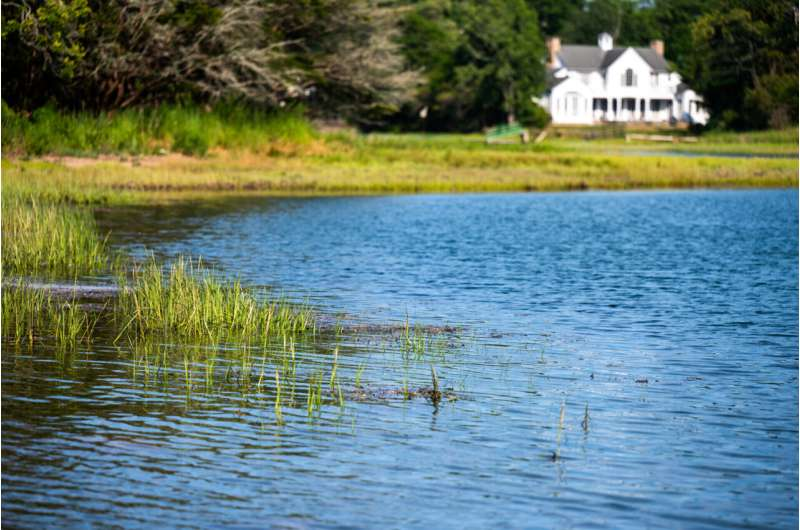
Communities along Massachusetts’ rugged Cape Ann peninsula are confronting a reality that is becoming harder to ignore: the Atlantic Ocean is steadily moving closer. A new, multi-year research effort led by Harvard University is giving residents and local leaders a clearer picture of what rising seas and stronger storms could mean for their towns—and how difficult the choices ahead may be.
Cape Ann, located just north of Boston, includes the towns of Essex, Gloucester, Manchester-by-the-Sea, and Rockport, home to a combined population of about 50,000 people. These are historic coastal communities with deep maritime roots, and much of their infrastructure was built long before climate change entered everyday conversation. Today, many of those systems are under strain.
One vivid example is Apple Street in Essex, a narrow road only a few feet above sea level. On calm days, it looks like a classic New England scene, with oak trees, stone walls, granite outcrops, and boat sheds. During storms, however, seawater can flood the road, turning it into a temporary moat. This matters because Apple Street serves as a critical emergency shortcut when the town’s main street floods—something that already happens several times each year.
The question facing the town is deceptively simple but emotionally loaded: should Apple Street be raised to remain passable during storms, even if that means removing large, mature trees that define the character of the neighborhood?
That debate reflects a much broader challenge playing out across Cape Ann.
Studying the Future Before It Arrives
For the past five years, researchers from Harvard’s Graduate School of Design, working through the Office for Urbanization, have partnered with local communities, nonprofits, and government agencies to examine how Cape Ann might fare as sea levels rise. The work has been supported by local, state, and federal funding and is closely connected to Harvard’s Salata Institute for Climate and Sustainability.
Rather than producing a traditional master plan, the research team focused on stress-testing the region. They simulated scenarios such as a Category 3 hurricane, layered current flooding patterns with mid-century sea-level rise projections, and analyzed what would fail first under extreme conditions.
The goal was not to create dramatic visuals for their own sake. Instead, the simulations were designed to provide evidence-based insights into how storm surge could cut through roads, isolate neighborhoods, overwhelm infrastructure, and disrupt daily life.
Crucially, the researchers also looked beyond the most obvious impacts. When roads flood, health clinics may close because staff cannot reach them. When one pump station fails, sewage systems can overflow into the harbor. These secondary and tertiary effects often cause the most damage during real disasters.
Infrastructure, Ecosystems, and Hard Trade-Offs
One of the thorniest issues facing Cape Ann is how to protect essential infrastructure without destroying the ecosystems that make the region livable and economically viable.
For example, some towns are grappling with whether to protect sewage treatment plants with seawalls or relocate them uphill. Seawalls may seem like a straightforward solution, but they can disrupt tidal flows, damage marshes, and accelerate erosion elsewhere.
Salt marshes play a vital role in coastal resilience. When healthy, they absorb storm energy, reduce flooding, and provide habitat for marine life. Restoring marshes could significantly blunt the impact of future storms, but doing so often requires removing earthen berms or retreating from certain properties.
That idea—sometimes called managed retreat—is gaining attention among state officials in Massachusetts and beyond. Still, it raises difficult questions about property rights, funding, and fairness.
As sea levels rise, high-value waterfront homes are increasingly at risk, which can erode the local property tax base. That, in turn, makes it harder for municipalities to pay for adaptation projects, creating a financial feedback loop that few towns are prepared for.
Protecting Culture as Well as Property
Cape Ann’s identity is inseparable from the sea. Gloucester, the largest town in the group, proudly calls itself America’s oldest seaport, with more than 400 years of maritime history. Fishing is not just an industry here; it is a cultural backbone.
Researchers and residents alike worry that aggressive coastal armoring could undermine that heritage. Compared with a generation ago, mudflats support fewer mussels, and spawning grounds for herring and eels are shrinking. These species are essential to the food web that supports cod, bluefish, and striped bass, all of which are central to the region’s fishing economy.
Installing a seawall in the wrong place might protect a row of houses while destroying marsh systems, killing clams, and harming businesses tied to local food traditions—such as the iconic fried-clam industry that many residents associate with Cape Ann’s identity.
The peninsula’s variable hydrological conditions depend on water being able to move naturally. Blocking that movement can solve one problem while creating several new ones.
A Bottom-Up Approach to Resilience
One of the most distinctive aspects of the Harvard-led project is its emphasis on community engagement. The research team brought together people with very different backgrounds—retirees and fishermen, low-income immigrants and wealthy landowners—to discuss risks, priorities, and visions for the future.
The belief underlying this approach is that climate resilience cannot be imposed from the top down. Instead, it must be built across overlapping jurisdictions, with trust and cooperation between towns that share geography, infrastructure, and risks.
Climate change does not stop at municipal boundaries, and neither can effective adaptation.
Importantly, the researchers have been clear that their final, three-phase report is not a binding plan. Decisions about the future of Cape Ann, they argue, should be made by the people who live there.
Local partners agree—but also acknowledge how challenging that responsibility is. There is no central blueprint for adaptation, and communities must balance what they value most against what is physically and financially possible.
Why This Matters Beyond Cape Ann
While this study focuses on a specific region, its lessons apply far beyond Massachusetts. Coastal communities around the world are facing similar dilemmas: how to protect people and infrastructure without sacrificing ecosystems, culture, or long-term resilience.
Cape Ann’s experience shows that adaptation is not a single project or deadline. There is no starting gun. The process is already underway, whether communities feel ready or not.
Rising tides, disappearing beaches, flooded parking lots, and stressed infrastructure are early signals of a much larger transformation. By confronting these issues now—using the best available science and inclusive public dialogue—Cape Ann may offer a valuable model for other coastal regions navigating an uncertain future.
Research paper and project reference:
https://salatainstitute.harvard.edu/subtopic/cape-ann/