A Major Shift in the Sargasso Sea Reveals a Steep Decline in Historic Sargassum Populations
A new scientific study has revealed a striking change unfolding in the Atlantic Ocean: historic populations of sargassum seaweed in the North Sargasso Sea have dropped sharply over the past decade, even as other parts of the Atlantic are experiencing record-breaking sargassum growth. The research, led by scientists at the University of South Florida’s College of Marine Science, highlights a complex and potentially worrying transformation in one of the ocean’s most important floating ecosystems.
Sargassum is a brown, free-floating seaweed best known for forming vast mats across the ocean’s surface. These mats play a critical ecological role, especially in the Sargasso Sea, a unique region of the North Atlantic defined not by land borders but by surrounding ocean currents. For centuries, the Sargasso Sea has been named after and defined by its dense sargassum presence. That defining feature, however, is now fading.
A Sharp Decline Since 2015
According to the study, published in Nature Geoscience, the abundance of sargassum in the North Sargasso Sea has plummeted since around 2015. Satellite observations and field measurements both point to the same conclusion: large, healthy mats that once dominated the region are now far less common. At the same time, the Gulf of Mexico, which historically supplies much of the sargassum that drifts into the Sargasso Sea, has also seen a substantial decline in healthy seaweed populations.
This finding stands in stark contrast to what has been happening elsewhere in the Atlantic. Over the past decade, the tropical Atlantic Ocean has experienced massive increases in sargassum, culminating in the formation of the Great Atlantic Sargassum Belt, a sprawling system that stretches nearly 5,000 miles across the ocean. These blooms have become infamous for washing ashore across the Caribbean, Mexico, Florida, and the Gulf Coast, causing environmental damage and economic disruption.
In other words, two opposite trends are occurring at the same time: explosive growth in one part of the Atlantic, and a steep decline in another.
Why the Gulf of Mexico Matters
The Gulf of Mexico plays a key role in this story. Typically, the Gulf experiences a spring bloom of sargassum, which is then transported northward by ocean currents. By late fall or early winter, this seaweed reaches the Sargasso Sea, where it historically formed dense seasonal mats.
The new research shows that lower levels of healthy sargassum in the Gulf now mean less seaweed reaching the Sargasso Sea. As a result, the Sargasso Sea is no longer receiving the steady supply it once relied on. Even when sargassum from the tropical Atlantic arrives, it may not be well suited to survive in the cooler waters of the North Atlantic.
A Possible Basin-Scale Regime Shift
The researchers describe these changes as potentially signaling a basin-scale regime shift, meaning a large, long-term reorganization of how sargassum is distributed across the Atlantic Ocean. One of the most notable signs of this shift is a change in seasonality. Historically, sargassum levels in the North Sargasso Sea peaked in fall and winter. Now, those peaks are increasingly occurring in summer instead.
Such changes matter because sargassum ecosystems are tightly linked to timing. Many marine species rely on predictable seasonal patterns for feeding, breeding, and shelter.
Ocean Warming as a Key Driver
To understand what might be driving this decline, the researchers examined three factors essential for plant growth: light, nutrients, and temperature. Among these, temperature appears to be especially important.
Waters in the Gulf of Mexico have warmed by approximately 0.19°C per decade between 1970 and 2020, which is roughly twice the rate of global ocean warming. Sargassum generally thrives in temperatures between 20°C and 28°C, but recent summers in the Gulf have seen temperatures exceed 30°C. These prolonged heat conditions, combined with increasingly frequent marine heat waves, may be stressing the seaweed and reducing its ability to grow and reproduce.
Nutrient competition may also be playing a role. Large amounts of sargassum drifting in from the Caribbean could be consuming nutrients that Gulf populations once relied on, leaving them weaker and less resilient.
Why the Great Atlantic Sargassum Belt Is Not Filling the Gap
One might assume that the massive sargassum blooms in the tropical Atlantic could compensate for the losses in the Gulf and Sargasso Sea. The study suggests otherwise. Sargassum from the Great Atlantic Sargassum Belt may be acclimated to warmer waters or already in poor condition by the time it drifts north. When it reaches the cooler environment of the Sargasso Sea, it often struggles to survive.
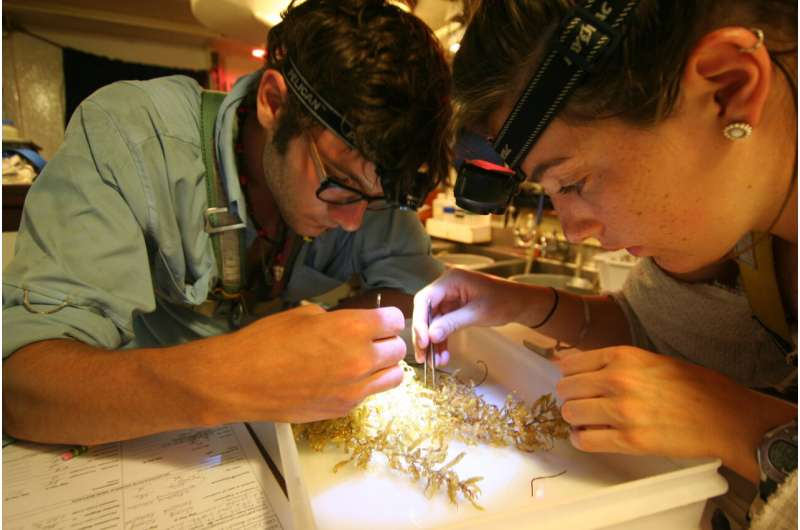
Additionally, different varieties and morphotypes of sargassum respond differently to environmental conditions, making the situation even more complex. Long-term field data, some collected over nearly 50 years by research vessels, have been essential in distinguishing these differences and understanding which populations are declining most severely.
Why Sargassum Matters to Marine Life
Sargassum mats are often described as floating rainforests. They provide shelter, breeding grounds, and feeding opportunities for a wide range of marine organisms, including juvenile fish, crabs, shrimp, sea turtles, and seabirds. Some species are so closely adapted to sargassum that they rely on it almost entirely during certain life stages.
A decline in these floating habitats could ripple across the marine food web. While coastal communities often view sargassum as a nuisance when it washes ashore and decays—producing foul odors and harming tourism—its role in the open ocean is overwhelmingly positive.
Ironically, cleanup efforts related to beaching events already cost governments and businesses millions of dollars each year, even as offshore ecosystems that depend on sargassum face growing uncertainty.
Looking Ahead
The research team plans to continue investigating how shifting sargassum populations may reshape marine ecosystems. One key question is whether ongoing competition from the Great Atlantic Sargassum Belt will further weaken Gulf populations. Another is how long-term warming trends might permanently alter where and when sargassum can survive.
What is clear is that the Atlantic Ocean’s sargassum system is no longer behaving the way it did for centuries. The Sargasso Sea, once synonymous with abundant floating seaweed, is undergoing a profound transformation—one that could have lasting consequences for marine life across the North Atlantic.
Research paper:
https://www.nature.com/articles/s41561-025-01863-5