A Robotic Ocean Float Survived Beneath Antarctic Ice Shelves and Revealed New Clues About Sea Level Rise
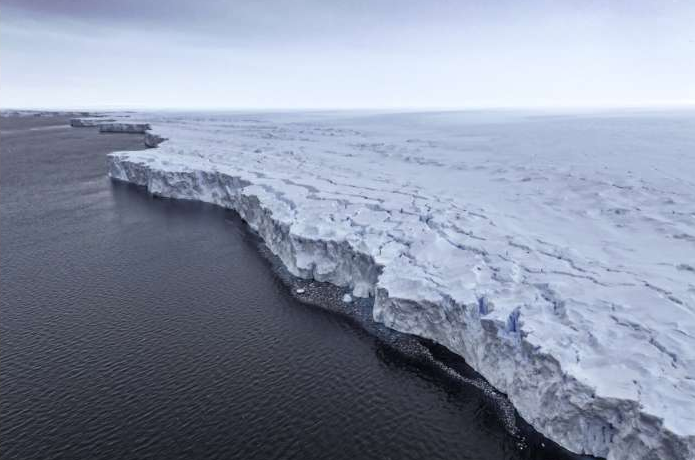
A small robotic ocean float has managed something scientists have long struggled to achieve: directly measuring ocean conditions beneath massive Antarctic ice shelves for an extended period of time. Over nearly two and a half years, this autonomous instrument drifted hundreds of kilometers under the ice in East Antarctica, collecting data from places humans and ships cannot easily reach. What it discovered is now reshaping how scientists understand the vulnerability of Antarctic ice and its potential impact on future sea level rise.
The float, part of the global Argo ocean observing program, was deployed near the Denman and Shackleton ice shelves. It traveled roughly 300 kilometers, collecting close to 200 detailed profiles of ocean temperature and salinity. At one point, it disappeared beneath the ice for about eight months, completely cut off from satellite communication, before eventually resurfacing and transmitting its data. This marked the first-ever direct ocean transect beneath an East Antarctic ice shelf.
Despite the risks, the float survived harsh conditions that could have crushed or trapped it permanently. Its success has given scientists a rare look at how ocean heat interacts with ice shelves from below—a key process that determines how fast Antarctica may lose ice in a warming world.
What Makes This Mission So Important
Ice shelves are floating extensions of glaciers that act as natural barriers, slowing the flow of land-based ice into the ocean. If ice shelves thin, weaken, or collapse, glaciers behind them can accelerate toward the sea, leading to faster sea level rise.
While scientists have long known that warm ocean water can melt ice shelves from below, they have lacked direct measurements from beneath the ice, especially in East Antarctica. This region was traditionally thought to be relatively safe from warm water intrusion. The robotic float’s journey has now challenged that assumption.
The float repeatedly measured temperature and salinity from the seafloor up to the underside of the ice shelf, including the critical 10-meter-thick boundary layer directly beneath the ice. This boundary layer controls how efficiently heat is transferred from the ocean to the ice, making it central to determining melt rates.
Key Findings Beneath the Shackleton Ice Shelf
One of the major results from the mission concerns the Shackleton Ice Shelf, the northernmost ice shelf in East Antarctica. The measurements show that, for now, this ice shelf is not exposed to sufficiently warm water capable of driving rapid melting from below.
This suggests that the Shackleton Ice Shelf is currently less vulnerable than scientists had feared. However, researchers stress that this does not mean it is immune to future changes. Ocean circulation patterns can shift, and even small increases in warm water access could alter the balance.
Denman Glacier Shows Signs of Serious Risk
The situation beneath the Denman Glacier is far more concerning. Denman Glacier sits on bedrock that slopes downward inland and holds enough ice to raise global sea levels by approximately 1.5 meters if it were to destabilize completely.
The float detected warm water reaching beneath the Denman Ice Shelf, placing the glacier in a precarious state. Scientists found that relatively small changes in the thickness of the warm water layer could significantly increase melt rates. This could trigger unstable retreat, where ice loss accelerates rapidly and becomes difficult to stop.
This finding reinforces concerns that large parts of East Antarctica may be far more vulnerable to ocean-driven melting than previously believed.
How Scientists Tracked a Lost Float Under the Ice
One of the biggest challenges during the mission was simply figuring out where the float had gone. Normally, Argo floats surface every few days, transmit data via satellite, and obtain a GPS position. Under thick ice shelves, that was impossible.
To solve this, researchers used a clever workaround. Every time the float rose and bumped into the base of the ice, it recorded the depth of the ice shelf underside, known as the ice draft. Scientists then compared these measurements with satellite-derived maps of ice shelf thickness. By matching the depth patterns, they reconstructed the float’s likely path beneath the ice.
This detective work allowed scientists to map the float’s journey and place its measurements in the correct geographical context.
Why Robotic Floats Are a Game Changer
Traditionally, studying ice shelf cavities required drilling through hundreds or thousands of meters of ice and lowering instruments into the ocean—an expensive, logistically complex, and rarely repeated process. As a result, direct measurements under ice shelves have been extremely limited.
Autonomous floats offer a powerful alternative. They can drift with ocean currents, repeatedly sample the water column, and operate for years with minimal human intervention. This mission demonstrated that floats can survive long-term under-ice conditions, opening the door to much broader exploration.
Deploying more floats along the Antarctic continental shelf could dramatically improve understanding of how ocean heat reaches ice shelves. This would help scientists refine computer models, reducing one of the largest uncertainties in projections of future sea level rise.
The Bigger Picture for Sea Level Rise
Sea level rise threatens hundreds of millions of people living in coastal cities, low-lying islands, and river deltas around the world. Antarctica’s contribution to future sea level rise remains the largest unknown in global climate projections.
Much of the Antarctic Ice Sheet rests on bedrock below sea level, making it vulnerable to warm ocean water. The stability of floating ice shelves largely determines how quickly inland ice can flow into the ocean. Understanding the ocean–ice interaction beneath these shelves is therefore critical.
This robotic float mission provides some of the most detailed observations yet from one of the least understood regions on Earth, offering valuable data to improve predictions of how Antarctica will respond to a warming climate.
About the Argo Program and Polar Research
The Argo program is a global network of thousands of autonomous floats that continuously monitor the world’s oceans. Most Argo floats operate in open water, but newer generations are being adapted for polar conditions, including ice detection and deeper sampling capabilities.
Polar oceanography is especially challenging due to extreme cold, seasonal darkness, thick ice cover, and limited access. Innovations like under-ice floats are helping scientists overcome these barriers and gather data that was once thought impossible to obtain.
Why This Study Stands Out
What makes this research particularly notable is not just the technical achievement, but the quality and duration of the data. Continuous measurements over multiple seasons provide insights into how ocean conditions change over time, rather than offering just a snapshot.
The findings also highlight that East Antarctica, once considered relatively stable, may contain hidden vulnerabilities. Some ice shelves appear resilient for now, while others, like Denman, sit dangerously close to thresholds that could trigger rapid ice loss.
Research Paper Reference
Circulation and ocean–ice shelf interaction beneath the Denman and Shackleton Ice Shelves
Science Advances (2025)
https://www.science.org/doi/10.1126/sciadv.adx1024