Airborne PFAS Found in South Florida Reveal a Hidden and Overlooked Pollution Risk

South Florida is often associated with ocean breezes, warm sunshine, and relatively clean air compared to heavily industrialized regions. But new scientific research suggests that the air in this coastal region may not be as harmless as it appears. A recent study has found that PFAS, commonly known as “forever chemicals,” are present in the air over South Florida—attached to microscopic particles that can travel deep into the human lungs and potentially enter the bloodstream.
The findings come from a peer-reviewed study published in the Journal of Hazardous Materials (2025) by researchers at Florida International University (FIU). The research was led by associate professor Natalia Soares Quinete alongside Ph.D. researcher Maria Guerra de Navarro, both affiliated with FIU’s Institute of Environment. Their work focuses on a pathway of PFAS exposure that has received far less attention than contaminated water or food: inhalation.
What Are PFAS and Why They Matter
PFAS, or per- and polyfluoroalkyl substances, are a large group of synthetic chemicals that have been manufactured since the mid-20th century. They are prized for their ability to resist heat, water, and grease, which is why they appear in everyday products such as nonstick cookware, food packaging, stain-resistant fabrics, cleaning products, cosmetics, and firefighting foams.
The problem is persistence. PFAS do not easily break down in the environment or in the human body. Once released, they can linger for decades, earning them the nickname “forever chemicals.” Numerous studies have linked PFAS exposure to immune system suppression, hormone disruption, liver damage, developmental issues, and increased cancer risk.
Until recently, most PFAS research has focused on water contamination. This new study shifts attention to the air we breathe, highlighting an exposure route that has largely flown under the radar.
Studying PFAS in the Air Over South Florida
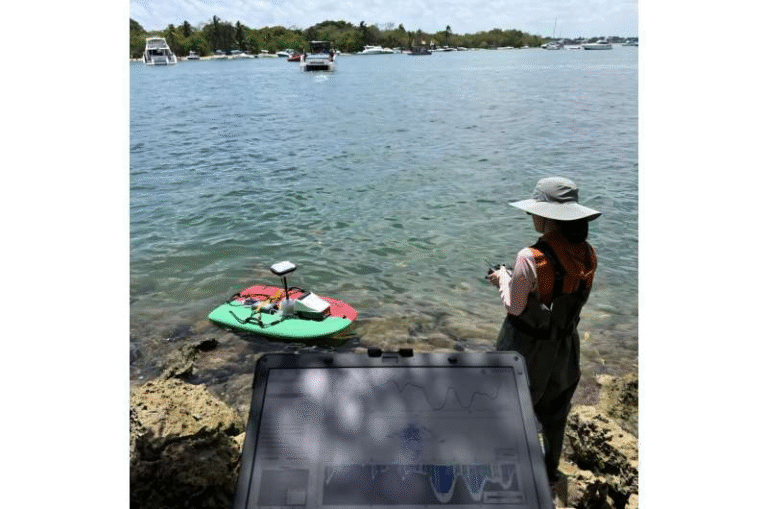
The FIU research team conducted a year-long monitoring campaign from January to December 2024 in a coastal urban area of North Miami, Florida. Importantly, this location was chosen because it lacks major PFAS-producing industries, smokestacks, or heavy manufacturing facilities. In other words, it was not an obvious pollution hotspot.
Using advanced air-sampling equipment designed to mimic how particles move through the human respiratory system, the researchers collected ambient particulate matter of varying sizes. These particles were then analyzed using liquid chromatography–tandem mass spectrometry (LC-MS/MS), a highly sensitive method capable of detecting trace levels of chemical compounds.
The goal was to determine whether PFAS were present, which compounds appeared most often, and how they were distributed across different particle sizes.
What the Researchers Found
The results were clear and concerning. The team detected nearly 30 different PFAS compounds bound to airborne particles. Some of these particles were extremely small—fine enough to penetrate deep into the lungs when inhaled.
Certain PFAS compounds, such as PFBA (perfluorobutanoic acid), were detected frequently and at higher concentrations, while others like PFOS (perfluorooctane sulfonate) and PFOA (perfluorooctanoic acid) appeared less often but are well-known for their toxicity and long-term health effects.
One especially important finding was that some PFAS were attached to fine and ultrafine particles, which are capable of reaching the lower respiratory tract. Once there, these chemicals may pass into the bloodstream, adding to the body’s overall PFAS burden.
Although the detected concentrations were relatively low, researchers emphasized that low does not mean harmless, especially when exposure occurs continuously over long periods.
Why South Florida Still Has Airborne PFAS
One of the most surprising aspects of the study is where it took place. South Florida is not known for heavy industrial pollution, yet PFAS were still present in the air. According to the researchers, this supports the idea of long-range atmospheric transport.
PFAS released in other regions can travel hundreds or even thousands of miles through the atmosphere before settling elsewhere. South Florida’s warm temperatures, high humidity, and coastal weather patterns may actually help these chemicals persist and move through the air more easily.
Rainfall events, sea breezes, and aerosol formation all play a role in how PFAS circulate and settle, making coastal cities especially interesting—and concerning—places to study airborne contamination.
Potential Health Implications
At present, the researchers say that immediate health risks appear low, but the long-term consequences of inhaling PFAS remain poorly understood. Unlike a one-time exposure, breathing contaminated air happens daily, often without any awareness.
The study also suggests that men may experience slightly higher exposure, simply because they tend to inhale larger volumes of air over time. However, the researchers stress that everyone is potentially affected, especially vulnerable populations such as children, older adults, and people with respiratory conditions.
This research provides a framework for estimating how much PFAS can enter the body through inhalation, something that has been difficult to measure until now.
Everyday Products as a Hidden Source
Another key takeaway from the study is the connection between daily consumer products and airborne PFAS. Many of the detected compounds are commonly associated with household cleaners, skincare products, cosmetics, and food packaging.
When these products are used, washed, heated, or disposed of, PFAS can be released into the environment. Over time, they can become airborne, attach to particles, and travel far from their original source.
The researchers point out that individual purchasing choices, while small on their own, collectively influence environmental PFAS levels. Reducing PFAS at the source may be just as important as cleaning up contamination after it occurs.
Why Regulations Are Still Lagging Behind
Despite growing scientific evidence, airborne PFAS are not currently regulated under U.S. federal air quality standards. Most existing PFAS regulations focus on drinking water, leaving inhalation exposure largely unaddressed.
One reason is data scarcity. Studies like this one are still rare, and policymakers often require broad, nationwide evidence before establishing new limits. The FIU team emphasizes that findings from a single region, while important, are not enough on their own to drive regulatory change.
That said, this research represents an important first step toward filling a major knowledge gap.
What the Researchers Are Studying Next
The work does not stop here. The FIU team is now investigating the full atmospheric life cycle of PFAS, including how they transform through chemical reactions like oxidation and how they interact with aerosols.
In parallel, additional research is exploring stormwater and wastewater systems as pathways for PFAS movement, linking air, water, and urban infrastructure into one interconnected system.
The long-term goal is to develop a complete picture of how PFAS behave in the environment, from release to human exposure.
Why This Study Matters
This research shows that airborne PFAS exposure is real, measurable, and largely invisible. Even in regions that appear clean and free of industrial pollution, these chemicals can still arrive through the atmosphere.
Understanding this pathway is essential for accurate health risk assessments and future environmental policy. As scientists continue to uncover how PFAS move through air, water, and soil, it becomes increasingly clear that addressing the problem will require both scientific insight and regulatory action.
Research Reference:
https://doi.org/10.1016/j.jhazmat.2025.139797