Carbon-Based Filters Are Showing Real Promise in Removing PFAS From Contaminated Groundwater
Carbon-based materials are emerging as one of the most practical and effective tools yet for tackling PFAS contamination in groundwater, according to a newly published field study. PFAS, short for per- and polyfluoroalkyl substances, are a large group of synthetic chemicals that have been manufactured and used for decades. They are found in everyday products such as nonstick cookware, water-resistant clothing, food packaging, cosmetics, and a wide range of industrial applications including firefighting foams, metal coatings, and lubricants.
The problem is not just how widespread these chemicals are, but how stubborn they are. PFAS are often called “forever chemicals” because of their extremely strong carbon–fluorine bonds, which make them resistant to heat, water, and most natural degradation processes. Once they enter groundwater, they can persist for decades, creating long-term risks for drinking water supplies near military bases, industrial facilities, airports, and municipal landfills.
A new study published in the Journal of Hazardous Materials explores a promising approach to addressing this challenge in real-world conditions, not just laboratory settings.
A Collaborative Effort to Address a Growing Environmental Problem
The research was led by scientists from Brown University and the University of Minnesota, working in collaboration with Jacobs Engineering, Arq Inc., and the U.S. Navy. Their shared goal was to test whether PFAS could be effectively removed from groundwater using an in situ treatment method, meaning the contamination is treated underground without pumping the water to the surface.
Previous research has shown that certain PFAS compounds can be destroyed or captured in controlled laboratory environments. However, translating those results to actual contaminated sites has been difficult. Field conditions are far more complex, involving variable soil types, groundwater chemistry, and long-term stability concerns.
This study focused on bridging that gap between lab success and field reality.
How the Carbon-Based Filter Works Underground
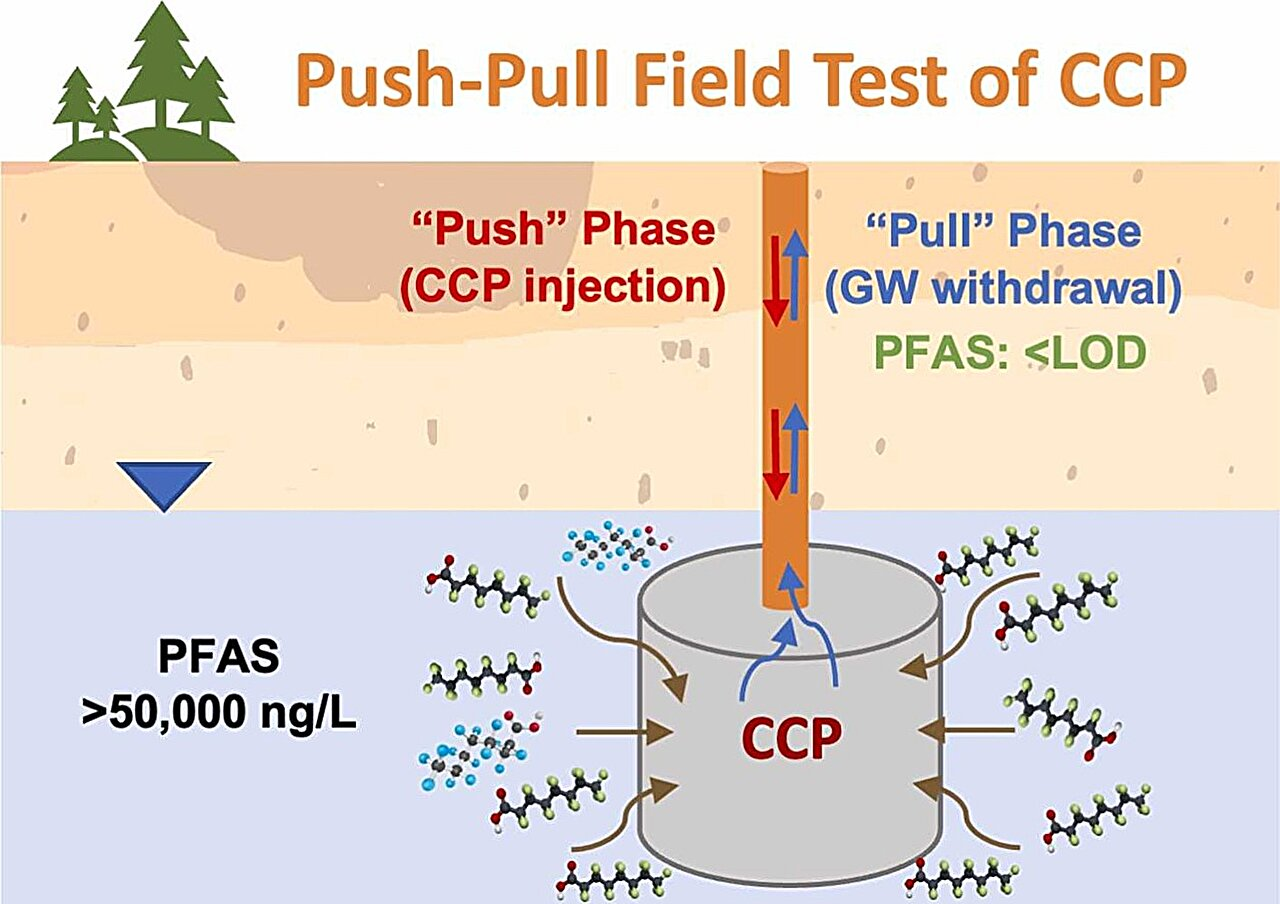
At the center of the study is a specially engineered material known as a colloidal carbon product (CCP). This material consists of ultra-fine activated carbon particles that are stabilized with polymers, allowing them to remain suspended in water long enough to be injected deep into the ground.
The idea is simple but powerful. Once injected into the soil, the carbon particles spread through the groundwater zone and create an underground reactive filter. As contaminated water flows through this zone, PFAS molecules bind to the carbon surface and are effectively removed from the water.
To test this concept, researchers used a technique known as “push-pull” testing. First, the CCP was injected into the subsurface (the push). Later, groundwater was extracted from the same area (the pull) to measure how PFAS concentrations had changed after passing through the carbon-treated zone.
From the Lab to a Real Navy Training Site
The research team began with laboratory-scale tests, using soil collected from the actual contaminated site. These tests helped confirm that the carbon material could move through the soil and bind PFAS effectively.
After that, the team conducted a full field demonstration at a U.S. Navy training area known to have extremely high PFAS contamination. Initial groundwater samples showed PFAS concentrations exceeding 50,000 nanograms per liter, levels far above most regulatory guidelines.
Following the injection of the colloidal carbon, the site was monitored over time. Groundwater samples were collected months later to evaluate the long-term effectiveness of the treatment.
Dramatic Reductions in PFAS Levels
The results were striking. Ten months after the carbon injection, PFAS concentrations in the treated groundwater had dropped by up to four orders of magnitude. In many samples, PFAS levels fell below laboratory detection limits, representing a dramatic improvement from initial conditions.
One of the most important findings was that the treatment worked not only on long-chain PFAS, which are relatively easier to capture, but also on short-chain PFAS, which typically pass through many conventional filtration systems. This is a major advancement, as short-chain PFAS are increasingly used as replacements for older compounds and are often harder to remove.
Cost and Practicality Matter in Long-Term Cleanup
Beyond effectiveness, the study also examined the economic feasibility of using colloidal carbon for PFAS remediation. Many contaminated sites require decades of treatment, making long-term costs a critical factor.
The researchers found that the operating costs of CCP-based treatment could be less than half those of traditional remediation methods such as pump-and-treat systems. Because the carbon filter remains underground and requires minimal ongoing maintenance, the approach significantly reduces energy use, equipment needs, and labor costs over time.
This combination of effectiveness and affordability makes the technology especially attractive for large or remote sites where conventional treatment systems are difficult to maintain.
Why In-Situ Treatment Is a Big Deal
Traditional groundwater cleanup often involves pumping contaminated water to the surface, treating it with filters or chemical processes, and then either disposing of or reinjecting the water. While effective, these systems are expensive, energy-intensive, and slow.
In-situ treatment flips that model by addressing contamination where it exists. By creating a treatment zone underground, water can be cleaned continuously as it flows naturally through the subsurface. This approach reduces surface infrastructure and allows remediation to occur with minimal disruption to surrounding communities.
PFAS, Health Concerns, and Why Cleanup Matters
PFAS contamination has been linked to a growing list of potential health concerns, including immune system effects, thyroid disease, liver damage, developmental issues, and certain cancers. Because PFAS can accumulate in the human body over time, even low-level exposure is a concern.
Groundwater contamination is particularly problematic because it can affect private wells and municipal drinking water supplies without obvious warning signs. Technologies that can reliably reduce PFAS at the source play a crucial role in protecting public health.
What This Method Does and Does Not Do
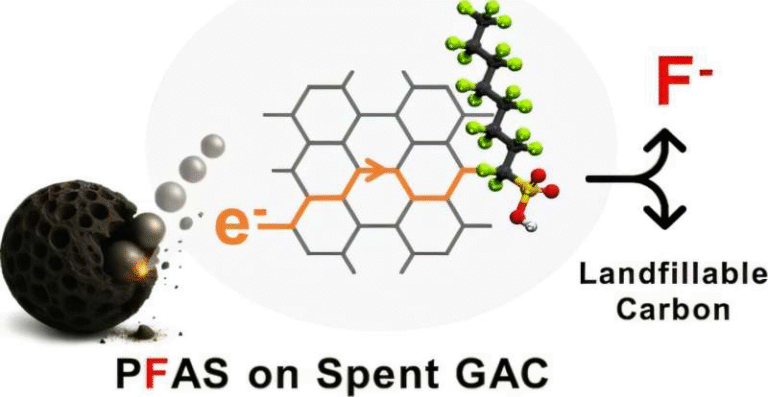
It is important to note that the colloidal carbon method captures PFAS rather than destroying them. The chemicals bind tightly to the carbon particles, preventing them from spreading further, but they are not chemically broken down.
Future research will need to address questions about how long the carbon remains effective, what happens when it becomes saturated, and whether the approach can be combined with technologies that actually destroy PFAS molecules instead of simply immobilizing them.
What Comes Next for Carbon-Based PFAS Cleanup
The research team recommends further studies to better understand the long-term performance of underground carbon treatment zones. Additional field trials in different soil types and groundwater conditions will help determine how widely the technology can be applied.
There is also interest in exploring hybrid approaches, where carbon capture is paired with chemical or thermal methods that break PFAS down into harmless byproducts.
A Meaningful Step Toward Practical PFAS Solutions
This study represents an important step forward in addressing one of today’s most persistent environmental challenges. By demonstrating that a simple, noninvasive, and cost-effective method can dramatically reduce PFAS in real-world conditions, the research offers hope to communities struggling with contaminated groundwater.
While no single solution will solve the PFAS problem everywhere, carbon-based in-situ treatment is quickly proving itself as a serious and scalable option in the growing toolbox of remediation technologies.
Research paper:
https://doi.org/10.1016/j.jhazmat.2025.140292