Climate Modeling With Communities Is Changing How Local Climate Impacts Are Studied
Climate change affects every region differently, yet many of the scientific tools used to predict those impacts are designed far away from the people who will actually live with the consequences. A recent study published in AGU Advances highlights a growing shift in climate science: building Earth system models together with communities, not just for them. The research shows how closer collaboration with Indigenous communities can make climate models more useful, more realistic, and more ethically grounded—while also exposing real limits in today’s scientific and funding systems.
Earth system models are powerful computer simulations that combine data about the atmosphere, land, rivers, ecosystems, and human activity. Scientists use them to understand how climate change may reshape landscapes, water systems, and weather patterns over years or decades. These models guide everything from environmental policy to local planning. However, the researchers behind this study point out a persistent problem: the people most affected by climate change are rarely involved in shaping these models, even though they are often the ones expected to use the results for real-world decisions.
To address this gap, lead author Yifan Cheng and colleagues worked directly with Indigenous communities in two very different regions of the United States. Their goal was not just to apply existing models, but to explore what happens when communities help define priorities, scenarios, and expectations from the very beginning.
Why Traditional Climate Models Often Fall Short Locally
Large-scale climate models are usually designed to answer global or continental questions, such as how average temperatures might rise or how precipitation patterns could shift. While scientifically valuable, these models often lack the local detail communities need. A river-dependent village, for example, may care far more about seasonal flooding or ice breakup timing than global temperature averages.
Another challenge is that model assumptions are not always transparent to non-scientists. When community leaders see colorful maps or projections, it is easy to assume the results are precise and comprehensive. In reality, every model comes with trade-offs, uncertainties, and technical limits. Without clear communication, models can be misused or misunderstood in local decision-making.
The study argues that involving communities early can reduce these problems. By openly discussing what models can and cannot do, researchers and local partners can align expectations and avoid frustration later.
The Arctic Rivers Project in Alaska
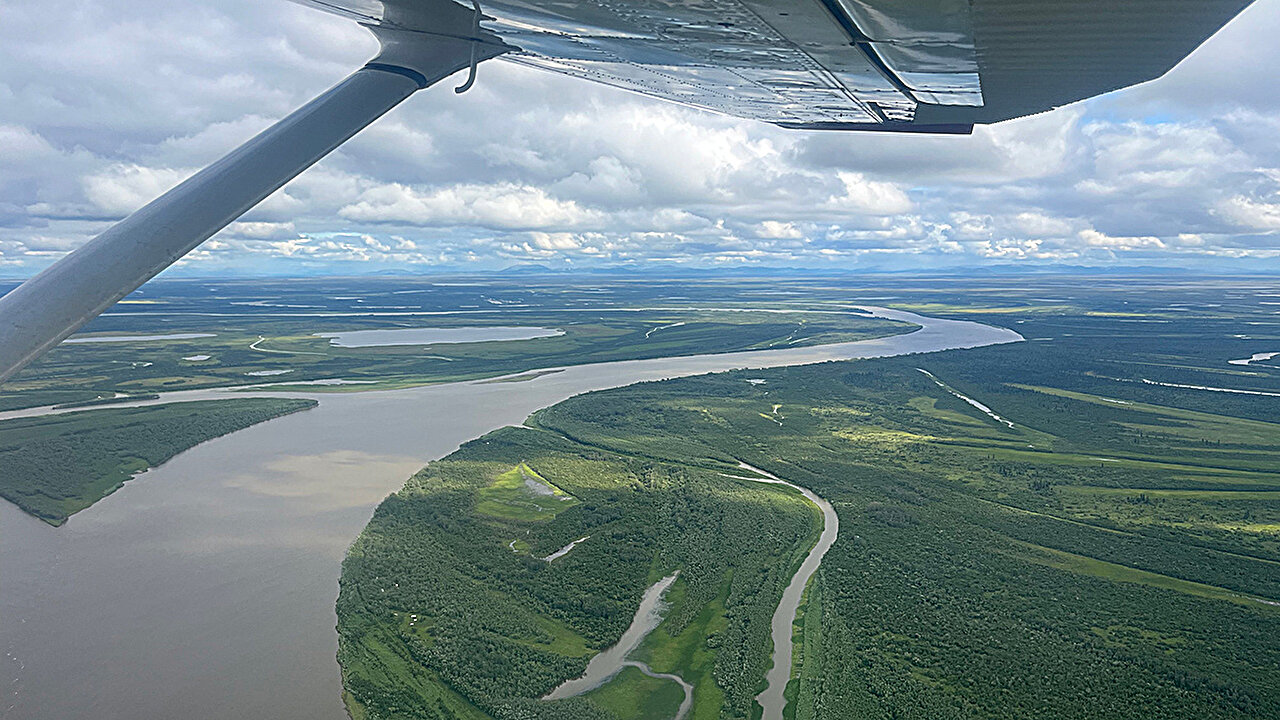
One of the two main case studies was the Arctic Rivers project, which focused on rivers and streams across Alaska. Indigenous communities in this region depend heavily on river systems for food, transportation, and cultural practices. Climate-driven changes in river flow, ice formation, and seasonal timing directly affect daily life.
The research team worked alongside Indigenous communities and organizations, including an Indigenous Advisory Council and the Yukon River Inter-Tribal Watershed Council. These groups helped identify which climate scenarios mattered most locally. This input was especially important because the researchers faced computational constraints. Running Earth system models is expensive and time-consuming, which limits how many future scenarios scientists can realistically simulate.
Rather than choosing scenarios based purely on academic interest, the team prioritized those most relevant to community concerns. This made the results more practical for local planning, even though it meant modeling fewer possibilities overall.
Community members also raised concerns that went beyond the models’ capabilities. Some noted that conditions in Alaska are changing so rapidly that subseasonal projections—forecasts spanning weeks to months—would be extremely valuable. Unfortunately, producing such detailed short-term projections was outside the technical expertise and scope of the project. The researchers emphasized the importance of not overselling what the models could deliver, choosing honesty over false promises.
The Mid-Klamath Project in Northern California
The second case study took place in Northern California’s Mid-Klamath region, where the researchers partnered with the Karuk Tribe. This project focused on how different wildfire management strategies might affect local hydrology, including water flow and availability.
Wildfire is a major concern in the region, both ecologically and culturally. Fire management decisions influence forests, rivers, and long-term landscape health. The Karuk Tribe has extensive traditional knowledge related to fire stewardship, making their involvement especially valuable.
However, this project also revealed how easily things can go wrong. Early misunderstandings led the researchers to select a modeling tool that did not fully meet the tribe’s expectations. While the model still produced useful insights, it was not as well aligned with community priorities as it could have been. The authors note that more extensive conversations during the earliest stages of the project might have prevented this mismatch.
This experience reflects a broader structural issue: traditional research funding often does not allow enough time or resources for deep early-stage collaboration. Encouragingly, the study notes that the National Science Foundation has begun adjusting its grant programs to support these early discussions, recognizing their importance for successful co-designed research.
Cultural Humility and Capacity Limits in Science
Across both projects, the researchers identified cultural humility as a central requirement for meaningful collaboration. Spending time in communities, listening carefully, and respecting Indigenous knowledge systems are not optional extras—they are foundational to effective co-design.
At the same time, the authors are careful to acknowledge the capacity constraints faced by many scientists. Not every researcher has the time, funding, or institutional support needed for long-term community engagement. To address this, the study suggests offering flexible roles with reasonable time commitments, so that scientists with fewer resources are not excluded from collaborative projects.
This balanced perspective is one of the study’s strengths. Rather than framing co-design as a moral ideal disconnected from reality, the authors treat it as a practical challenge that requires changes in funding structures, timelines, and professional incentives.
What Co-Designed Earth System Models Really Mean
The study introduces a framework for thinking about co-designed Earth system models from a modeler’s perspective. Collaboration can happen at different levels, ranging from prioritizing scenarios to co-developing entirely new model components. Not every project needs to reach the most intensive level, but even partial collaboration can significantly improve relevance and trust.
Importantly, co-design does not mean abandoning scientific rigor. Instead, it means aligning scientific tools with real-world needs, while being transparent about uncertainty and limitations. When communities understand how models work, they are better equipped to use them responsibly—and to question them when necessary.
Why This Research Matters Beyond These Two Projects
As climate impacts become more localized and more severe, demand for actionable climate information will only grow. Infrastructure planning, water management, wildfire mitigation, and ecosystem protection all depend on reliable projections that make sense at the community level.
This study shows that improving climate modeling is not just a technical problem. It is also a social one. Who gets to ask the questions, decide the scenarios, and interpret the results matters just as much as computing power or data resolution.
By documenting both successes and failures, the researchers provide a realistic roadmap for future projects. The message is clear: climate models are strongest when they are built with the people who rely on them most.
Research paper:
Yifan Cheng et al., Toward Co-Designed Earth System Models: Reflecting End-User Priorities in Local Applications From a Modeler’s Perspective, AGU Advances (2025).
https://doi.org/10.1029/2025AV001921