Exposing How Humidity Can Escalate a Heat Wave
When people in Florida think about extreme weather, hurricanes usually steal the spotlight. Every year brings familiar conversations about storm categories, projected paths, and evacuation plans. But while hurricanes are dramatic and visible, another threat is quietly becoming more dangerous across Florida and much of the United States: extreme heat intensified by humidity.
Recent research from the University of Florida highlights a critical issue that often gets overlooked in discussions about heat waves. It’s not just how hot it gets or how long the heat lasts — humidity plays a powerful role in turning heat waves into serious public health threats. This new research shows that when humidity is properly accounted for, heat waves in places like Florida are far more severe than previously understood.
Heat Waves Are More Dangerous Than Most People Realize
Extreme heat already poses a major risk in the U.S. Each year, more people die from heat-related causes than from hurricanes, floods, tornadoes, or any other type of extreme weather. Official statistics attribute over a thousand deaths annually to hyperthermia, but researchers believe the real number is likely much higher. Many heat-related deaths are recorded under secondary causes such as dehydration, heat exhaustion, or heat stroke, which makes the true toll difficult to track.
For more than a decade, researchers at the University of Florida have been studying how heat waves are changing. Their work shows that heat waves are becoming more frequent, more intense, and longer lasting, especially in the southeastern United States. Florida, in particular, stands out as a hotspot for worsening heat conditions.
Why Traditional Heat Wave Definitions Fall Short
Traditionally, scientists have defined heat waves using two main factors: temperature and duration. If temperatures exceed a certain threshold for several consecutive days, the event is classified as a heat wave. While this method is simple and widely used, it leaves out a key piece of the puzzle.
The UF research team recognized that this approach doesn’t fully reflect what people actually experience on the ground. Heat waves don’t just vary in how hot they are or how long they last — they also differ in how widespread they become and how oppressive they feel due to humidity.
To address this gap, the team developed a new framework called the Heat Severity and Coverage Index (HSCI). This index measures heat waves based on three factors:
- How hot the temperatures are
- How long the heat persists
- How large an area the heat wave covers
This already provided a more complete picture of heat wave behavior. But the team didn’t stop there.
Adding Humidity Changes Everything
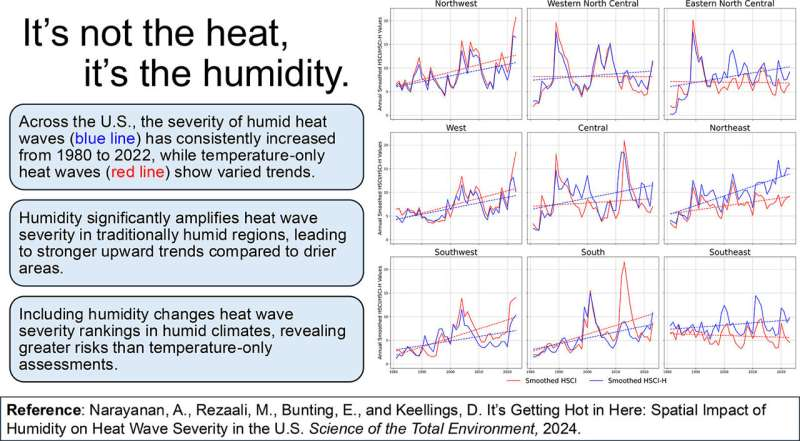
In their latest study, the researchers took a crucial step forward by incorporating humidity into their heat wave analysis. The results were striking.
When humidity was included, heat waves in the eastern United States — especially in Florida — showed a much sharper increase in severity than previously identified. Events that were once classified as moderate suddenly ranked among the most dangerous heat waves on record.
Humidity makes heat significantly harder for the human body to manage. Normally, the body cools itself through sweating, but when the air is already saturated with moisture, sweat evaporates more slowly. This limits the body’s ability to release heat, increasing the risk of heat-related illness even when temperatures are not at record highs.
Florida’s geography makes it particularly vulnerable. Positioned between the Atlantic Ocean and the Gulf of Mexico, the state is constantly supplied with moist air. Its relatively flat landscape allows that moisture to linger, creating long stretches of hot, sticky conditions that can persist for days or even weeks.
Florida’s Heat Problem Is Growing Faster Than Expected
The study found that Florida experiences more frequent passages of warm, humid air masses than in the past. These air masses contribute to heat waves that are not only hotter, but also longer in duration and higher in magnitude.
Compared to other parts of the Southeast, Florida stands out as a region where humid heat is intensifying at an alarming pace. When humidity is factored into heat wave measurements, Florida consistently ranks among the most affected areas in the country.
This matters because humid heat is often more dangerous than dry heat. Even if air temperatures are similar, high humidity dramatically increases how hot conditions feel and how much stress they place on the body.
How Machine Learning Helped Reveal the Pattern
To conduct this research, the UF team used machine learning tools to analyze decades of historical weather data. These algorithms were designed to:
- Identify heat wave events
- Track how they move across regions
- Measure their geographic coverage
- Assess their severity over time
This data-driven approach allowed researchers to see trends that traditional methods might miss. By combining advanced analytics with a more realistic definition of heat waves, the study provides a clearer understanding of how extreme heat is evolving.
Importantly, this approach isn’t meant to stay locked inside academic journals. The goal is to make heat risk more visible and easier to understand for the public, health officials, and policymakers.
Rethinking How We Communicate Heat Risk
One idea being explored is the creation of a heat wave rating scale, similar to the Saffir-Simpson scale used for hurricanes. Just as people know the difference between a Category 1 and Category 5 storm, a standardized heat scale could help communities understand when conditions are becoming dangerous.
Such a system could support better decision-making, including:
- Opening cooling centers
- Issuing targeted public health alerts
- Encouraging people to check on vulnerable neighbors
- Adjusting work schedules for outdoor labor
However, creating a universal heat wave scale is challenging. What qualifies as extreme heat in New York may be normal summer weather in Miami or Phoenix. Any rating system would need to account for regional differences in climate and population adaptation.
The Broader Impacts of Extreme Heat
The consequences of extreme heat go far beyond discomfort. Severe heat events place heavy strain on power grids, increase energy demand, disrupt agriculture, and reduce worker productivity. They also disproportionately affect vulnerable populations, including older adults, people with chronic illnesses, outdoor workers, and those without reliable access to air conditioning.
Researchers are now expanding their work to study the long-term health impacts of heat exposure. Instead of focusing only on hospital visits during heat waves, they are examining whether chronic exposure to oppressive heat contributes to conditions such as cardiovascular disease and respiratory problems over time.
Why Humidity Deserves More Attention
This research highlights an important shift in how we should think about heat. Temperature alone doesn’t tell the full story. Humidity amplifies heat, making already warm conditions far more dangerous and harder for the body to handle.
As climate patterns continue to change, humid heat waves are expected to become more common in many parts of the world. Florida’s experience may offer an early warning of what other regions could face in the future if humidity is ignored in heat planning and policy.
Looking Ahead
Hurricanes will always be a defining part of Florida’s climate story, but heat waves are emerging as a quieter and deadlier threat. By improving how heat waves are measured and communicated, researchers hope communities can better prepare for this growing risk.
With better tools, clearer warnings, and continued investment in climate research, extreme heat doesn’t have to catch people off guard. Understanding the role of humidity is a crucial step toward protecting lives in a warming world.
Research paper:
https://www.sciencedirect.com/science/article/pii/S0048969725000312