Fire Risks Associated With Rooftop Solar Panel Installations Evaluated in Large-Scale Testing
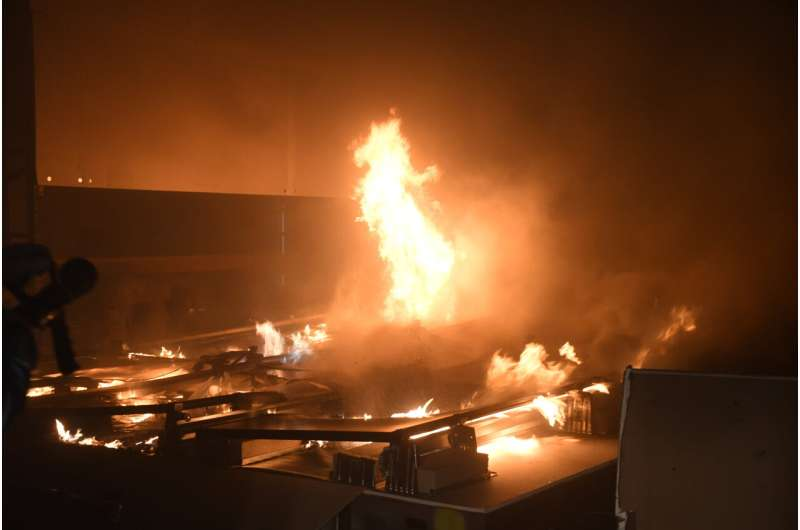
Fire safety concerns around rooftop solar panels are gaining serious attention as commercial and industrial buildings increasingly adopt photovoltaic (PV) systems. A recent set of large-scale fire tests conducted by Southwest Research Institute (SwRI) takes a deep, practical look at how fires behave beneath rooftop solar installations and what can be done to reduce the risks. The findings are expected to play an important role in shaping future building codes, fire safety standards, and mitigation strategies for solar-equipped rooftops.
At the core of this research is a straightforward question: how does the presence of solar panels on flat rooftops change the way fire spreads, and what design choices can make these systems safer?
Why Fire Risk Under Solar Panels Matters
Commercial and industrial rooftop solar installations are very different from residential systems. These rooftops are often expansive, flat, and covered with low-slope roofing materials that may already present fire challenges. When solar panels are mounted above these surfaces, they create enclosed spaces where heat, flames, and wind can interact in unpredictable ways.
Firefighters, insurers, and building designers have long suspected that solar panel configurations could influence flame spread, but until now, much of the testing had been limited to small-scale experiments or outdoor tests with limited control over conditions. SwRI’s work aimed to close that gap with controlled, full-scale testing.
How the SwRI Fire Tests Were Conducted
To replicate real-world rooftop conditions as accurately as possible, SwRI researchers constructed large test decks that mirrored commercial and industrial roofing assemblies. These decks were then fitted with mounted photovoltaic panel systems using common racking configurations found in the field.
The fire tests were carried out indoors using SwRI’s large fire testing facilities, which allowed researchers to carefully control flame exposure, airflow, and environmental impact. A custom pollution abatement system ensured that testing could be conducted safely and responsibly without releasing harmful emissions.
During the experiments, flames were applied to the leading edge of the roof deck, along with controlled crosswinds. This setup helped researchers observe how fire spread beneath the panels and how different installation choices influenced flame behavior.
Comparing Different Solar Panel Configurations
One of the main goals of the study was to understand how racking orientation affects fire spread. SwRI performed baseline tests using three different PV panel mounting orientations, each representing commonly used installation methods.
By comparing these configurations, the researchers were able to identify which setups allowed flames to spread more rapidly beneath the panels. This information is particularly valuable for builders and designers, as it highlights how seemingly minor design choices can have major fire safety implications.
In addition to these baseline tests, the team conducted a comparison test using a bare roof deck with no solar panels installed. This allowed them to directly assess how much the presence of PV systems changes fire behavior compared to a traditional rooftop.
Testing Fire Mitigation Strategies
Beyond identifying risks, the research also explored practical solutions. SwRI evaluated two specific fire mitigation techniques that could be incorporated into rooftop solar designs:
- Uncovered walkways between solar panel arrays
- Vertical fire barriers installed beneath or between panel sections
These features were tested alongside selected racking orientations to see whether they could slow flame spread or disrupt fire pathways under the panels.
The results provided valuable data on how physical separations and barriers might reduce fire hazards, offering potential design strategies that could be adopted without compromising the performance of solar systems.
Who Supported the Research and Why It Matters
The fire testing program was conducted for the Fire Protection Research Foundation, an affiliate of the National Fire Protection Association (NFPA), and the Property Insurance Research Group. This combination of sponsors reflects the broad interest in the findings, spanning fire safety organizations, insurance providers, and building code authorities.
For insurers, understanding fire behavior under solar panels helps refine risk assessments and coverage models. For fire safety organizations and code developers, the data provides a scientific basis for updating fire mitigation protocols and building regulations.
Sharing Findings With the Fire Safety Community
Preliminary results from the study were presented at the 2025 NFPA Conference held in Las Vegas, Nevada, on June 18, 2025. This early dissemination allowed fire protection professionals, engineers, and policymakers to begin discussing how the findings could influence future standards and best practices.
Importantly, this is not the end of the research. SwRI has confirmed that a second round of large-scale fire testing is planned for early 2026. These follow-up tests will examine additional mitigation strategies and configurations, further expanding the data available to decision-makers.
Why Large-Scale Indoor Testing Is a Big Deal
One of the standout aspects of this research is the scale and level of control achieved during testing. Previous studies often relied on outdoor experiments, where wind, weather, and environmental factors introduced variables that were hard to manage. Others used smaller setups that did not fully capture the complexity of commercial rooftops.
By conducting the tests indoors at full scale, SwRI was able to precisely control exposure conditions while still replicating real-world scenarios. This approach improves the reliability and usefulness of the results, making them far more actionable for code development and system design.
Broader Context: Solar Energy and Fire Safety
As rooftop solar adoption continues to grow, fire safety is becoming an increasingly important part of the conversation around renewable energy. Solar panels themselves are designed to meet fire resistance standards, but the system as a whole, including mounting hardware, roof materials, and electrical components, determines overall fire performance.
Electrical faults, heat buildup, and restricted airflow beneath panels can all contribute to fire risks if systems are poorly designed or installed. Research like this helps ensure that renewable energy expansion does not come at the cost of safety, especially for large buildings where fires can have widespread consequences.
What This Means Going Forward
The SwRI study provides hard data that can be used to update building codes, refine installation guidelines, and improve firefighter response strategies for solar-equipped rooftops. It also gives architects, engineers, and insurers clearer insight into which designs are safer and which need additional safeguards.
As more findings emerge from the next phase of testing, the industry will be better equipped to balance clean energy goals with robust fire safety standards, ensuring that commercial and industrial solar installations remain both effective and secure.
Research reference:
https://www.nfpa.org/for-professionals/research-and-reports/fire-protection-research-foundation/projects-and-reports/photovoltaic-systems-and-roof-fire-spread