Geoscientists Use Satellite Data to Understand How Water Shapes the Land
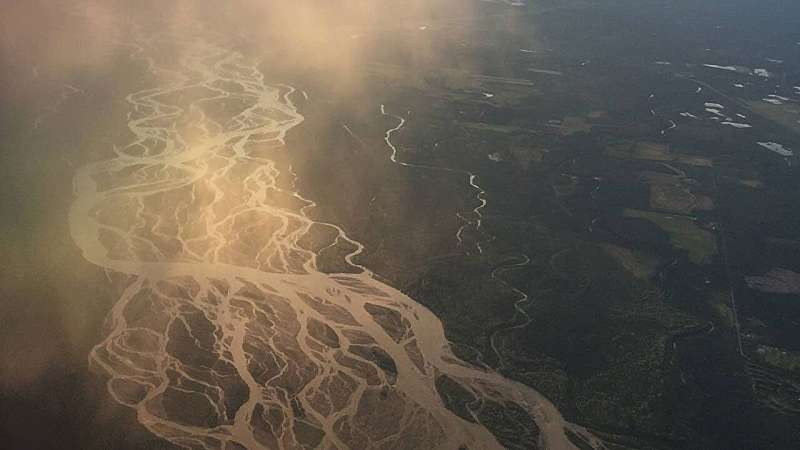
Geoscientists have long tried to answer a deceptively simple question: how does water shape the Earth’s surface? While rivers, streams, and floods are clearly powerful forces, measuring exactly how they move sediment and reshape landscapes has always been difficult. That challenge is now being tackled with help from space.
In 2022, NASA launched the Surface Water and Ocean Topography (SWOT) satellite, a mission designed to precisely measure the height and extent of water bodies across the planet. While the satellite was originally intended to map oceans, lakes, and rivers, researchers at Virginia Tech are now using its data in a new way: to study how flowing water actively sculpts the land beneath it.
This work is opening up fresh possibilities for a scientific field known as fluvial geomorphology, which focuses on how rivers and streams transport sediment, carve valleys, and evolve over time.
A Satellite Built to Measure Water, Repurposed to Study Land
The SWOT satellite was designed to answer a classic scientific question: what is the shape of water? Using advanced radar technology, SWOT measures water surface elevations with remarkable precision, allowing scientists to track changes in water levels across nearly all of Earth’s surface waters.
However, researchers realized that these measurements could reveal much more than water height alone. By analyzing changes in river slopes, widths, and elevations, scientists can infer how much energy water has and how effectively it can move sediment. That information is crucial for understanding how rivers reshape landscapes.
At Virginia Tech, geoscientists demonstrated that SWOT can be used to study river dynamics at a global scale, something that was previously out of reach. Their findings were published in GSA Today, a journal of the Geological Society of America, with Molly Stroud, a postdoctoral associate, serving as the first author.
The goal of the research was not to change the satellite’s mission, but to show that SWOT has far greater potential than many scientists initially realized.
What Is Fluvial Geomorphology?
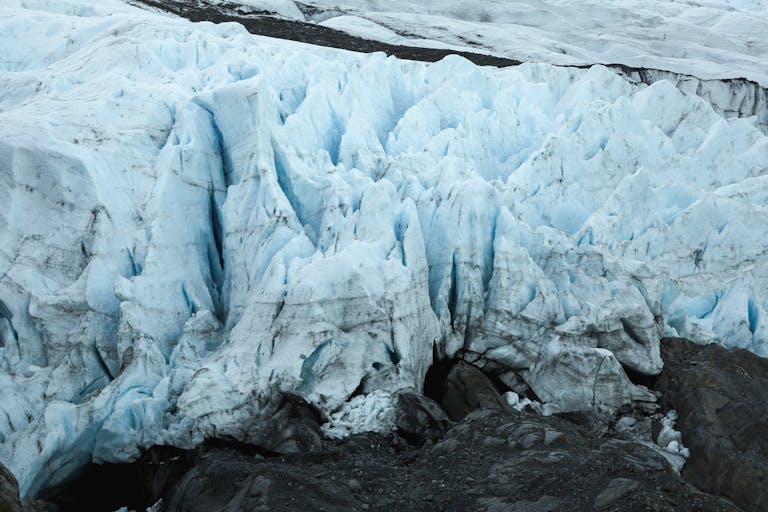
Fluvial geomorphology is the study of how flowing water shapes Earth’s surface. It examines processes such as erosion, sediment transport, channel formation, and floodplain development. Rivers are dynamic systems, constantly adjusting their shape based on water flow, sediment supply, and landscape slope.
Traditionally, fluvial geomorphologists relied on fieldwork and airborne surveys. Researchers would visit specific river locations, measure cross-sections, and collect data to estimate sediment transport and flood risks. While effective, these methods are time-consuming and limited to small areas.
SWOT changes that approach entirely by allowing scientists to study rivers worldwide, repeatedly and consistently, from orbit.
How SWOT Transforms River Research
One of the biggest advantages of SWOT is scale. Instead of focusing on a single river reach or watershed, scientists can now observe entire river systems across continents. This makes it possible to compare rivers in different climates, geological settings, and stages of development.
According to the Virginia Tech team, SWOT allows researchers to track how rivers evolve over time, not just how they look at one moment. This long-term perspective is critical for understanding processes such as erosion, sediment buildup, and channel migration.
The satellite’s ability to collect repeated measurements also helps scientists detect subtle changes that would otherwise go unnoticed, especially in remote or inaccessible regions.
Key Applications Demonstrated in the Study
To highlight SWOT’s capabilities, the researchers focused on three major applications relevant to fluvial geomorphology.
The first is large river dynamics. Large rivers play a major role in shaping landscapes and transporting sediment from continents to oceans. SWOT data allows scientists to analyze river slopes and water surface variations across long distances, providing insights into how these massive systems behave.
The second application involves sharp breaks in river profiles, such as waterfalls and steep drops. These features, often called knickpoints, can indicate tectonic activity, changes in rock type, or shifts in climate. SWOT’s high-resolution elevation data makes it easier to identify and study these abrupt changes along river courses.
The third application is shear stress, a key factor in sediment movement. Shear stress refers to the force exerted by flowing water on the riverbed. By estimating shear stress, scientists can better understand how much sediment a river is capable of transporting and where erosion or deposition is likely to occur.
Tracking Dam Failures from Space
Beyond natural river processes, the research also explored how SWOT data could be used to observe dam failures. Across the United States alone, there are thousands of dams, many of which are aging and increasingly vulnerable to extreme weather events.
When a dam fails, it can dramatically alter river channels and ecosystems downstream. Until now, monitoring these changes has been difficult and often reactive. SWOT offers the possibility of tracking such events more systematically, helping scientists assess both immediate impacts and long-term consequences.
As climate change brings more frequent and intense flooding, this capability could become especially valuable for infrastructure planning and environmental protection.
Why This Matters Beyond Academia
Understanding how water shapes land is not just a theoretical pursuit. Rivers influence flood risks, infrastructure stability, ecosystems, and water resources. Better data means better models, which in turn support more informed decision-making.
For example, knowing how sediment moves through a river system can help engineers design safer bridges and dams. It can also help ecologists understand habitat changes that affect fish and wildlife. In flood-prone regions, improved river monitoring can contribute to more accurate risk assessments.
SWOT’s global coverage ensures that even remote or under-studied river systems can be analyzed, reducing gaps in scientific knowledge.
How the SWOT Satellite Works
SWOT uses a Ka-band radar interferometer, known as KaRIn, to measure water surface elevations across a wide swath of Earth’s surface. Unlike traditional radar altimeters that only measure directly beneath the satellite, SWOT observes a broad area, allowing for detailed mapping of rivers and lakes.
This technology enables measurements of river width, slope, and height with unprecedented accuracy. Over time, repeated passes allow scientists to build a comprehensive picture of how water bodies change.
Looking Ahead
The Virginia Tech researchers emphasize that this work is just the beginning. As SWOT continues to collect data and build a longer observational record, its value for fluvial geomorphology will only grow.
Long-term datasets will allow scientists to answer complex questions about river evolution, sediment budgets, and landscape change. They will also help identify trends linked to climate variability and human activity.
For now, researchers are still exploring what this powerful new tool can do, but the early results make one thing clear: SWOT is transforming how scientists study rivers and the land they shape.
Research paper:
https://doi.org/10.1130/gsatg630a.1