Human-Driven Climate Change Is Drying Out the U.S. Southwest Faster Than Expected
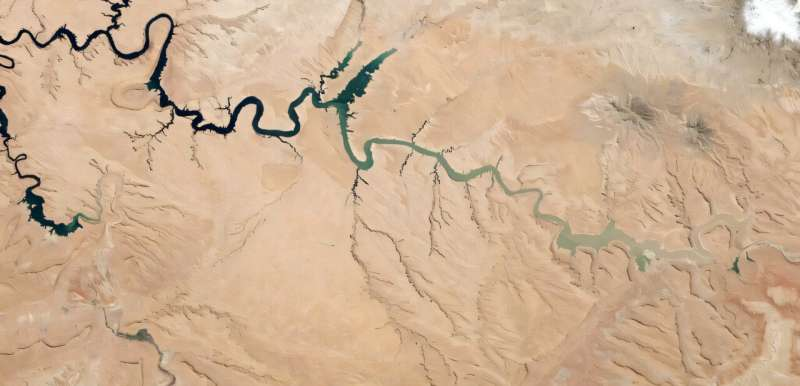
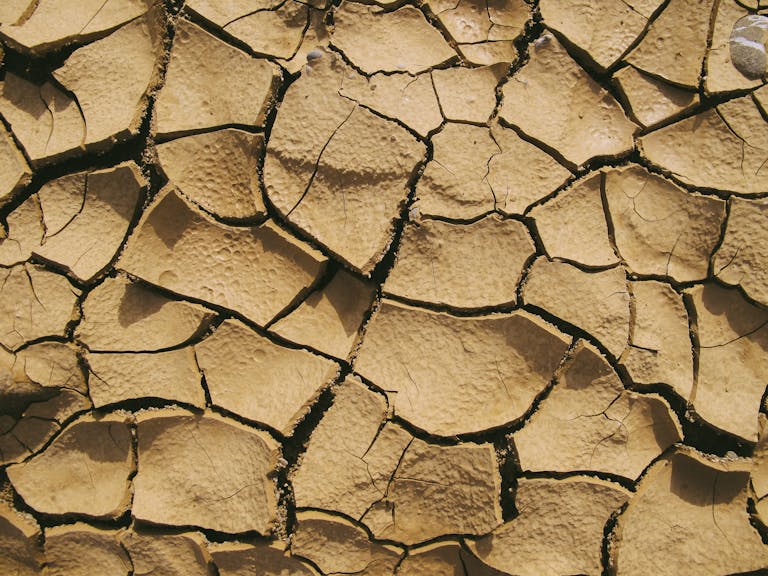
The U.S. Southwest has been dealing with drought for decades, but new scientific evidence makes one thing increasingly clear: this is no longer just a natural dry spell. According to the latest research, human-driven climate change is now a major reason why precipitation across the Southwest is disappearing, especially in the Colorado River Basin. What was once thought to be part of long-term natural climate variability is now understood to be a persistent, human-influenced shift toward a drier future.
A Megadrought That Refuses to End
The drought affecting the Colorado River Basin began around 1999 and has now lasted more than 25 years, making it one of the longest and most severe dry periods in recorded history. Scientists describe it as a megadrought, a term reserved for droughts that persist for decades rather than years.
The Colorado River Basin is not a minor regional system. It supplies water to seven U.S. states—Arizona, California, Colorado, Nevada, New Mexico, Utah, and Wyoming—as well as Mexico. More than 40 million people depend on it for drinking water, agriculture, industry, and energy production. When precipitation drops here, the consequences ripple far beyond the desert.
Rising Temperatures Were Only Part of the Story
For years, scientists have agreed that rising temperatures caused by greenhouse gas emissions were worsening drought conditions in the Southwest. Warmer air increases evaporation, dries out soils faster, and reduces how much water actually reaches rivers and reservoirs. This effect alone has significantly reduced the flow of the Colorado River.
What remained uncertain until recently was whether the decline in precipitation itself—rain and snow—was also linked to climate change. Many researchers believed reduced rainfall could still be part of natural climate cycles that might eventually reverse.
That assumption has now changed.
New Evidence Points Directly to Human Influence
Climate scientists Jonathan Overpeck of the University of Michigan and Brad Udall of Colorado State University have been tracking drought conditions in the Colorado River Basin for years. Their latest update, published as part of the Colorado River Research Group’s annual report, reaches two major conclusions:
First, the long-term decline in precipitation across the Southwest is also driven by human activity, not just rising temperatures.
Second, this decline is unlikely to reverse on its own unless climate change is significantly slowed.
The researchers reached these conclusions after incorporating an additional year of data and drawing on new studies that improved climate modeling and expanded historical context.
Why This Conclusion Is Stronger Than Before
Two recent scientific studies played a key role in strengthening the case for human-driven precipitation loss.
One study, led by Jeremy Klavans at the University of Colorado Boulder, improved regional climate models. These refined models better simulate how warming alters atmospheric circulation patterns over the Southwest. The results show that climate change is reshaping weather systems in ways that reduce winter storms and snowfall.
Another study, led by Victoria Todd at the University of Texas at Austin, used paleoclimatology—the study of ancient climates—to examine temperature trends going back thousands of years. By analyzing natural climate records such as tree rings and sediment data, researchers could compare today’s conditions with long-term historical patterns. The findings show that current warming and drying trends fall outside the range of normal natural variability.
Together, these studies removed much of the remaining doubt about whether precipitation decline could simply “bounce back.”
Colorado River Flows Are Far Below What’s Needed
For the Colorado River Basin to reliably meet water demand, the river’s natural flow should average about 16.5 million acre-feet per year. To put that into perspective, that’s roughly the volume of eight million Olympic-sized swimming pools.
Today, average flows are closer to 12 million acre-feet, and sometimes even lower. This shortfall explains why major reservoirs like Lake Powell and Lake Mead have dropped to historically low levels over the past decade.
The Vanishing Safety Buffer
One of the most concerning findings is that the system’s built-in safety buffer is essentially gone. Over the past 26 years, reservoir storage has been steadily depleted to compensate for dry years. That stored water once provided flexibility during droughts.
Now, there is little room left for error.
According to the researchers, one more dry winter could trigger water usage cuts on a scale never seen before in the region. These cuts would affect cities, farms, tribal nations, and power generation facilities that rely on hydroelectric dams.
Natural Variability Still Exists, but the Trend Is Clear
Scientists emphasize that natural variability has not disappeared. There will still be wetter years and snowier winters from time to time. However, the long-term trend strongly favors drier conditions, with more dry winters than wet ones becoming the new norm.
This means occasional good years will no longer be enough to offset long-term losses in precipitation and snowpack.
Climate Change Is Really About Water
One of the most important takeaways from this research is that climate change should not be viewed only as a temperature problem. It is fundamentally a water problem.
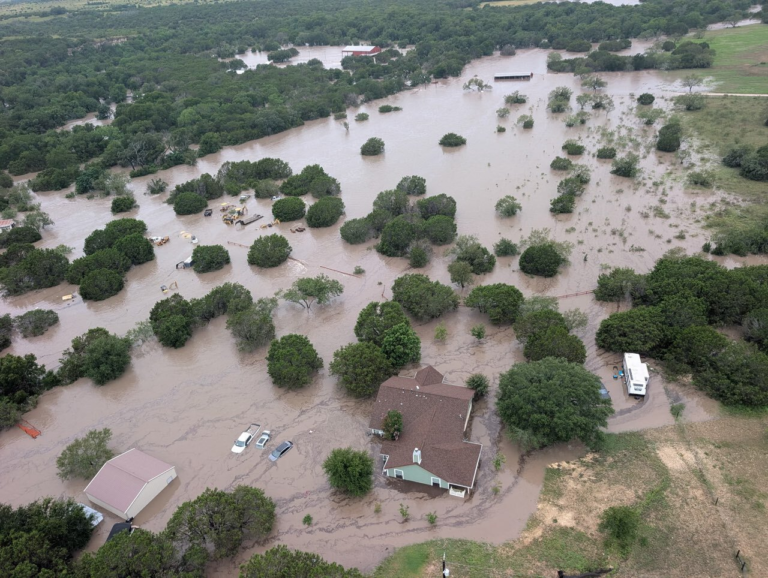
Warmer air holds more moisture, which leads to more intense storms and floods in some regions, while pulling moisture away from others. In the Southwest, this shift results in longer droughts, reduced snowpack, earlier snowmelt, and declining river flows.
The same processes contributing to drought are also linked to more severe wildfires, since dry vegetation becomes easier to ignite and harder to control.
What This Means Beyond the Southwest
While the Colorado River Basin is a high-profile example, the implications are global. Climate-driven changes to the water cycle are already affecting food systems, ecosystems, and infrastructure worldwide. Regions dependent on snow-fed rivers are especially vulnerable.
The Southwest’s experience offers a preview of what happens when long-term warming intersects with water scarcity and growing demand.
Can This Trend Be Reversed?
According to the researchers, the causes of the precipitation decline are now well understood—and that means solutions exist. Reducing greenhouse gas emissions is the primary lever for slowing warming and stabilizing long-term precipitation patterns. While progress has been uneven, scientists stress that it is not too late to prevent the most severe outcomes.
The message from the data is straightforward: the future of water in the Southwest depends on decisions being made right now, both locally and globally.
Additional Context: Why Winter Snow Matters So Much
In the Colorado River Basin, winter snowpack is far more important than rainfall. Snow acts as a natural reservoir, slowly releasing water during spring and summer when demand is highest. Warmer winters mean more precipitation falls as rain instead of snow, and it runs off quickly rather than being stored.
This shift reduces water availability precisely when it is needed most, compounding the effects of declining total precipitation.
The Bottom Line
The Southwest’s drought is no longer just about heat intensifying dry conditions. Human-driven climate change is actively reducing how much precipitation the region receives, locking in a drier future unless emissions are curtailed. With reservoir levels low and demand high, the margin for error has never been smaller.
Understanding this reality is essential for policymakers, water managers, and residents alike, because the choices made today will determine whether the region adapts—or faces even deeper water shortages in the decades ahead.
Research reference:
https://coloradoriverresearchgroup.org/colorado-river-insights-2025/