Methyl Bromide Pesticide Is Still Widely Used Across California, Raising Serious Health Concerns
A pesticide that the U.S. government recommended phasing out more than two decades ago is still being used across large parts of California, and a new academic study suggests that its continued presence may pose significant health risks, especially for children and people living near ports and fumigation facilities.
The chemical in question is methyl bromide, often abbreviated as MeBr. It is a highly toxic fumigant known for its developmental, neurological, and respiratory impacts, and it has also been linked to cancer and organ damage. Researchers from UCLA and UC Irvine recently took a deep look at how and where this pesticide is still being used in California, and what they found raises important questions about oversight, public health, and environmental justice.
A Chemical Meant to Be Phased Out, But Still Very Much Around
Back in 2005, the U.S. government recommended that methyl bromide be phased out because of its well-documented health and environmental harms. The chemical is not only dangerous to human health but is also an ozone-depleting substance, which led to global efforts under the Montreal Protocol to reduce and eliminate its use.
In California, most agricultural uses of methyl bromide did come to an end by 2015. However, the story didn’t stop there. Certain exceptions were carved out, particularly for non-agricultural fumigation, such as treating freight containers, shipping goods, and imported commodities to prevent the spread of pests.
These exceptions are the focus of a new study titled “Exceptional use: examining methyl bromide applications in California 2016–2022,” published in the journal Environmental Research Communications.
How Widespread Is Methyl Bromide Use Today?
According to the study, methyl bromide was used in 36 out of California’s 58 counties between 2016 and 2022. These counties are home to more than 35 million people, meaning a majority of Californians live in areas where this toxic pesticide has been applied in recent years.
The counties reporting the highest overall use of methyl bromide across all categories include:
- Siskiyou
- Merced
- Stanislaus
- San Joaquin
- Los Angeles
The reasons for use vary by region. In the more agricultural counties, such as Siskiyou and San Joaquin, methyl bromide is still used mainly for soil fumigation and nursery or greenhouse operations. In contrast, Los Angeles County stands out for a different reason: the overwhelming majority of its methyl bromide use comes from non-agricultural fumigation, primarily related to shipping and freight handling.
Ports and Shipping Hubs Are Key Hotspots
One of the most concerning findings from the study is where the highest exposure risks appear to be concentrated. Because methyl bromide is still allowed for treating shipping containers, port communities are experiencing some of the most significant impacts.
Areas highlighted by the researchers include:
- Long Beach
- Wilmington
- San Pedro
These neighborhoods are located near the Ports of Los Angeles and Long Beach, two of the busiest shipping hubs in the United States.
Air monitoring data collected during 2023 and 2024 in western Long Beach revealed that average methyl bromide levels were about 2.1 parts per billion (ppb). For comparison, California’s recommended long-term exposure level is 1.2 ppb. On some days, concentrations were much higher, with hourly spikes exceeding 900 ppb.
To put this into context, researchers calculated a hazard quotient of 1.6 for the area. Any value above 1.0 indicates a heightened risk of adverse health effects.
Why These Exposure Levels Matter
Methyl bromide is a potent inhalation toxin. Short-term exposure can cause headaches, dizziness, nausea, and respiratory irritation, while long-term or high-level exposure has been linked to neurological damage, lung injury, and harm to the kidneys, liver, and skin.
Children face even greater risks. Because they breathe more air relative to their body weight than adults, their exposure levels are proportionally higher. Despite this, inhalation exposure to fumigation pesticides like methyl bromide has been rarely studied in children, making the new findings particularly troubling.
Previous research in California has already shown that:
- Living near areas where methyl bromide is applied is associated with restricted fetal growth
- Higher ambient levels of methyl bromide are linked to increased emergency department visits for asthma among children
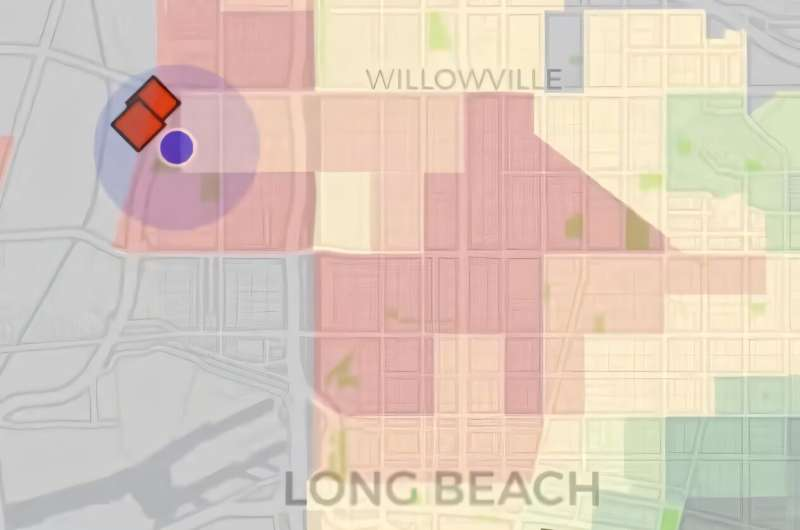
In western Long Beach, the situation is especially concerning because fumigation facilities are located near an elementary school, hundreds of homes, parks, and neighborhoods already ranked in the top 25% statewide for environmental burden under CalEnviroScreen 4.0.
Mapping the Risk Across California
To conduct their analysis, the researchers pulled data from several sources, including:
- The California Department of Pesticide Use Registry
- The California Air Resources Board
- Local monitoring data from the Ports of Los Angeles and Long Beach
- Federal records from the U.S. Department of Agriculture
They then used standardized mapping techniques to visualize methyl bromide use across all 58 counties and to identify clusters of high exposure risk. Maps included buffers showing how close fumigation sites were to schools and residential areas, making the potential human impact impossible to ignore.
Data Gaps and Monitoring Limitations
While the findings are alarming, the researchers also acknowledge important limitations in the available data. For example, in the Long Beach area, regional air monitoring relies on a single monitor, and consistent data has only been available since 2023.
This lack of comprehensive monitoring means that actual exposure levels could be higher or more widespread than currently documented. The study argues that better coordination between federal, state, and local agencies is urgently needed, along with expanded air monitoring and clearer warning systems for nearby residents.
Are There Safer Alternatives?
One of the key questions raised by the study is whether continued reliance on methyl bromide is truly necessary. According to the researchers, alternatives do exist, particularly for shipping and transportation-related fumigation. These include other chemical treatments, controlled atmospheres, and non-chemical pest management strategies that pose lower risks to human health.
Given that methyl bromide has already been largely replaced in California’s fields and orchards, the authors argue that there is no clear justification for its continued heavy use in port and freight operations without stronger safeguards.
What This Means Going Forward
The study makes it clear that the health burdens of methyl bromide use are not evenly distributed. Communities near fumigation sites, especially in port areas, are bearing a disproportionate share of the risk. At the same time, gaps in oversight, limited monitoring, and regulatory exemptions have allowed a chemical meant to be phased out to remain part of everyday operations.
For researchers, policymakers, and residents alike, this raises a fundamental question: how long should “exceptional use” continue when the health risks are so well established?
Research paper:
https://doi.org/10.1088/2515-7620/ae3227