Microplastics in the Ocean May Be Quietly Distorting Our Understanding of the Carbon Cycle
The ocean plays a central role in regulating Earth’s climate by absorbing, storing, and redistributing carbon. Scientists rely on precise measurements of oceanic carbon to understand how much carbon is locked away in marine systems and how much eventually returns to the atmosphere. However, new research from Stony Brook University suggests that this foundational understanding may be partially flawed — not because of bad science, but because of something increasingly common and hard to avoid: microplastics.
A recent study conducted by researchers at the School of Marine and Atmospheric Sciences (SoMAS) at Stony Brook University reveals that microplastics present in ocean samples can interfere with standard carbon measurement techniques. When this happens, carbon released from plastics is mistakenly counted as natural organic carbon, potentially skewing decades of marine carbon data and the climate models built upon it.
Why the Ocean Carbon Cycle Matters
The ocean is Earth’s largest active carbon sink, absorbing roughly a quarter of human-produced carbon dioxide each year. Carbon enters marine systems through multiple pathways — photosynthesis by phytoplankton, sinking organic particles, sediment burial, and exchanges between the ocean and atmosphere. Scientists track these movements using measurements of particulate organic carbon (POC) found in seawater and sediments.
Accurate POC measurements are essential. They inform climate models, guide predictions about ocean productivity, and help researchers understand how marine ecosystems respond to warming, acidification, and pollution. Even small measurement errors can cascade into large-scale misunderstandings when applied globally.
Where Microplastics Enter the Picture
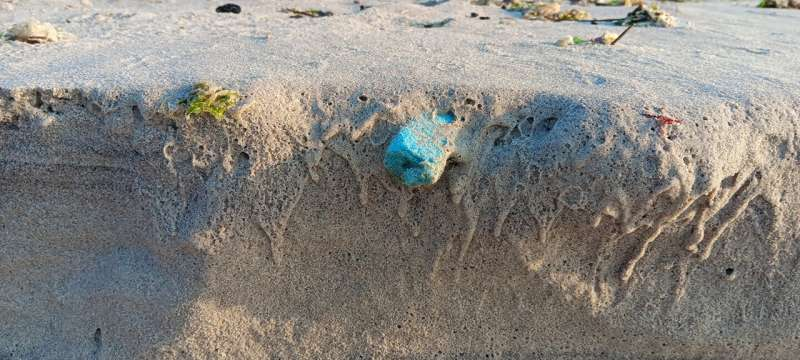
Microplastics are tiny plastic fragments, generally smaller than 5 millimeters, that originate from the breakdown of larger plastic items or are manufactured at small sizes for industrial and consumer products. They enter the ocean through rivers, wastewater, storm runoff, and even atmospheric deposition, and they are now found virtually everywhere — from coastal waters to the deep sea.
Because of their size, microplastics often end up mixed with natural organic particles when scientists collect ocean samples. This is where the problem begins.
How Carbon Is Normally Measured
To measure carbon content, researchers commonly use combustion-based analytical techniques. In these methods, samples are heated to very high temperatures, causing carbon-containing materials to burn and release carbon dioxide. Instruments then quantify how much carbon was present based on the gas released.
The issue, as the SoMAS researchers discovered, is that these tools cannot tell the difference between carbon from natural biological sources and carbon from plastics. Both burn, both release carbon dioxide, and both are counted as organic carbon.
What the Study Found
The research team applied a range of analytical tools routinely used in marine science to samples containing both sedimentary organic matter and microplastics. They then calculated the carbon yield contributed by each component.
Their findings were striking. Even very small amounts of microplastic contamination could significantly alter carbon measurements. In some experimental cases, just 1% microplastic content in a sample contributed up to 40% of the measured carbon signal. This means a sample could appear far richer in organic carbon than it truly is.
The researchers also examined how microplastics affect radiocarbon dating, a method used to estimate the age of carbon. Because plastics are derived from fossil fuels, they contain no radiocarbon. When plastic carbon is mixed into a sample, it can make organic material appear thousands of years older than it actually is, dramatically distorting interpretations of carbon cycling and storage.
Why This Matters for Climate Science
Carbon measurements collected from oceans over the past several decades form the backbone of many global climate models. If some of these measurements were unknowingly influenced by microplastic contamination, then parts of our understanding of how carbon moves through marine systems may be incomplete or biased.
This does not mean all past data is invalid, but it does suggest that microplastics represent a hidden variable that scientists have only recently begun to account for. Subtle biases introduced over time could affect estimates of carbon sequestration rates, organic matter turnover, and even the ocean’s overall role in slowing climate change.
Contamination Can Happen Easily
One of the more concerning aspects of the study is how easily microplastics can enter samples. Fibers from clothing, fragments from plastic lab equipment, and particles introduced during sampling, storage, or processing can all become embedded in samples without being noticed. Once there, they are extremely difficult to separate from natural particles.
The researchers emphasize that this contamination is usually unintentional, but its effects are real and measurable.
A Call to Rethink Best Practices
The authors of the study believe their work is the first to quantitatively demonstrate how plastic contamination can affect environmental organic matter analysis at this level of detail. They argue that their findings highlight the urgent need to re-evaluate best practices for collecting, handling, and analyzing samples used for carbon measurements.
Possible solutions may include improved contamination controls, alternative analytical methods, or new protocols specifically designed to detect and remove microplastics before analysis. However, implementing these changes across global monitoring programs will take time.
What Are Microplastics, Exactly?
Microplastics come in many forms, including fragments, beads, films, and fibers. Some are intentionally manufactured, such as microbeads once used in cosmetics, while others form when larger plastic items degrade due to sunlight, heat, and mechanical stress.
Once in the ocean, microplastics can persist for decades or longer, interacting with marine organisms and transporting chemical pollutants. Their small size makes them particularly difficult to track and remove.
Microplastics and Marine Biogeochemistry
Beyond measurement issues, microplastics may also play a more active role in marine biogeochemical cycles. Some studies suggest they can act as surfaces for microbial growth, influence nutrient availability, or alter how organic matter sinks through the water column. While this Stony Brook study focused specifically on measurement distortion, it adds to a growing body of evidence that microplastics are not passive bystanders in marine systems.
Looking Ahead
As microplastic pollution continues to increase, understanding its impacts — both physical and analytical — becomes increasingly important. This research serves as a reminder that even our tools and methods must evolve alongside changing environmental conditions.
For marine scientists and climate researchers, the message is clear: microplastics are not just an ecological problem, but also a scientific blind spot that must be addressed to ensure accurate data and reliable climate predictions.
Research paper: https://journals.plos.org/plosone/article?id=10.1371/journal.pone.0334546