New Study Shows the Rate of U.S. Coastal Sea Level Rise Has More Than Doubled Over the Past Century
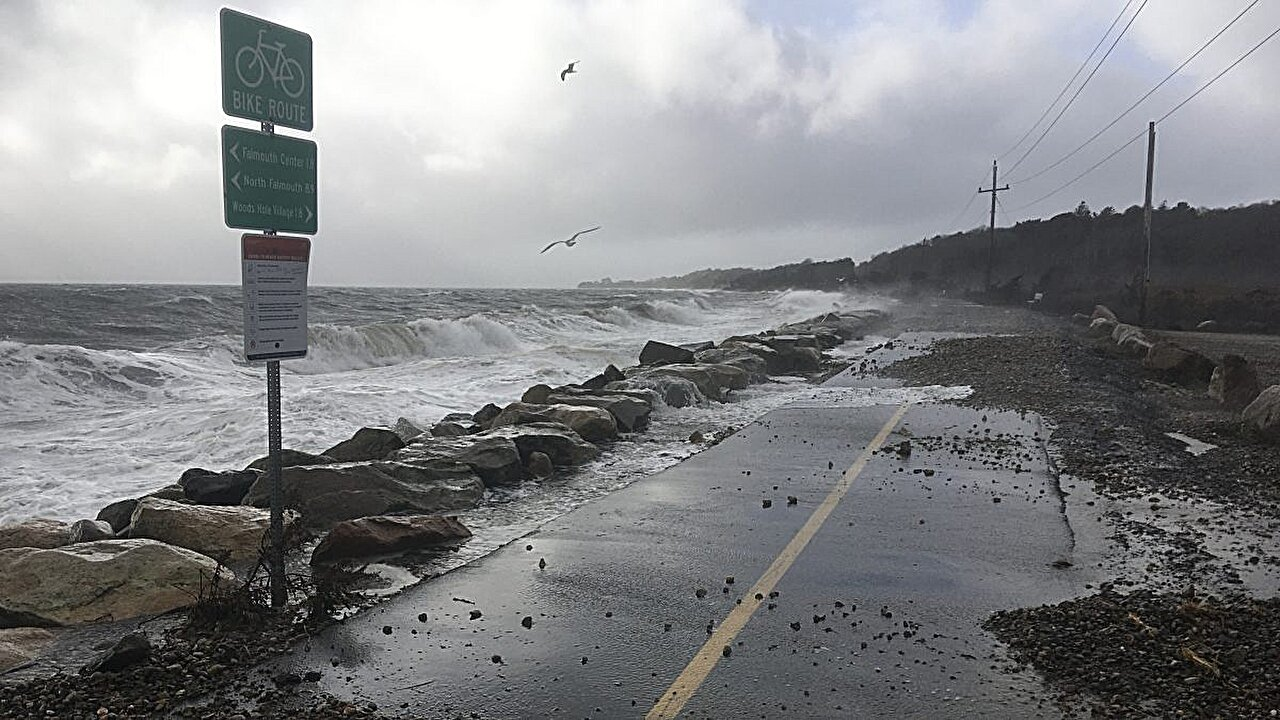
A new scientific study has found that U.S. coastal sea levels are rising much faster than they did a century ago, directly challenging recent claims by the U.S. Department of Energy (DOE) that no clear acceleration can be seen in long-term measurements. According to the research, the rate of sea level rise along the U.S. coastline has more than doubled since 1900, providing strong evidence that climate-driven changes are already reshaping America’s shores.
The study was led by Christopher G. Piecuch, a physical oceanographer at the Woods Hole Oceanographic Institution (WHOI), and published in the peer-reviewed journal AGU Advances in 2025. It draws on one of the most comprehensive analyses of U.S. tide gauge data to date, offering a stark contrast to a DOE report released earlier in July 2025.
How Fast Are U.S. Sea Levels Rising?
The findings are straightforward but significant. The study shows that around 1900, U.S. coastal sea levels were rising at a rate of less than 2 millimeters per year. By 2024, that rate had climbed to more than 4 millimeters per year. In simple terms, the pace of sea level rise has more than doubled over roughly 125 years.
When those yearly increases are added up, the total change becomes even more striking. Over that period, U.S. coastal sea level has risen by about 40 centimeters, or nearly 16 inches. That amount of rise already has real-world consequences, including more frequent flooding, higher storm surge impacts, and long-term risks to coastal infrastructure and ecosystems.
The study concludes that current rates of sea level rise are well above the historical average, leaving little doubt that acceleration is underway.
Why This Study Matters
This research gained particular attention because it directly contradicts a July 2025 DOE report, which stated that U.S. tide gauge data “in aggregate show no obvious acceleration in sea level rise beyond the historical average rate.” According to Piecuch’s analysis, that conclusion is based on an incomplete and potentially misleading dataset.
The DOE report relied on data from only five tide gauge locations, a small sample given the size and diversity of the U.S. coastline. The new study argues that those locations are heavily influenced by local land movement, making them poor indicators of large-scale sea level trends.
In contrast, Piecuch’s research uses data from 70 tide gauges distributed along the entire contiguous U.S. coast. Each station included in the analysis has more than 30 years of continuous data, ensuring both geographic breadth and long-term consistency.
By looking at all available observations together, the study finds a clear and statistically significant acceleration in U.S. coastal sea level rise.
The Problem With Limited Tide Gauge Data
One of the central critiques of the DOE report is its reliance on tide gauges that are strongly affected by local vertical land motion. Vertical land motion refers to land rising or sinking due to geological processes or human activity, which can distort relative sea level measurements.
Some of the locations highlighted in the DOE report, such as Grand Isle, Louisiana, and Galveston, Texas, are known for significant land subsidence. In these areas, factors like sediment compaction, Mississippi River dynamics, and oil and gas extraction have caused coastal land to sink over time.
In places like Grand Isle, land subsidence was particularly intense during the 1960s and 1970s, driven by both natural processes and industrial activity. These local effects can exaggerate or mask sea level trends when viewed in isolation.
The new study acknowledges that vertical land motion plays an important role in relative sea level changes. However, it also shows that land motion alone cannot explain the widespread acceleration observed across dozens of sites. When data from many locations are analyzed together, the signal of accelerating sea level rise becomes unmistakable.
Climate Change as the Primary Driver
The study links the acceleration of U.S. coastal sea level rise to well-understood global climate processes. As the planet warms, oceans absorb heat and expand, a process known as thermal expansion. At the same time, glaciers and ice sheets continue to lose mass, adding more water to the oceans.
These global drivers are consistent with what scientists observe worldwide, not just in the United States. The study notes that the U.S. coastal trend mirrors global sea level acceleration, reinforcing the conclusion that climate change is the dominant cause.
Importantly, the research emphasizes that the observed acceleration cannot be dismissed as a short-term fluctuation or a statistical artifact. The pattern persists across regions and time periods, making it highly unlikely to be a coincidence.
Why Accelerating Sea Level Rise Matters
Rising sea levels are not just a future concern. Even modest increases in the rate of rise can dramatically increase the frequency of coastal flooding, especially during high tides and storms. Areas that once experienced flooding a few times per year may now face it dozens of times annually.
Higher baseline sea levels also amplify storm surges, pushing water farther inland during hurricanes and nor’easters. Over time, this leads to coastal erosion, saltwater intrusion into freshwater supplies, and mounting pressure on roads, homes, and public infrastructure.
From wetlands to barrier islands, many coastal ecosystems are struggling to keep pace with the rising water. When sea level rise accelerates, these systems have less time to adapt, increasing the risk of permanent loss.
How Tide Gauges Help Scientists Track Change
Tide gauges have been quietly measuring sea level for more than a century, making them one of the most valuable tools for understanding long-term coastal change. While satellite data now provide global coverage, tide gauges offer high-precision, location-specific records that stretch back to the late 19th and early 20th centuries.
By combining dozens of these records, scientists can separate local effects from broader trends. This approach is what allowed Piecuch’s study to identify acceleration that might be missed when focusing on only a handful of sites.
The study highlights the importance of using comprehensive datasets when making national-level conclusions, especially on issues as consequential as sea level rise.
A Clear Message From the Data
The central takeaway from this research is simple: U.S. coastal sea level rise is accelerating, and the rate today is far higher than it was a century ago. Claims that suggest otherwise, when based on limited or unrepresentative data, risk downplaying a very real and growing challenge.
As Piecuch’s analysis shows, when all the evidence is considered together, the trend becomes clear. The U.S. coastline is entering a period of faster sea level rise, with implications that will shape coastal planning, infrastructure investment, and climate adaptation efforts for decades to come.
For readers interested in exploring the science directly, the full research paper is available here:
https://doi.org/10.1029/2025AV002018