Northern Arizona University Releases 13 Years of the Most Detailed U.S. CO₂ Emissions Data Ever Created
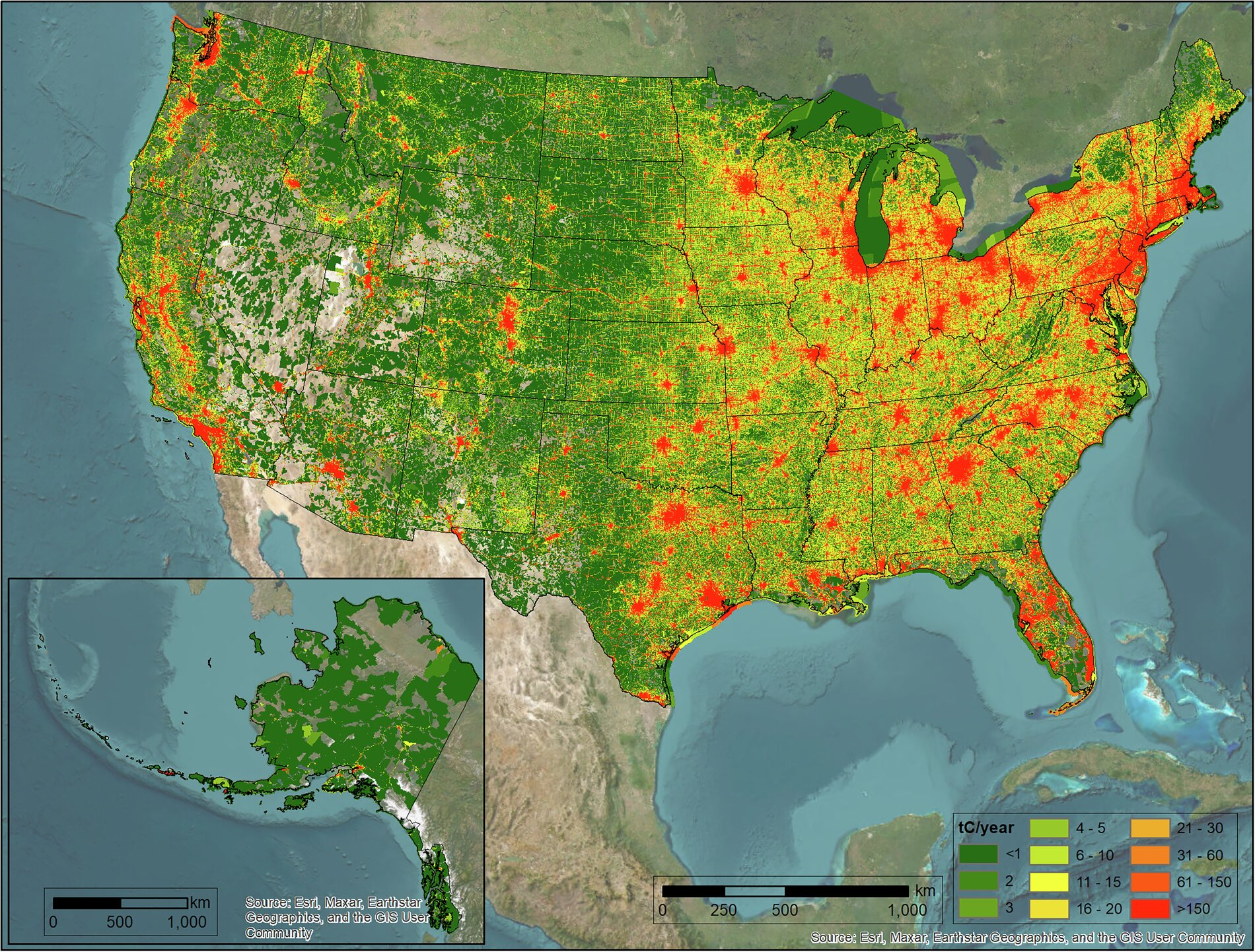
Northern Arizona University (NAU) has released a major new scientific dataset that offers one of the most detailed pictures of carbon dioxide emissions in U.S. history. Covering a 13-year period from 2010 to 2022, the dataset provides high-resolution, location-specific estimates of fossil fuel CO₂ emissions across the entire United States, including Alaska. The work is part of a long-running research effort led by Professor Kevin Gurney and was formally published in the journal Scientific Data in 2025.
This release marks the first installment in a broader series of public data products that aim to make emissions information more transparent, more precise, and more useful for policymakers, businesses, researchers, and local communities.
What Exactly Was Released and Why It Matters
The newly published dataset is known as Vulcan version 4.0, an updated and expanded version of the Vulcan emissions modeling system that has been under development for more than two decades. This version delivers annual CO₂ emissions estimates for every year between 2010 and 2022, mapped at an exceptionally fine spatial resolution of 1 square kilometer per grid cell.
What makes this release especially significant is its level of detail. Instead of offering only national or state-level totals, the Vulcan system pinpoints emissions based on where and when fossil fuels are actually burned. That includes power plants, factories, homes, commercial buildings, roadways, and other infrastructure tied to coal, oil, and natural gas use.
According to the research team, this level of detail is critical at a time when access to reliable climate data is becoming increasingly uncertain. With proposed changes to federal greenhouse gas reporting programs and ongoing science funding pressures, independently produced datasets like Vulcan are becoming more important than ever.
The Scope of the Data: What’s Included
The Vulcan 4.0 dataset focuses specifically on fossil fuel carbon dioxide (FFCO₂) emissions. These are emissions that come directly from the combustion of fossil fuels and from industrial processes such as cement production. The data does not include methane or other greenhouse gases, nor does it attempt to quantify natural carbon sinks.
Key characteristics of the dataset include:
- Time span: Annual emissions from 2010 through 2022
- Geographic coverage: The contiguous United States and Alaska
- Spatial resolution: 1 km × 1 km grid cells
- Units: Metric tons of carbon per square kilometer (tC/km²)
- Sector coverage: Power generation, industrial sources, residential and commercial buildings, transportation, and cement production
Each emission estimate is tied to specific locations and activities, allowing users to see how emissions change over time at scales as small as individual neighborhoods or industrial zones.
How the Vulcan System Works
The Vulcan system aggregates and harmonizes data from a wide range of authoritative sources, including federal energy statistics, emissions inventories, fuel consumption records, traffic data, and power plant monitoring systems. These inputs are then processed using advanced computational models to distribute emissions across time and space.
The scale of this work is enormous. The final output consists of many terabytes of data, and generating it requires access to high-performance computing systems. The modeling process captures emissions down to city blocks, road segments, and individual facilities, offering what researchers describe as unprecedented resolution.
This latest version represents the fourth major release of the Vulcan system and reflects years of methodological refinement and validation.
Scientific Validation and Reliability
One of the strengths of the Vulcan dataset is its rigorous validation process. Emissions estimates are routinely compared with direct atmospheric measurements and other independent datasets. According to the research team, Vulcan’s estimates have shown strong agreement with observed atmospheric CO₂ concentrations, reinforcing confidence in the system’s accuracy.
Professor Gurney, who has authored more than 180 scientific publications, has also contributed to major national assessments, including a recent U.S. National Academy report on greenhouse gas emissions for decision-making. His work on the Vulcan and related Hestia projects has become foundational for researchers studying carbon emissions at fine spatial scales.
Why This Data Is Important for Policy and Planning
One of the main goals of releasing the Vulcan dataset is to empower better environmental decision-making. When emissions data is coarse or outdated, it becomes difficult to design effective climate policies or measure whether existing strategies are working.
With this dataset, cities can identify emissions hotspots, businesses can better understand their carbon footprints, and policymakers can craft targeted interventions rather than relying on broad, one-size-fits-all approaches. The data also supports the development of carbon trading markets, climate-aligned investments, and localized emissions reduction strategies.
The researchers emphasize that making this data publicly accessible is not just a scientific priority, but a civic one. Transparent emissions data helps ensure accountability and enables informed participation in climate-related discussions.
Challenges Facing Climate Data Collection
Despite the success of this release, the research team has been candid about the challenges involved. Funding cuts and political uncertainty have slowed innovation and made long-term planning more difficult. Nevertheless, the team remains committed to maintaining and expanding the dataset.
This commitment is especially important in the context of broader discussions about the future of federal climate data reporting. Independent academic efforts like Vulcan provide continuity and reliability when official reporting mechanisms face disruption.
What’s Coming Next
The 2010–2022 dataset is only the beginning. Future Vulcan releases are expected to include even more granular information, such as:
- Neighborhood-level emissions estimates
- City-specific emissions profiles
- Road-segment-level vehicle emissions
- Individual industrial facility emissions
These upcoming releases will further enhance the ability of researchers and decision-makers to understand emissions patterns at the scales where real-world interventions occur.
A Broader Look at CO₂ Emissions and Why Resolution Matters
Carbon dioxide remains the largest contributor to human-driven climate change, primarily due to fossil fuel combustion. While national emissions totals are useful for international reporting, climate impacts and solutions are often local. Heat islands, air quality issues, and infrastructure planning all depend on understanding emissions at fine spatial scales.
High-resolution datasets like Vulcan help bridge the gap between global climate science and local action. They allow communities to see not just how much carbon is emitted, but where it comes from, how it changes over time, and which sectors are driving those changes.
As climate policies increasingly move toward localized implementation, the demand for this kind of data will only grow.
Research Reference
Vulcan version 4.0 high-resolution annual carbon dioxide emissions in the U.S. for the 2010–2022 time period
https://doi.org/10.1038/s41597-025-06391-w