Ocean Sediments Play a Crucial Role in the Survival of Northeastern US Salt Marshes
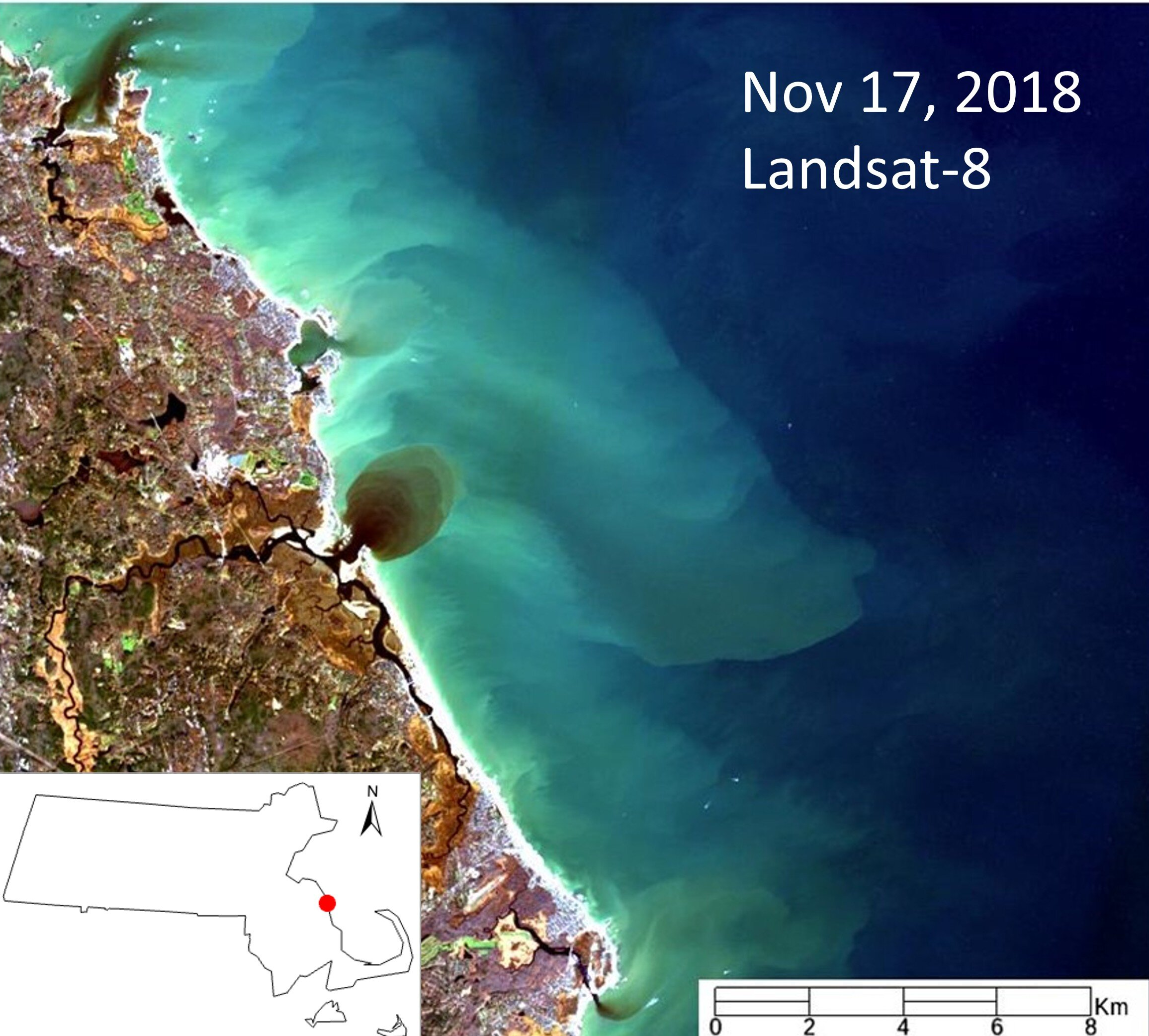
Salt marshes along the northeastern coast of the United States are far more dependent on the ocean than scientists previously believed. A recent scientific study has revealed that ocean-sourced sediments, not just river sediments, are a critical factor in helping these marshes survive in an era of accelerating sea-level rise. This finding reshapes long-held assumptions about how salt marshes maintain their elevation and highlights new challenges—and opportunities—for coastal management.
Salt marshes are among the most valuable coastal ecosystems on Earth. They act as natural buffers against flooding, absorbing storm surges and protecting coastal towns. They store large amounts of blue carbon, helping slow climate change, and they provide essential habitat for fish, birds, and countless other species. Despite their importance, many salt marshes are struggling to survive as rising seas threaten to drown them.
For a salt marsh to remain healthy, it must continuously build elevation at roughly the same pace as sea-level rise. This process depends heavily on a steady supply of sediment. If sediment accumulation slows or stops, the marsh surface sinks relative to the water level, leading to increased flooding, vegetation loss, and eventual collapse.
For decades, scientists largely assumed that rivers were the primary source of sediment feeding salt marshes. This assumption made intuitive sense, as rivers carry mud, sand, and silt downstream from inland landscapes to the coast. However, previous research showed a major problem with this idea: many northeastern rivers simply do not carry enough sediment to sustain nearby marshes over the long term.
That realization pushed researchers to look elsewhere for answers. The ocean, long suspected but difficult to measure, emerged as a possible missing piece of the puzzle.
A research team led by the University of Massachusetts Amherst and the Massachusetts Geological Survey set out to quantify how much sediment the ocean actually supplies to salt marshes in the Northeast. Their work was recently published in Geophysical Research Letters and represents one of the most detailed regional analyses of coastal sediment dynamics to date.
One of the biggest challenges in studying ocean sediment is measurement. Rivers are relatively easy to monitor: scientists can place sensors at fixed locations and record how much sediment flows past. Coastal waters, by contrast, are dynamic and chaotic. Sediment moves constantly under the influence of waves, tides, storms, and currents, spreading across wide areas that are difficult to monitor using traditional instruments alone.
To overcome this challenge, the research team turned to satellite remote sensing. Using more than four decades of data from the LANDSAT Earth-observing satellite program, they developed a sophisticated dataset capable of estimating suspended sediment concentrations in coastal waters with high accuracy. This approach allowed them to observe long-term patterns that had previously remained invisible.
With this satellite-derived dataset, the researchers analyzed 103 salt marshes stretching from New York City to the Canadian border. Their findings were striking. The ocean was confirmed as a major source of sediment for many marshes across the region, especially in areas where rivers run relatively clear.
Even more revealing was a strong north–south divide in marsh health and sediment availability. Marshes located in Cape Cod Bay and northern New England are generally receiving enough sediment to keep pace with rising sea levels. In contrast, marshes in southern New England are showing clear signs of stress.
Historical satellite imagery revealed that coastal sediment supply in southern New England has been declining steadily since around 2000. As sediment availability drops, these marshes struggle to maintain elevation, making them increasingly vulnerable to flooding and vegetation loss.
The researchers point to several likely reasons for this decline, many of which are tied to human activity. Coastal armoring, such as sea walls and hardened shorelines, prevents natural erosion of coastal bluffs that would otherwise supply sediment to the nearshore environment. Dredging operations, which remove sediment from channels and harbors and often dispose of it offshore, further reduce the amount of material available to nourish marshes.
In addition to direct human intervention, changes in physical ocean processes may also be playing a role. The study notes a gradual weakening of wave energy in parts of the region, which reduces the ocean’s ability to stir up and transport sediment toward the coast. Together, these factors create a sediment deficit that threatens the long-term survival of southern New England marshes.
If current trends continue, many of these marshes may simply not be able to keep up with accelerating sea-level rise. The researchers warn that without sufficient sediment, marsh drowning becomes increasingly likely, with serious consequences for coastal resilience.
Beyond identifying the problem, the study also offers tools and insights for solutions. The research team developed a web-based application called SedXplorer, which allows scientists, planners, and coastal managers to explore satellite-derived sediment dynamics anywhere in the world. This tool makes it easier to see how sediment availability changes over time and how human activities may be influencing those patterns.
The findings carry important implications for coastal planning and restoration. Sediment is increasingly recognized as a precious and limited resource, and the study suggests it should be treated as such. Decisions about shoreline protection, dredging, and habitat restoration should carefully consider how they affect sediment movement along the coast.
Why Sediment Matters for Salt Marshes
Sediment is not just mud—it is the foundation of marsh survival. As sediment settles on marsh surfaces, it raises elevation and provides nutrients that support plant growth. Healthy marsh vegetation, in turn, traps even more sediment, creating a positive feedback loop that enhances resilience.
Without sufficient sediment, this cycle breaks down. Plants become stressed, erosion accelerates, and open water areas expand. Over time, the marsh transitions from a thriving ecosystem into a fragmented and degraded landscape.
The Bigger Picture of Coastal Resilience
Salt marsh loss is not just an ecological issue; it is a human and economic concern. Marshes reduce flood damage, protect infrastructure, and support fisheries that coastal communities depend on. As climate change drives faster sea-level rise, understanding how marshes survive—and why they fail—has never been more urgent.
This study adds a crucial piece to that understanding. By demonstrating the central role of marine-sourced sediment, it challenges long-standing assumptions and opens the door to more informed coastal management strategies. It also highlights the power of satellite technology to reveal environmental processes that are difficult or impossible to observe from the ground.
In short, the survival of northeastern US salt marshes depends not only on what flows down rivers, but also on what the ocean delivers. Recognizing and protecting that connection may be key to preserving these vital ecosystems in the decades ahead.
Research paper:
Marine-Sourced Sediment Supply Supports Salt Marsh Resilience to Sea Level Rise in the Northeastern US – Geophysical Research Letters
https://doi.org/10.1029/2025GL118706