Previously Unknown Chemical Pathway for Air Pollution Particle Formation Has Been Uncovered
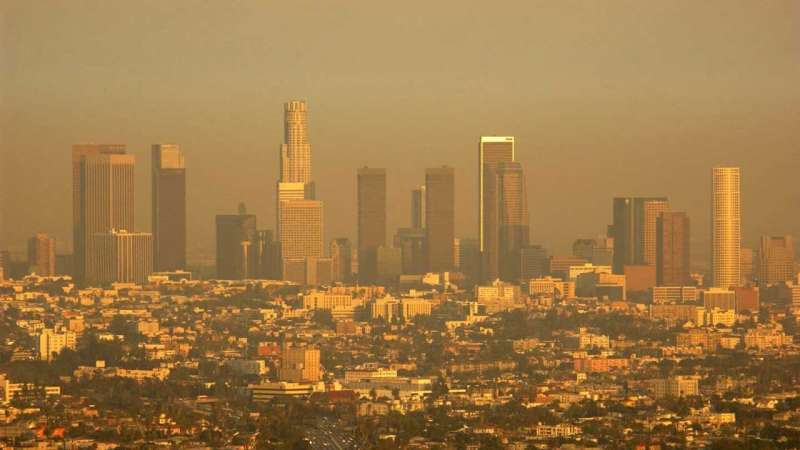
Scientists studying air pollution have uncovered a previously unknown chemical pathway that plays a major role in how air pollution particles form in the atmosphere. The discovery comes from new research led by an atmospheric scientist at The University of Alabama in Huntsville (UAH) and could significantly change how researchers understand air quality, climate impacts, and pollution modeling.
At the center of this research is Dr. Shanhu Lee, a professor of Atmospheric and Earth Science at UAH, which is part of The University of Alabama System. Dr. Lee led a study published in the scientific journal Geophysical Research Letters, revealing that a class of compounds known as oxygenated organosulfates (OOS) can form directly in the gas phase of the atmosphere and act as powerful starting points for the creation of new air pollution particles.
This finding challenges long-standing assumptions in atmospheric science and highlights how natural and human-made emissions interact in complex ways that scientists are only beginning to fully understand.
A New Perspective on How Air Pollution Particles Form
Air pollution particles, also known as aerosols, come from a mix of natural sources—such as trees and vegetation—and anthropogenic sources, meaning emissions caused by human activity like power plants, vehicles, and industrial processes. These particles play a critical role in air quality, human health, cloud formation, and climate behavior.
Traditionally, scientists believed that organosulfates mostly formed inside existing aerosol particles, not in the gas phase. The new study overturns that idea by showing that oxygenated organosulfates can form directly in the gas phase before particles even exist. Once formed, these compounds act as highly effective “seeds” that kick-start the formation of new particles.
Over time, these particles can grow into fine particulate matter, which is linked to respiratory and cardiovascular health problems and also influences how clouds form and reflect sunlight.
An Unexpected Discovery in Laboratory Experiments
The discovery was not something the research team initially set out to find. Dr. Lee and her team were conducting laboratory experiments designed to mimic forested environments in the United States. These environments are often influenced by long-range transport of pollution, meaning pollutants released far away can travel and mix with natural emissions from trees and plants.
During these experiments, researchers mixed biogenic compounds (emitted by vegetation) with ozone and sulfur dioxide, two common atmospheric pollutants. What they observed was surprising: the mixture produced oxygenated organosulfates in the gas phase.
This was unexpected because organosulfates were thought to form primarily in particles, not in the gas phase. The finding suggested that an entirely new chemical pathway might be operating in the atmosphere.
What the Gas Phase Really Means
In atmospheric chemistry, the gas phase refers to chemical species that exist in the air before they become part of solid or liquid particles. Many low-volatility compounds exist briefly in this phase and strongly influence particle formation, growth, and chemical reactions.
The discovery that oxygenated organosulfates form in this stage means they can influence aerosol creation much earlier than scientists previously believed.
Confirming the Chemistry with Quantum Calculations
To confirm whether this gas-phase formation was chemically possible, Dr. Lee collaborated with Dr. Jonas Elm and his research team at Aarhus University in Denmark. Using advanced quantum chemical calculations, the team explored the molecular-level reactions involved.
Their calculations revealed a previously unknown, barrier-less reaction pathway. In chemistry, a barrier-less reaction means the process can occur efficiently and spontaneously, without requiring extra energy to overcome a reaction barrier.
This explained how oxygenated organosulfates could form so readily in the gas phase from common atmospheric compounds. The results confirmed that these reactions are not just possible but likely happening frequently in real-world conditions.
Detecting Hundreds of New Compounds
Using state-of-the-art mass spectrometers, Dr. Lee’s team detected more than 200 distinct gas-phase oxygenated organosulfates. This was not a minor or rare phenomenon. The sheer number of compounds identified showed that these reactions are chemically rich and widespread.
The researchers also found that these compounds contribute significantly to aerosol nucleation, which is the very first step in forming new particles in the atmosphere.
Why Aerosol Nucleation Matters
Aerosol nucleation is the process by which tiny clusters of molecules collide and stick together, eventually forming solid or liquid particles. These particles are responsible for haze, smog, cloud droplets, and pollution events.
Nucleation typically involves gases like sulfuric acid, ammonia, and low-volatility organic vapors. The discovery that oxygenated organosulfates are highly effective nucleation precursors adds a new and previously unrecognized player to this process.
This finding challenges the traditional view that aerosol formation comes from separate, independent contributions of individual precursors.
Rethinking Long-Standing Assumptions
For decades, atmospheric models have treated aerosol formation as the result of individual chemicals acting independently. The new research shows that these chemicals can chemically react with one another, creating entirely new compounds that strongly influence particle formation.
Oxygenated organosulfates are now identified as a new class of nucleation precursors, yet they are not included in most current air quality and climate models. This suggests that many models may be missing an important piece of the puzzle.
Why Mixed Environments Are So Important
One of the most important insights from the study is its relevance to real-world environments. Purely natural or purely human-made environments are actually rare. Most regions contain a mix of biogenic and anthropogenic emissions.
Urban areas often have trees and vegetation, while forested regions are frequently exposed to pollution transported over long distances. Cities such as Atlanta and Houston, for example, experience high sulfur dioxide pollution from nearby power plants while also having strong natural emissions from vegetation.
These mixed environments create ideal conditions for oxygenated organosulfate formation.
Emerging Urban Pollutants and Future Research
The study also points to emerging sources of pollution, particularly emissions from personal care products and cleaning agents. Many of these products release monoterpenes, such as limonene, into the air.
Future research will examine how limonene, ozone, and sulfur dioxide interact in urban environments to form oxygenated organosulfates. As emissions from these sources continue to grow, understanding their role in air pollution will become increasingly important.
Why This Discovery Matters Going Forward
This research represents a major breakthrough in aerosol science. By uncovering a new chemical pathway that links natural and human-made emissions, scientists now have a better framework for understanding air quality, health impacts, and climate interactions.
As researchers continue to refine atmospheric models and study complex emission mixtures, oxygenated organosulfates are likely to become a key focus in future air pollution research.
Research Paper:
https://agupubs.onlinelibrary.wiley.com/doi/10.1029/2025GL117259