Scientists Discover One of the Mediterranean’s Largest Hydrothermal Vent Fields Off the Coast of Milos
A major new geological discovery has just put the Greek island of Milos firmly on the scientific map once again. Researchers have identified an extensive hydrothermal vent field on the seafloor surrounding the island, revealing that the region is far more geologically active and complex than previously understood. The discovery significantly expands what scientists know about hydrothermal systems in the Mediterranean, especially those located at shallow to intermediate depths.
The findings come from a recent scientific study published in Scientific Reports, following detailed investigations carried out during the METEOR research expedition M192. Using a combination of advanced underwater technologies, scientists mapped and sampled vast areas of the Milos seafloor, uncovering previously undocumented hydrothermal activity spread across a wide region.
A Hidden Hydrothermal System Beneath the Aegean Sea
Hydrothermal vents are typically associated with deep-ocean environments, such as mid-ocean ridges or volcanic arcs. What makes the Milos discovery remarkable is its depth range and size. The vents were found between 100 and 230 meters below the surface, placing them in the shallow-to-intermediate depth zone, which is far less explored than deeper ocean basins.
This newly documented vent field is now considered one of the largest known hydrothermal systems of its kind in the Mediterranean Sea. Until now, hydrothermal activity in the region was thought to be relatively localized and limited. The Milos vents challenge that assumption, showing that extensive venting can exist much closer to shore and at accessible depths.
How the Discovery Was Made
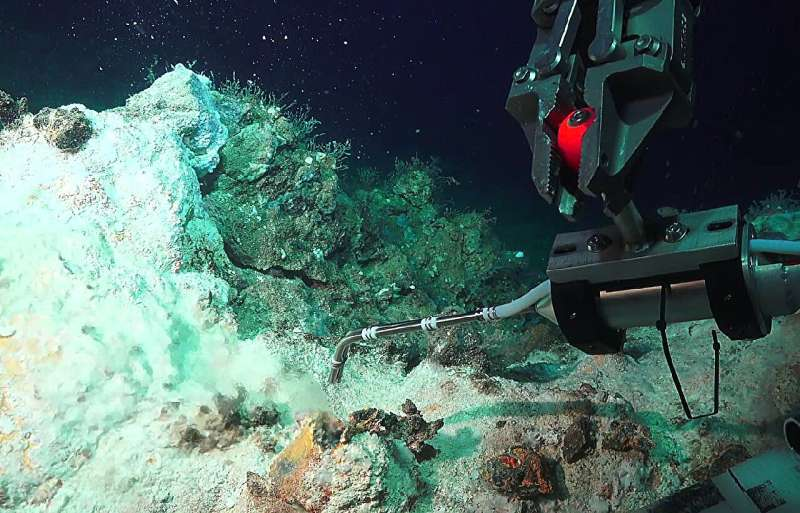
The vents were identified during the METEOR expedition M192, led by scientists from MARUM – Center for Marine Environmental Sciences at the University of Bremen, in collaboration with Greek research institutions. The team used autonomous underwater vehicles (AUVs) and remotely operated vehicles (ROVs) to conduct high-resolution seafloor surveys.
These tools allowed researchers to:
- Map the seafloor in detail
- Detect gas flares rising through the water column
- Visually observe vent structures
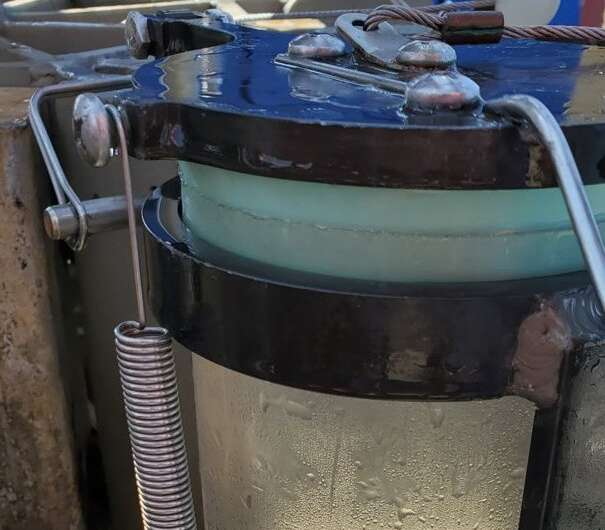
- Collect fluid samples directly from active vents
Some of the sampled hydrothermal fluids reached temperatures of around 180°C, indicating a strong heat source below the seafloor. The vents displayed a wide variety of forms, including shimmering fluid emissions, chimney-like structures, and surfaces coated with thick microbial mats.
Where the Vents Are Located
The newly discovered venting is concentrated in three main areas around Milos:
- Aghia Kiriaki
- Paleochori–Thiorychia
- Vani
All three locations sit along active fault zones that cut across the Milos continental shelf. These faults are part of a broader tectonic structure known as the Milos Gulf–Fyriplaka graben, a large geological depression that has lowered parts of the seafloor to depths of up to 230 meters.
The alignment of the vent fields with these fault systems is not a coincidence. The study shows that tectonic activity plays a dominant role in controlling where hydrothermal fluids reach the seafloor.
The Strong Link Between Tectonics and Venting
One of the most important conclusions of the study is the clear structural control of hydrothermal venting. Rather than being randomly distributed, the vents closely follow the geometry of major faults surrounding Milos.
In areas where multiple faults intersect, venting tends to be more intense and clustered. These fractures act as pathways, allowing heated fluids and gases from deeper levels of the Earth’s crust to rise upward and escape into the sea.
This finding highlights how ongoing tectonic deformation, combined with volcanic heat, shapes the evolution of hydrothermal systems. Milos sits within the South Aegean Volcanic Arc, a region known for active and dormant volcanoes, including nearby Santorini and Nisyros. The new data suggest that Milos remains a highly dynamic geological environment, even if no surface eruptions are occurring.
Why This Discovery Matters
The Milos vent field is significant for several reasons:
- It dramatically expands the known extent of hydrothermal activity in the Mediterranean.
- It provides strong evidence that fault systems can control hydrothermal circulation at shallow depths.
- It establishes Milos as a key natural laboratory for studying interactions between tectonics, volcanism, and hydrothermal processes.
Because the vents are located at relatively accessible depths, they offer rare opportunities for detailed observation and sampling without the extreme challenges associated with deep-sea exploration.
Life Around Hydrothermal Vents
Although the study primarily focuses on geological structure, observations revealed abundant microbial communities living on and around the vent structures. Microbial mats thrive in these chemically rich environments, feeding on sulfur and other compounds released by the vents.
Hydrothermal ecosystems are of great interest to scientists because they:
- Support life independent of sunlight
- Offer clues about early life on Earth
- Serve as analogs for potential life on other planetary bodies
Further biological studies of the Milos vents could provide new insights into how life adapts to extreme chemical and thermal conditions in shallow marine environments.
Broader Scientific Collaboration and Future Research
The research behind this discovery was the result of close collaboration between Greek and German institutions, including:
- National and Kapodistrian University of Athens
- MARUM – University of Bremen
- Friedrich-Alexander-Universität Erlangen-Nürnberg
- ICBM – Institute for Chemistry and Biology of the Marine Environment, Oldenburg
- Constructor University Bremen
The findings are also closely tied to the MARUM-based Cluster of Excellence “The Ocean Floor—Earth’s Uncharted Interface”, which focuses on understanding seafloor processes and their global significance.
Building on this success, scientists are planning follow-up expeditions to Milos and other nearby volcanic regions, including the Kolumbo submarine volcano near Santorini and Nisyros. These future missions aim to better understand how hydrothermal systems evolve across different tectonic and volcanic settings in the Aegean region.
What Hydrothermal Vents Tell Us About Earth
Hydrothermal vents are more than just geological curiosities. They play a key role in:
- Regulating ocean chemistry
- Transferring heat from Earth’s interior to the oceans
- Concentrating metals and minerals on the seafloor
Studying vent fields like the one off Milos helps scientists piece together how Earth’s crust behaves under stress, how fluids move through fractured rock, and how geological processes shape marine environments over time.
A Major Step Forward for Mediterranean Geology
The discovery of this extensive hydrothermal vent field confirms that the Mediterranean still holds major geological surprises, even in regions that have been studied for decades. Milos now stands out as one of the most important locations in the region for investigating active tectonics, volcanism, and hydrothermal circulation—all in one place.
As research continues, the Milos vent field is likely to play a central role in advancing our understanding of how Earth’s internal processes shape the seafloor, influence marine ecosystems, and connect geology with life itself.
Research paper:
https://doi.org/10.1038/s41598-025-26398-y