Seismic Snapshot Reveals New Insight Into How the Rocky Mountains Formed
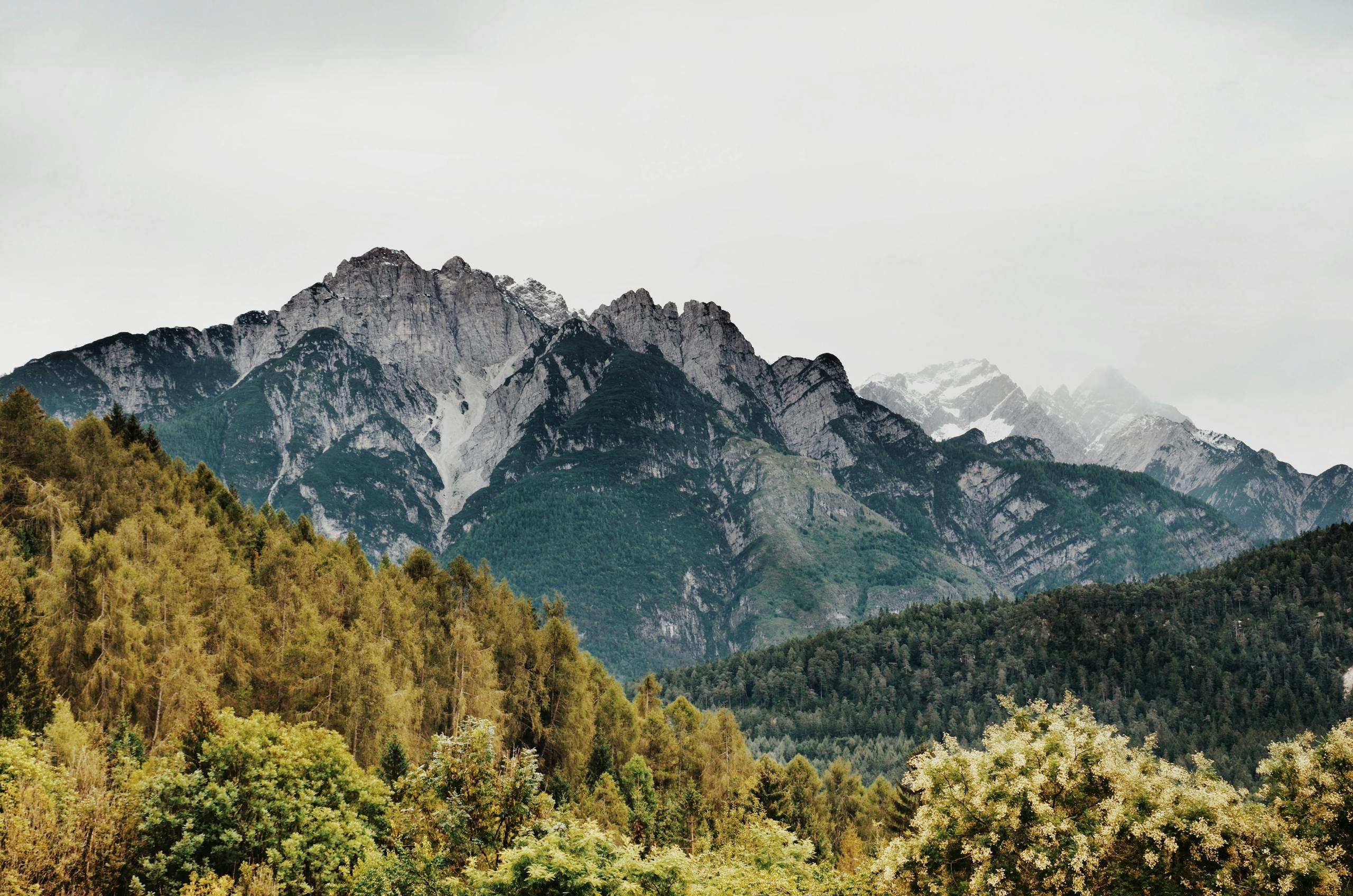
The Rocky Mountains have always been understood as the result of powerful tectonic forces, but new research shows their origin was far more complex than scientists once believed. A recent seismic study has revealed that the deep structure beneath the Rockies involves a stacked plate system, challenging long-standing assumptions about how one of North America’s most iconic mountain ranges came into existence.
This new understanding comes from a detailed seismic analysis led by Songyun Huang, a graduate student at the University of Alberta, working with her supervisor Jeffrey Gu, a professor in the university’s Department of Physics. Their findings were published in the peer-reviewed journal Nature Communications, offering a clearer picture of what happened deep beneath the Earth’s surface tens of millions of years ago—and what may still be happening today.
A New Look Beneath the Rockies Using Seismic Waves
The study focused on analyzing how earthquake vibrations travel through the Earth. As seismic waves move through different layers of rock, they change speed and direction depending on temperature, composition, and structure. By carefully examining these changes, scientists can construct high-resolution images of what lies deep below the surface.
Using this method, Huang and Gu were able to create what they describe as a seismic “snapshot” of the mantle beneath the southeastern Canadian Cordillera, a region that includes part of the Rocky Mountains. This snapshot revealed the presence of two distinct lithospheric layers stacked on top of one another.
The upper layer, known as the Cordilleran lithosphere, sits at a depth of around 75 kilometers. Beneath it lies the craton layer, which forms the ancient, stable core of the North American continent and reaches depths of about 180 kilometers.
This layered configuration was not entirely unexpected—but the way these layers interact was.
A Gentle Slope Instead of a Sharp Boundary
For years, many geophysicists believed the boundary between these two layers was relatively steep and abrupt, resembling a vertical step in the Earth’s interior. The new seismic data tells a different story.
Instead of a sharp boundary, the researchers found a gentle slope of about six degrees, dipping westward beneath the Rocky Mountains. This indicates that during the Cretaceous period, one tectonic plate didn’t simply collide and stop. Instead, one plate gradually slid beneath the other, creating a stacked architecture deep below the surface.
This finding suggests that mountain formation in this region involved underthrusting, where one continental block is forced beneath another, rather than just surface-level crustal deformation.
Evidence of a Dynamic and Evolving Structure
One of the most intriguing aspects of the study is that the structure beneath the Rockies may still be evolving today.
The seismic data suggests that the lower edge of the craton—the ancient, stable portion of the continent—is being eroded by the flow of hot mantle rock beneath it. This process, sometimes referred to as mantle erosion, implies that even long-stable continental interiors are not completely immune to change.
This challenges the traditional view of cratons as rigid, unchanging blocks and highlights the dynamic nature of Earth’s interior, even far from active plate boundaries.
A Surprising Parallel With the Tibetan Plateau
The stacked configuration observed beneath the Rocky Mountains closely resembles structures found beneath the Tibetan Plateau, where the Indian plate is currently sliding beneath the Eurasian plate.
This comparison is significant because Tibet represents one of the most dramatic examples of continental collision on Earth today. Finding a similar structure beneath the Rockies suggests that continental stacking may be a more common mountain-building process than previously thought, even in regions that are no longer tectonically active.
It also reinforces the idea that the Rockies were shaped by deep, large-scale interactions between continental plates, not just shallow crustal processes.
Why This Discovery Matters
Understanding how the Rocky Mountains formed is about more than just explaining a landscape. It helps scientists refine models of plate tectonics, continental evolution, and mantle dynamics.
This study provides rare, high-resolution evidence of how continental plates behave deep below the surface during major tectonic events. It also shows that ancient geological processes can leave long-lasting fingerprints in the Earth’s mantle, detectable millions of years later with modern seismic techniques.
For geophysicists, these findings help bridge the gap between surface geology and deep Earth processes, offering a more complete picture of how mountain belts form and evolve over geological time.
How Seismic Imaging Works in Studies Like This
Seismic imaging relies on analyzing P-waves and S-waves generated by earthquakes. When these waves encounter changes in rock type, temperature, or composition, they can reflect, refract, or convert from one type to another.
In this study, the researchers focused on converted seismic waves, which are particularly useful for identifying boundaries between different layers in the mantle. By collecting data from numerous earthquakes recorded at seismic stations across western Canada, they were able to build a detailed model of the subsurface.
This approach allows scientists to “see” structures that are otherwise inaccessible, offering insights into regions hundreds of kilometers below our feet.
Rethinking the Formation of the Rocky Mountains
The Rocky Mountains have often been associated with processes like flat-slab subduction and the Laramide orogeny, which involved shallow subduction of oceanic plates beneath North America. While these processes still play an important role, the new findings suggest that continental underthrusting and lithospheric stacking were also key contributors.
This means the Rockies may owe their existence to a combination of surface deformation and deep mantle interactions, making their formation more complex than any single model can explain on its own.
What This Means for Future Research
The discovery opens the door to new questions. How widespread are stacked lithospheric structures beneath other mountain ranges? How long do these features persist? And how does ongoing mantle flow continue to reshape continents long after mountain building ends?
Future seismic studies, combined with computer modeling and geological fieldwork, may provide even clearer answers. For now, this research offers a compelling reminder that the Earth beneath us is layered, dynamic, and full of surprises.
Research Paper Reference
Dual-layered mantle lithosphere beneath southeastern Canadian Cordillera
Nature Communications (2025)
https://doi.org/10.1038/s41467-025-65437-0