Tire Rubber in Artificial Turf Breaks Down Into a Potentially Dangerous Chemical Cocktail, New Research Finds
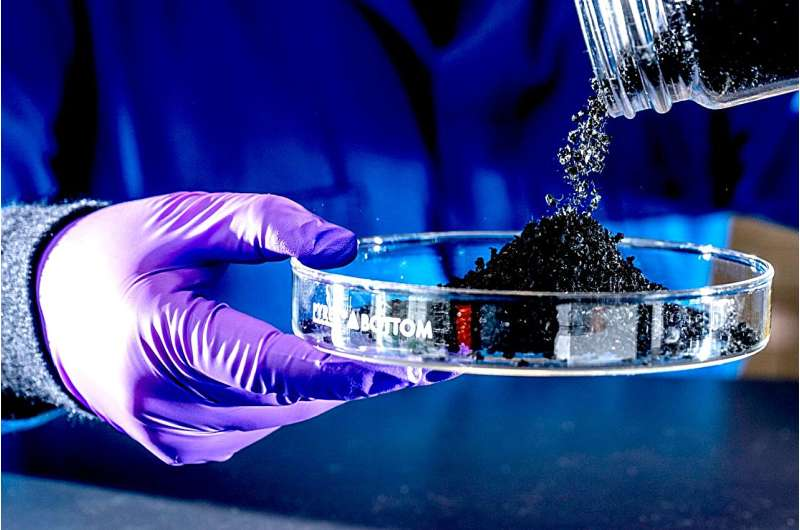
Artificial turf fields have become almost everywhere — schools, parks, stadiums, and neighborhood playgrounds. One of the key materials that makes these fields usable is crumb rubber, the small black beads sprinkled between synthetic grass blades to provide cushioning and bounce. Made from recycled car tires, crumb rubber has long been promoted as an environmentally friendly way to reuse waste.
But new research suggests that this recycled material may be far more chemically active and unpredictable than previously understood.
A study from Northeastern University, published in the journal Environmental Science & Technology, takes a close look at what happens to crumb rubber as it ages. The findings show that when tire rubber breaks down under real-world conditions like sunlight, rain, and time, it produces hundreds of chemical transformation products, some of which are already known to be hazardous.
What exactly is crumb rubber?
Crumb rubber is created by shredding old vehicle tires into tiny particles. These rubber beads are then used as infill in artificial turf to improve shock absorption and simulate the feel of natural grass. Because it repurposes discarded tires, crumb rubber has often been described as a win for recycling and sustainability.
However, tires are not simple materials. They are manufactured using complex chemical blends designed to withstand heat, friction, ozone, and weather. When these chemicals are repurposed in outdoor environments, their behavior can change dramatically.
Why scientists decided to study rubber decay
Researchers have known for years that tire rubber releases chemicals as it degrades. But most earlier studies focused on individual chemicals rather than the full mix of compounds that emerge over time.
The Northeastern University team, led by Zhenyu Tian, wanted to understand the entire chemical transformation process. Their question was straightforward: when crumb rubber sits outdoors for months or years, exposed to sunlight and the elements, what exactly is being created?
To find out, the researchers simulated aging conditions using a photoreactor, a device that accelerates exposure to intense sunlight. This allowed them to observe in months what would normally take years in a real artificial turf field.
Hundreds of new chemicals identified
The results were striking. The team identified at least 572 separate transformation products generated as crumb rubber degraded. Many of these chemicals had never been tracked or cataloged before.
This finding alone challenges the idea that crumb rubber simply breaks down into smaller, harmless fragments. Instead, the research shows that rubber decay is a highly reactive process, producing both smaller and larger molecules as chemical components interact with one another.
In other words, rubber does not just fall apart — it reorganizes chemically, creating new substances along the way.
Known hazardous chemicals found in the mix
Among the hundreds of compounds detected, the researchers confirmed the presence of several chemicals already known to be harmful.
One of the most concerning is 6PPD-quinone, a transformation product formed when a common tire additive called 6PPD reacts with ozone. This chemical has already been linked to mass die-offs of coho salmon in the Pacific Northwest.
Previous research showed that less than one microgram per liter of 6PPD-quinone in water can kill juvenile coho salmon in under an hour. Stormwater runoff from roads carries this compound into streams where salmon return to spawn, leading to mortality rates as high as 90 percent in some affected waterways.
While the effects of 6PPD-quinone on humans are still unknown, its extreme toxicity to aquatic life highlights the biological potency of tire-derived chemicals.
Other chemicals with human health concerns
The study also identified two additional compounds of concern:
- 4-HDPA, a chemical suspected to act as an endocrine disruptor and linked to breast cancer risk
- 1,3-DMBA, a compound known to mimic the stimulating effects of amphetamines
These chemicals are not hypothetical risks — they are well-documented substances with established biological activity. Their presence in aging crumb rubber raises important questions about long-term exposure, especially for children and athletes who spend significant time on artificial turf fields.
How exposure might happen
According to previous assessments, including a 2019 report from the U.S. Environmental Protection Agency, exposure to crumb rubber chemicals is believed to be limited due to how turf fields are typically used. The report suggested that contact duration and concentration levels might reduce overall risk.
However, the new research complicates that conclusion. Since artificial turf infill comes from tires of different ages and manufacturers, the chemical makeup of each field can vary widely. As crumb rubber continues to react over time, new chemicals keep forming rather than disappearing.
The study found that many of these transformation products remain chemically active for four to five months, and the entire reaction process may last two to three years — roughly the same time frame in which many turf fields are replaced.
Rubber decay is not a simple breakdown process
One of the most surprising findings is that chemical reactions within crumb rubber do not only break molecules apart. In many cases, smaller molecules combine to form larger ones, creating new compounds with unknown properties.
For the majority of the 572 transformation products identified, scientists currently have no data on how they affect human health or ecosystems. This uncertainty does not automatically mean danger, but it highlights how little is still understood.
As Tian bluntly put it, the reality is that researchers simply do not yet know what many of these chemicals do once they enter the environment or the human body.
What this means for artificial turf debates
Artificial turf has long been controversial. Supporters point to lower maintenance costs, year-round usability, and water savings. Critics raise concerns about heat retention, injury rates, microplastic pollution, and now increasingly, chemical exposure.
This study does not claim that playing on artificial turf definitively harms human health. Instead, it adds a crucial layer of evidence showing that crumb rubber is far from inert and continues to evolve chemically long after installation.
Why tires are chemically complex materials
Car tires are designed to survive extreme conditions. They contain antioxidants, stabilizers, vulcanizing agents, plasticizers, and fillers that help them resist cracking and wear. Once these materials are removed from controlled road environments and placed into soil, turf, or waterways, they behave very differently.
Sunlight, oxygen, water, and mechanical stress all accelerate chemical reactions. This makes recycled tire products especially challenging to evaluate from a long-term safety perspective.
What researchers say should happen next
Scientists involved in the study emphasize the need for further toxicological testing, particularly to understand how newly formed compounds interact with the human body. Long-term exposure studies, environmental monitoring, and improved material alternatives are all likely to be part of future research.
For now, the key takeaway is not panic, but awareness. Crumb rubber may be recycled, but it is still chemically active, continuously changing in ways that science is only beginning to understand.
Research Paper:
https://pubs.acs.org/doi/10.1021/acs.est.5c08260