3D Hybrid Imaging System Could Address Limitations of MRI, CT and Ultrasound
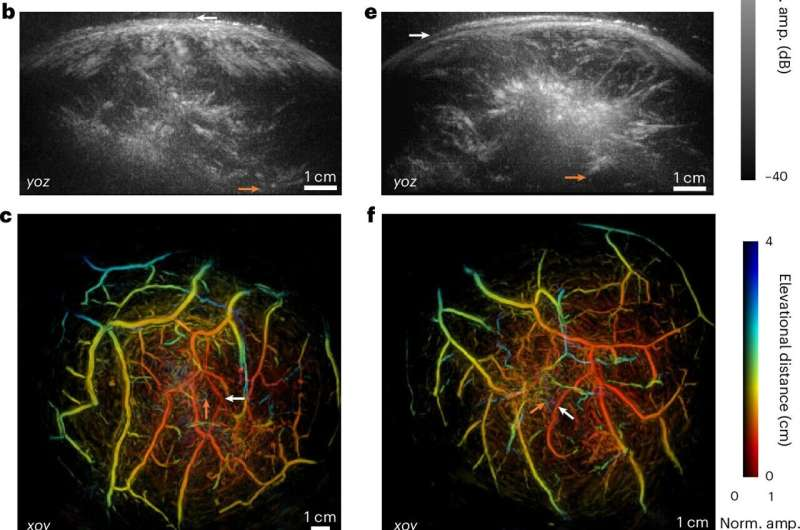
A new 3D hybrid medical imaging system developed by researchers at the Keck School of Medicine of USC and the California Institute of Technology (Caltech) could mark an important step forward in how doctors visualize the human body. In a proof-of-concept study, the team demonstrated a noninvasive imaging technique capable of rapidly capturing detailed, full 3D images of tissues and blood vessels across multiple parts of the body—all without ionizing radiation or powerful magnetic fields.
The findings were published in Nature Biomedical Engineering and represent the first time this combined imaging approach has been successfully tested in humans.
Why Medical Imaging Still Has Major Gaps
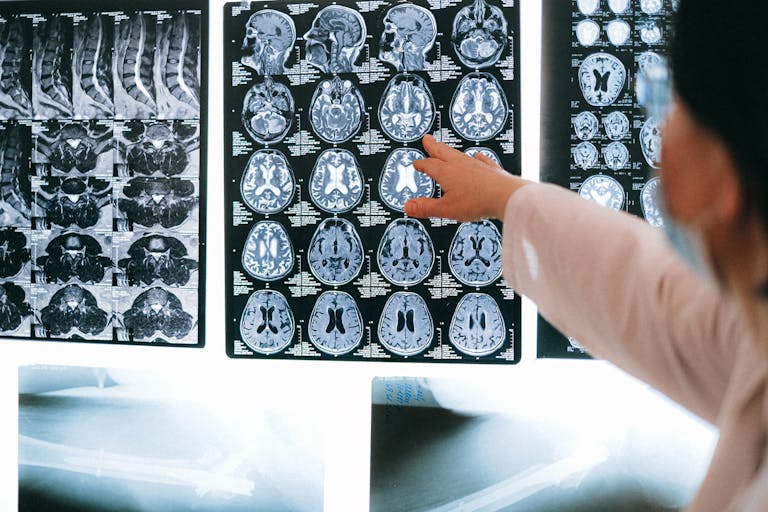
Medical imaging is central to modern healthcare. From diagnosing injuries and infections to monitoring cancer, chronic disease, and neurological disorders, clinicians rely heavily on tools like ultrasound, X-ray, CT scans, and MRI. Each of these technologies has transformed medicine, but none is perfect.
Ultrasound is relatively inexpensive and safe, yet it often lacks depth and fine detail. CT scans and X-rays offer clear structural images but expose patients to ionizing radiation. MRI provides exceptional soft-tissue contrast but is expensive, time-consuming, and requires strong magnetic fields that limit accessibility for some patients.
The research team set out to address these limitations by combining two complementary imaging methods into a single platform that could deliver fast, deep, and detailed 3D images at lower cost and risk.
Introducing RUS-PAT: A New Hybrid Imaging Platform
The new system is known as RUS-PAT, short for Rotational Ultrasound and Photoacoustic Tomography. It merges two advanced techniques into one coordinated imaging process.
The first component, rotational ultrasound tomography (RUST), builds on conventional ultrasound. Instead of using a single detector to produce a flat 2D image, RUST employs an arc-shaped array of ultrasound detectors that rotate around the area being scanned. This allows the system to reconstruct a true 3D volumetric image of tissues.
The second component, photoacoustic tomography (PAT), adds an entirely different layer of information. In PAT, short pulses of laser light are directed at the body. Hemoglobin molecules in blood absorb the light, vibrate, and generate ultrasonic waves. These waves are picked up by the same detectors used for ultrasound, enabling the system to map blood vessels and vascular structures in 3D.
By integrating RUST and PAT, RUS-PAT can simultaneously capture images of tissue structure and blood circulation, something no single conventional imaging modality can do on its own.
First Human Tests Across Multiple Body Regions
To demonstrate how broadly this technology could be applied, the researchers tested RUS-PAT on several regions of the human body, including the brain, breast, hand, and foot.
For brain imaging, the system was used in patients with traumatic brain injury who were already undergoing surgery and had portions of their skull temporarily removed. In these cases, RUS-PAT successfully captured both tissue structure and blood vessels across regions up to 10 centimeters wide, with scan times of about 10 seconds.
Breast imaging showed the system’s ability to visualize soft tissue alongside vascular networks, which is especially relevant for cancer detection and monitoring. Imaging of the hand and foot demonstrated potential applications in musculoskeletal, vascular, and metabolic diseases, including conditions that affect blood flow.
Key Advantages Over Existing Imaging Techniques
RUS-PAT offers several notable advantages when compared with today’s standard imaging tools.
First, it avoids ionizing radiation, making it safer for repeated use than CT scans or X-rays. Second, it does not rely on strong magnetic fields, eliminating many of the cost, infrastructure, and accessibility barriers associated with MRI.
From a technical standpoint, the system provides a large field of view, meaningful imaging depth, and high spatial resolution, all within very short scan times. The platform is also expected to be less expensive to build and maintain than MRI scanners, which could make advanced imaging more accessible in resource-limited settings.
Perhaps most importantly, RUS-PAT delivers dual-contrast imaging, capturing both anatomical structure and vascular information in a single session.
Potential Clinical Applications
The ability to image both tissues and blood vessels opens the door to a wide range of clinical uses.
In neurology, detailed 3D imaging of brain tissue and blood flow could improve diagnosis and treatment planning for stroke, traumatic brain injury, and neurological diseases. In oncology, especially breast cancer care, combined tissue and vascular imaging could help detect tumors, assess aggressiveness, and monitor response to treatment.
The technology may also be particularly valuable for vascular medicine. Rapid, low-cost imaging of the foot could help clinicians manage diabetic foot disease, venous disorders, and limb-threatening conditions by identifying compromised blood flow earlier and more precisely.
Challenges That Still Need to Be Solved
Despite its promise, RUS-PAT is not yet ready for routine clinical use. One of the biggest challenges lies in brain imaging through an intact skull. Bone distorts both ultrasound and photoacoustic signals, making it difficult to obtain clear images without surgical access.
The Caltech team is actively exploring solutions, including adjusting ultrasound frequencies and refining reconstruction algorithms to reduce distortion. Additional work is also needed to ensure consistent image quality across different patients and scanning conditions.
As with any early-stage technology, further validation, optimization, and clinical trials will be required before widespread adoption.
How Photoacoustic Imaging Fits Into the Bigger Picture
Photoacoustic imaging itself is an emerging field that sits at the intersection of optics and acoustics. By converting light absorption into sound, it provides unique functional information about blood oxygenation, vessel density, and tissue composition.
Over the past decade, photoacoustics has been explored in preclinical research for brain activity mapping, tumor imaging, and vascular studies. RUS-PAT builds directly on earlier work by the USC–Caltech team, which showed that photoacoustic methods could even be used to image brain activity.
By integrating photoacoustics with advanced ultrasound tomography, RUS-PAT represents a broader trend toward multimodal imaging, similar in spirit to PET-CT or PET-MRI systems, but using safer and more accessible physical principles.
An Important Early Step Toward Future Imaging
This study represents an early but significant proof of concept. It shows that RUS-PAT can produce medically meaningful images across multiple parts of the human body, quickly and without the drawbacks of radiation or massive infrastructure.
As researchers continue refining the system, the long-term goal is to create a versatile, low-cost, and widely accessible imaging platform that could complement or, in some cases, replace existing modalities.
If successful, this hybrid approach could reshape how clinicians see the human body—adding new dimensions of detail while reducing risk, cost, and complexity.
Research paper: https://www.nature.com/articles/s41551-025-01603-5