Bacterial “Pills” Offer a New Noninvasive Way to Detect Gut Diseases
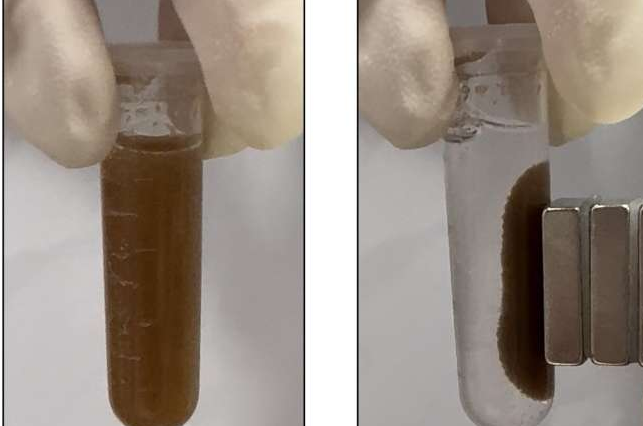
Researchers have developed an innovative ingestible sensor that could one day reduce the need for traditional colonoscopies. This new method uses tiny hydrogel microspheres packed with engineered bacteria and magnetic particles to detect signs of gastrointestinal disease, especially those involving intestinal bleeding. Published in ACS Sensors, the study outlines how these miniature “pills” work, how they were tested, and why they could transform how gut disorders are diagnosed and monitored.
How the Technology Works
The core of this technology is a set of microscopic hydrogel spheres, each ranging from 180–250 micrometers in diameter. These spheres contain three key components:
- Engineered heme-sensing bacteria
The bacteria are designed to detect heme, a component of red blood cells. Heme in the gut often indicates bleeding associated with conditions like colitis or other forms of gastrointestinal inflammation. - Magnetic particles (such as iron oxide)
These allow the microspheres to be quickly retrieved from stool using a magnet after they pass through the digestive system. - Sodium alginate hydrogel shell
Sodium alginate, a common food-grade thickening agent, forms the protective structure around the bacteria. When dropped into a calcium chloride solution during preparation, the alginate crosslinks into a stable hydrogel that shields the bacteria from digestive fluids.
This encapsulation process is crucial because unprotected bacterial sensors typically break down rapidly in the stomach and intestines. In contrast, the hydrogel coating improves the bacteria’s survival dramatically—about tenfold in simulated gastric conditions—long enough for them to travel through the body and perform detection.
What Happens After You Swallow the Microspheres
Once consumed, the microspheres move through the gastrointestinal tract just like food. During their journey:
- If heme is present due to bleeding, the bacteria activate and produce a detectable light signal.
- The microspheres exit the body in stool.
- A simple magnet can be used to pull them out of the waste material in a matter of minutes.
- The collected spheres are washed, and their light emission is measured to determine whether bleeding occurred.
The entire retrieval and analysis process takes roughly 25 minutes, making this a fast diagnostic approach compared to many existing stool-based tests.
Testing the Sensors in Mouse Models
To examine whether the microspheres could identify bleeding reliably, the researchers tested them in mouse models of colitis, a condition that mimics different stages of human intestinal inflammation. Mice were categorized from healthy to severe disease stages.
After the mice swallowed the microspheres:
- The spheres traveled through the digestive tract and were collected using a magnet.
- The light intensity emitted by the bacteria strongly correlated with disease severity. More severe colitis produced higher levels of heme, which in turn triggered brighter signals.
- Healthy mice showed no significant signal response and tolerated the microspheres without side effects.
These results confirmed three major points: the sensors survive digestion, they can be easily retrieved, and they give a quantitative readout linked directly to disease severity.
How This Differs From Colonoscopies
Colonoscopies remain the gold standard for diagnosing gastrointestinal disorders such as colorectal cancer, inflammatory bowel disease, and unexplained bleeding. They offer direct visualization and tissue biopsy capabilities. However, millions of people avoid them due to concerns about preparation, cost, discomfort, and invasiveness.
A swallowable diagnostic like this offers several potential advantages:
- Noninvasive
No sedation, no colon preparation, and no insertion of instruments into the body. - Rapid
Results can be generated in under half an hour once the microspheres are retrieved. - Scalable and user-friendly
If eventually approved for humans, people could potentially perform regular monitoring at home.
This is not a replacement for colonoscopies but could serve as a screening or monitoring tool, especially for chronic conditions where repeated invasive procedures are undesirable.
Potential for Detecting Other Gut Diseases
While this study focused on heme detection, the underlying concept is highly adaptable because engineered bacteria can be modified to sense many different biological molecules. That means future versions of these sensors might be tuned to:
- detect inflammation markers,
- sense pathogens,
- monitor metabolites linked to diet or microbiome health, or
- track treatment responses in real time.
Because gastrointestinal diseases often involve changes in chemical or microbial patterns long before symptoms arise, this approach offers a promising route for early detection and long-term disease management.
Additional Scientific Details for Readers Who Want Depth
- The bacterial strain used in the sensors is based on a modified form of Escherichia coli Nissle 1917, a probiotic strain with a history of safe use.
- The encapsulation process involves mixing bacteria, magnetic particles, and sodium alginate, then dripping this mixture into a calcium chloride bath where the spheres rapidly form.
- The microspheres were tested in simulated gastric and intestinal fluids, confirming that the hydrogel shell protects the engineered bacteria long enough to complete their function inside the body.
- The sensors’ signal-to-noise ratio improved because the magnetic retrieval step isolates them from stool matter, reducing background interference during analysis.
Broader Context: Why Noninvasive Gut Diagnostics Matter
Gut disorders such as ulcerative colitis, Crohn’s disease, colorectal cancer, and microscopic colitis affect millions of people worldwide. One of the biggest challenges in managing these conditions is that symptoms often fluctuate, requiring repeated monitoring.
Traditional tools like colonoscopy, CT scans, and stool tests each have limitations:
- Colonoscopies are invasive and require significant preparation.
- Stool tests can be slow and sometimes lack specificity.
- Imaging scans expose patients to radiation or require contrast materials.
An ingestible bacterial sensor offers an entirely different approach—biological diagnostics from inside the gut, acting as a miniature lab that moves through the body naturally.
Limitations and Next Steps
Despite promising results, there are several important limitations:
- The technology has not yet been tested in humans, so safety, dosage, and regulatory requirements must still be evaluated.
- Human gut environments differ from mice in terms of pH, immune response, microbiome composition, and diet.
- Long-term safety of repeated ingestion of engineered bacteria must be thoroughly assessed.
- The technology detects only heme for now; expanding biomarker detection is an ongoing research challenge.
The authors highlight that while this is still early-stage work, the method’s speed, simplicity, and adaptability make it a strong candidate for future development into clinical tools.
Why This Research Matters
If refined and validated for human use, bacterial “pill” diagnostics could become an accessible, low-cost method for patients to monitor gut health without repeated invasive procedures. For people with chronic conditions, this could mean:
- earlier warnings of flare-ups,
- personalized treatment adjustments,
- reduced reliance on hospital visits, and
- improved quality of life.
The combination of genetic engineering, hydrogel materials, and magnetic retrieval represents a creative and practical step forward in the field of noninvasive medical diagnostics.
Research Paper:
Magnetic Hydrogel: Enhanced Bacterial Biosensor for Speedy Gut Diseases Detection
https://doi.org/10.1021/acssensors.5c01813