How New Research Reveals the Role of Mechanical Force in Regulating Uterine Contractions During Childbirth

A new study published in Science has uncovered a detailed molecular explanation for how the uterus senses physical forces and converts them into the rhythmic contractions needed for childbirth. While hormones like progesterone and oxytocin are already known to influence labor, researchers from Scripps Research have now shown that the uterus also depends on specialized mechanosensors—proteins that detect stretch and pressure—to coordinate this intense biological process.
The study focuses on two proteins, PIEZO1 and PIEZO2, which act as pressure-sensitive ion channels in various tissues throughout the body. These channels were previously known for their role in touch and proprioception, but this work demonstrates their importance in childbirth as well. As the fetus grows and the uterus expands, and especially during delivery when pressure peaks, these mechanosensors help translate physical forces into electrical and chemical signals that shape contraction timing and strength.
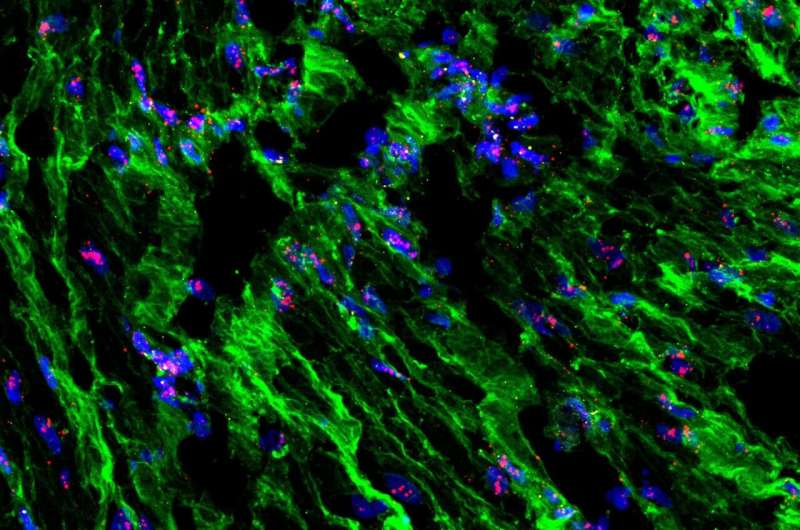
Credit: Scripps Research
The team, led by Ardem Patapoutian—recipient of the 2021 Nobel Prize in Physiology or Medicine for discovering these very mechanosensors—shows that childbirth is not driven solely by hormonal cues. Instead, the uterus relies on a coordinated partnership between mechanical sensing and biochemical signaling to maintain the rhythm and force of labor.
The Distinct Roles of PIEZO1 and PIEZO2 in Labor
The researchers found that PIEZO1 and PIEZO2 each contribute to uterine contraction but in different anatomical locations:
- PIEZO1 is mainly active in the uterine smooth muscle, detecting pressure changes as contractions begin and intensify.
- PIEZO2 is found in the sensory nerves of the cervix and vagina, where it responds to stretching caused by the descending fetus. Activation of these nerves triggers a neural reflex that boosts uterine contractions.
Together, these channels ensure that the uterus contracts in a coordinated and dynamic manner. When one pathway is disrupted, the other can partially compensate, explaining why labor can still proceed even when certain aspects of nerve signaling are blocked.
To test their roles, scientists created mouse models where PIEZO1, PIEZO2, or both were selectively removed from either the uterus or the sensory nerves surrounding the reproductive tract. Pressure sensors implanted in pregnant mice measured the strength and rhythm of uterine contractions during spontaneous labor. The results were clear:
- Removing either PIEZO1 or PIEZO2 alone caused moderate disruption.
- Removing both led to significantly reduced uterine pressure and delayed labor.
This confirms that mechanical force sensing through both muscle and nerve pathways is crucial for proper childbirth.
How Loss of Mechanosensing Disrupts Cellular Coordination
One of the study’s major discoveries is how PIEZO activity influences connexin 43, a protein that forms gap junctions—tiny channels that allow neighboring smooth muscle cells to communicate. These channels are essential for synchronized contraction, which allows the uterus to work as a unified muscle.
When PIEZO signaling was disrupted, levels of connexin 43 fell sharply. As a result, smooth muscle cells lost their coordination, causing contractions to weaken and become irregular. This explains why losing mechanical sensing leads to labor dysfunction.
The gene that encodes connexin 43, Gja1, was found to be less active in mouse models lacking PIEZO channels. The timing of this drop aligns with the late stages of pregnancy when the uterus typically prepares for strong, coordinated contractions.
Evidence in Human Tissue
To determine whether these mechanisms might apply to people, the researchers also examined human uterine samples. They found that the distribution of PIEZO1 and PIEZO2 closely matches what was observed in mice, suggesting a conserved biological design.
This may explain certain clinical observations. For example, a complete sensory nerve block—such as during a high-dose epidural—can prolong labor. The study’s findings show that sensory feedback through PIEZO2 helps reinforce contractions. When this pathway is entirely shut down, the uterus loses one of its sources of stimulation, reducing contraction strength.
This does not mean epidurals are unsafe; rather, it highlights why careful dosing is necessary to balance pain relief with the need for continuing sensory input that supports labor progression.
Potential Avenues for Future Labor Therapies
Understanding how mechanical forces contribute to childbirth creates opportunities for new types of interventions. If researchers can one day safely control PIEZO activity, they may be able to:
- Slow contractions in cases of preterm labor by blocking PIEZO1 activity.
- Strengthen contractions during stalled or prolonged labor by activating these channels.
- Improve pain management strategies that reduce discomfort without eliminating beneficial sensory feedback.
These possibilities remain theoretical for now. No approved drug targets PIEZO channels, and any attempt to manipulate them would require rigorous testing to avoid unintended consequences. Still, this research lays the groundwork for future innovation.
How Hormones and Mechanical Forces Interact
Another fascinating aspect of this study involves the interplay between hormones and mechanosensing:
- Progesterone, which keeps the uterus relaxed throughout pregnancy, suppresses connexin 43 even when PIEZO channels are active. This prevents premature contraction.
- Near term, progesterone levels decrease, removing this brake.
- PIEZO-driven calcium signaling then helps activate molecular pathways that initiate labor.
This suggests that hormones provide the timed “green light,” while mechanical sensors help regulate how forcefully and rhythmically the uterus contracts.
Researchers also note that not all sensory nerves near the uterus contain PIEZO2. Some may respond to other stimuli and serve as backup pathways. Understanding these networks could lead to more refined ways of managing labor pain without disrupting labor progression.
A Bit More Background on Mechanosensing
Mechanosensation—the ability of cells to detect physical forces—is fundamental to many biological processes. PIEZO channels have been shown to:
- Enable touch perception
- Regulate blood vessel pressure
- Assist in breathing reflexes
- Support proprioception (awareness of body position)
The discovery that the uterus relies on these same sensors reinforces how universal mechanical cues are in human physiology. Childbirth, with its combination of stretching tissues and powerful contractions, is a perfect example of where mechanosensing would play a vital role.
Why This Discovery Matters
This study does more than explain labor mechanics—it shifts how we understand childbirth. The uterus is not just a muscle responding to hormones; it is an organ that actively senses force, adjusts to it, and coordinates a complex biomechanical rhythm.
Because complications like stalled labor, weak contractions, or preterm birth can have serious consequences, understanding the underlying biological pathways opens new doors for improving maternal care.
Researchers are now exploring how PIEZO signaling interacts with other neural and hormonal systems to refine our understanding even further.
Research Paper:
PIEZO channels link mechanical forces to uterine contractions in parturition (Science, 2025)