How the Last Two Respiratory Pandemics Rapidly Spread Through U.S. Cities and Why Air Travel Played a Central Role
Public health researchers have long known that modern pandemics move fast, but a new study from Columbia University’s Mailman School of Public Health puts just how fast into sharp focus. By reconstructing the early spread of the 2009 H1N1 influenza pandemic and the 2020 COVID-19 pandemic, researchers found that both viruses swept through hundreds of U.S. cities within weeks—often before health authorities had a chance to detect or respond to them. One factor stood out again and again: air travel.
The study, published in Proceedings of the National Academy of Sciences (PNAS), is the first to comprehensively compare the spatial transmission patterns of these two major respiratory pandemics at the metropolitan level across the United States. Using advanced computer simulations, the researchers were able to reconstruct how these outbreaks likely unfolded in real time, revealing both shared patterns and important differences.
Why This Study Matters
The 2009 H1N1 flu pandemic and the COVID-19 pandemic were separated by just over a decade, yet they unfolded in dramatically different social and political contexts. Still, both caused enormous harm. In the United States alone, H1N1 led to an estimated 274,304 hospitalizations and 12,469 deaths, while COVID-19 has resulted in approximately 1.2 million confirmed deaths so far.
Understanding how these viruses spread geographically—especially in their earliest, most chaotic phases—is critical for future pandemic preparedness. The goal of the study was not to assign blame or rewrite history, but to figure out what lessons could realistically help slow the next pandemic before it spirals out of control.
How Researchers Reconstructed the Spread
The research team applied detailed epidemiological data from both pandemics to a sophisticated computer model. This model simulated how infections likely moved between locations using:
- Air travel patterns, including major national and regional flight routes
- Daily commuting flows between neighboring metropolitan areas
- The possibility of superspreading events
- Disease-specific characteristics, such as incubation periods and infectiousness
The simulations focused on more than 300 metropolitan areas across the U.S., making this one of the most granular national-scale reconstructions of pandemic spread to date.
One of the most striking findings was how quickly both viruses achieved nationwide circulation. In the simulations, most metropolitan areas were already experiencing active transmission within weeks of the initial emergence, well before early detection systems or public health interventions could meaningfully slow things down.
Air Travel Emerged as the Primary Driver
While both commuting and local movement played roles, air travel consistently emerged as the dominant force behind long-distance spread. Major metropolitan hubs acted as accelerators, rapidly seeding infections into new regions.
Cities such as New York and Atlanta appeared repeatedly in the simulations as key transmission hubs. These cities did not necessarily generate the most infections locally, but their extensive air connections made them highly effective at exporting the virus to other parts of the country.
Interestingly, although the specific transmission routes differed between H1N1 and COVID-19, the overall pattern of spatial expansion looked surprisingly similar. Both pandemics relied on a relatively small number of highly connected hubs to achieve rapid nationwide spread.
Why Predicting Early Spread Is So Difficult
Another important insight from the study was the role of randomness, or stochastic dynamics. Even with detailed mobility data and disease parameters, the models showed substantial uncertainty in exactly where and when outbreaks would ignite.
This randomness helps explain why early pandemic forecasts often struggle to accurately predict the first wave of spread. Small differences—such as who boards a particular flight or attends a crowded indoor event—can cascade into dramatically different outcomes at the national level.
In other words, even with perfect data, real-time prediction remains extremely challenging, especially during the earliest stages of a pandemic.
Implications for Future Pandemic Preparedness
One of the clearest messages from the study is that traditional surveillance systems may detect pandemics too late. By the time hospitals notice unusual case clusters, a virus may already be circulating widely across the country.
The researchers point to wastewater surveillance as a promising solution. Monitoring sewage for viral genetic material can provide early warning signals, sometimes weeks before clinical cases spike. Expanding wastewater surveillance coverage, combined with effective infection control measures, could potentially slow the initial spread of future respiratory pandemics.
The study also offers a generalizable modeling framework. While it focused on H1N1 and COVID-19, the same approach could be applied to other respiratory pathogens, including future influenza strains or novel viruses.
Other Factors That Influence Pandemic Spread
Although air travel was the dominant driver, the researchers caution against oversimplifying pandemic dynamics. Several other factors can shape how and when outbreaks intensify in different locations, including:
- Community demographics, such as age distribution
- School calendars and holiday travel
- Seasonal weather conditions
- Local healthcare capacity and behavior patterns
Pandemics are complex systems, and mobility interacts with many social and environmental variables.
The Researchers Behind the Study
The study was led by Renquan Zhang of Dalian University of Technology in China, with Sen Pei, an assistant professor of environmental health sciences at Columbia Mailman School, serving as senior author. Other contributors included researchers from Columbia University, Princeton University, the National Institutes of Health, and Dalian University of Technology.
For more than a decade, Jeffrey Shaman and colleagues—including Sen Pei—have been developing and refining models to understand the spread of infectious diseases such as influenza and COVID-19. Their work has also contributed to real-time outbreak forecasting, helping public health officials anticipate the timing, intensity, and geographic reach of epidemics.
Why Air Travel Is Such a Powerful Force
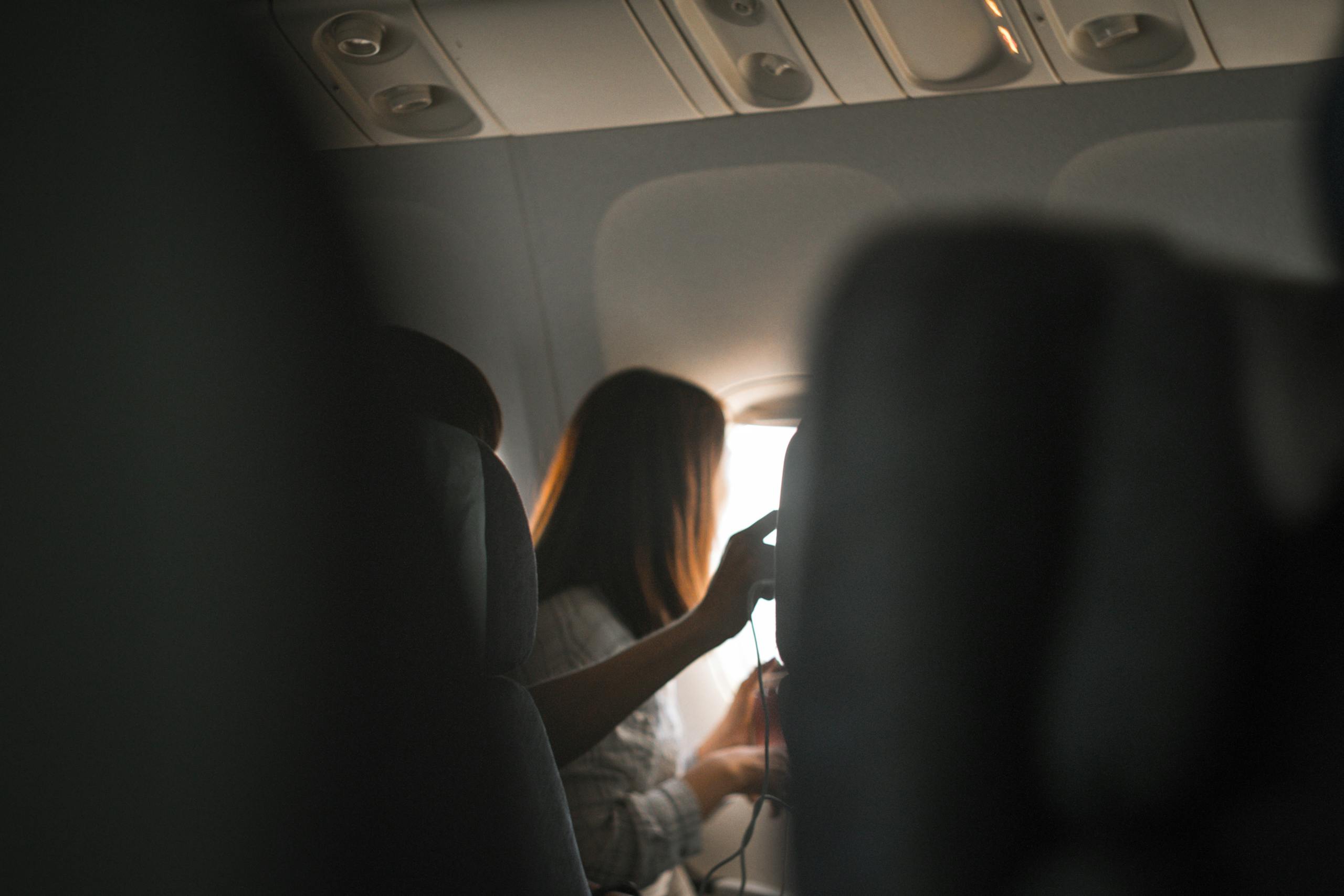
Modern air travel compresses geography in ways that are uniquely favorable to respiratory viruses. A person can be infected in one city, board a plane while still asymptomatic, and arrive thousands of miles away within hours. Multiply that by thousands of daily flights, and the result is a highly efficient national transmission network.
Unlike local commuting, which tends to reinforce regional spread, air travel allows viruses to leapfrog across the country, bypassing natural geographic barriers. This study reinforces what many epidemiologists have suspected: controlling early air-based spread may be one of the most critical—and most difficult—challenges in future pandemics.
Looking Ahead
The rapid and uncertain spread of H1N1 and COVID-19 underscores a sobering reality. By the time a pandemic is officially recognized, it may already be everywhere. Studies like this do not offer simple fixes, but they do provide clearer insight into how modern pandemics behave.
As surveillance technologies improve and modeling frameworks become more refined, researchers hope that future outbreaks can be detected earlier and slowed more effectively. While air travel will always pose risks, understanding its role may help policymakers design smarter, more targeted responses when the next pandemic inevitably arrives.
Research paper: https://doi.org/10.1073/pnas.2518051123