How Watching Dance Shapes the Brain in Ways We’re Only Beginning to Understand
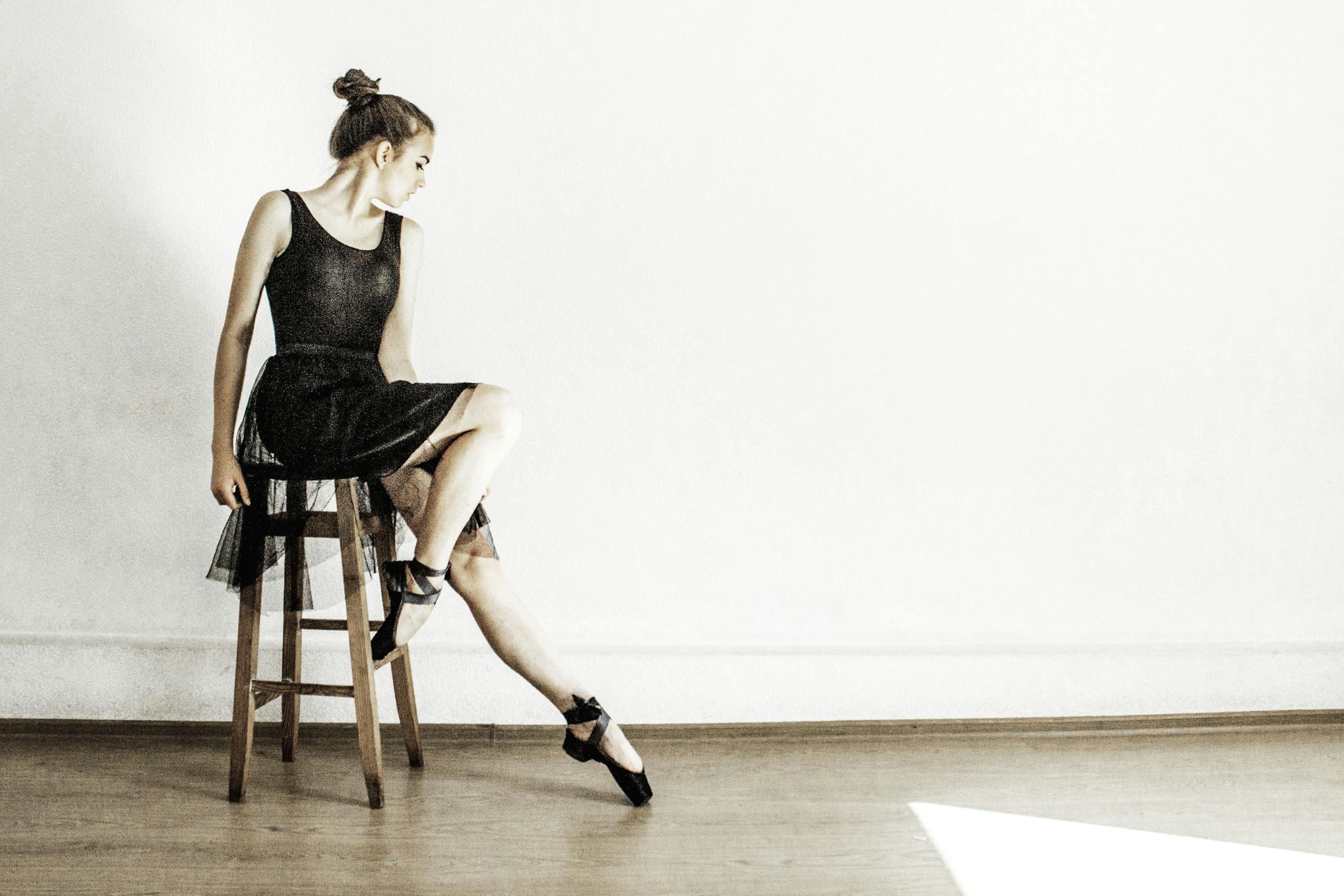
A new study published in Nature Communications offers one of the most detailed looks yet at how the human brain processes dance, revealing that movement, music, emotions, and aesthetics come together in surprisingly complex ways. The research, led by Yu Takagi and colleagues, used advanced deep generative AI models alongside fMRI scanning to map how different dance styles activate various regions of the brain—both in seasoned dancers and complete beginners. What makes this study stand out is not just its use of cutting-edge technology, but the scale and natural realism of the experiment, which provides a clearer window into how the brain handles real-world artistic experiences.
To gather accurate neurological data, the researchers scanned the brains of 14 participants, split evenly between seven expert dancers and seven novices. Each participant watched roughly five hours of dance footage, drawn from more than 1,100 video clips featuring over 30 dancers performing choreography to more than 60 unique music tracks across 10 different genres, including hip-hop, break dancing, street styles, and ballet jazz. This extensive dataset allowed the researchers to examine not only how people process dance in general, but also how individual backgrounds and expertise shape the brain’s response.
After collecting the fMRI data, the team used a deep generative AI model trained on a large collection of dance videos to analyze and interpret the participants’ brain activity. Instead of examining only movement or sound, the model captured combinations of motion, music, aesthetic cues, and emotional tone. This is important, because dance is inherently a cross-modal experience—you don’t just see dance, you feel rhythm, sense expression, and process meaning. According to the findings, these combined features were strong predictors of how each participant’s brain represented the dances they watched.
One of the standout discoveries was that expert dancers developed more individualized and detailed brain maps of dance styles than novices. This means that while novice viewers processed dance in more similar, generalized patterns, expert dancers’ brains reacted with greater variation, as if each had developed a personalized internal “dance representation system.” This effect was especially strong for mapping dance motion, suggesting that training sharpens the brain’s sensitivity to subtle movement details.
Another key takeaway is that multiple brain regions—not just visual or motor areas—were involved. Prior studies often focused on basic brain activation when viewing dance, but this research provides a richer picture. The team found evidence that regions associated with sensory integration, emotion, music perception, and aesthetic judgment played major roles in shaping how dance was processed. This aligns with earlier work suggesting that dance engages broad cognitive networks related to empathy, prediction, and embodied simulation.
At its core, this study provides a clearer understanding of how dance—an art form deeply rooted in human culture—interacts with the brain’s architecture. But beyond the findings themselves, the methodology is a major step forward. Using cross-modal deep generative models to decode the brain’s response to complex, naturalistic stimuli opens the door to future studies on topics such as film, theater, sports movements, and musical performance. Instead of relying on simplified lab stimuli, researchers can now examine experiences that more closely resemble real life.
To expand the value of the original study, here are some additional sections for readers who want to learn more about the science behind dance, perception, and neural modeling.
How the Brain Integrates Movement and Music
The human brain doesn’t treat dance as just movement. When you watch dance, your brain automatically synchronizes visual motion, auditory rhythm, and emotional cues. This cross-modal processing is handled by regions such as:
- Superior temporal gyrus, which integrates sound and movement
- Premotor cortex, involved in predicting and simulating actions
- Posterior parietal cortex, which maps spatial orientation and body relationships
- Temporal lobes, which contribute to emotional interpretation
The ability to interpret dance is connected to larger cognitive functions like empathy, timing, and understanding others’ intentions. This might be why observing dance often feels surprisingly engaging: your brain is actively decoding multiple layers of information at once.
Why Expertise Changes Brain Responses
Dance expertise doesn’t just give someone better technique—it reshapes the way their brain organizes information. Expert dancers develop:
- Heightened sensitivity to subtle movement variations
- Faster predictive modeling (anticipating upcoming moves)
- Refined motor imagery (mentally simulating movements)
- Personalized aesthetic frameworks for interpreting choreographic styles
This aligns with studies on athletes, musicians, and visual artists, where expertise leads to denser, more specialized neural networks. What’s interesting about this study is that it shows expertise increasing individual variability, not decreasing it. Instead of forming one standard “expert brain,” dancers form their own unique interpretive structures.
The Role of AI in Understanding Human Perception
The AI model used in this research—built to learn patterns from hundreds of dance videos—provided a bridge between raw sensory data and measurable brain activity. This model captured:
- Motion dynamics (speed, shape, direction, complexity)
- Musical structure (tempo, energy, beat intensity)
- Aesthetic qualities (style, emotional tone)
Because the AI created a compact representation of these features, scientists could test how well each feature predicted brain activation. This approach represents a shift in neuroscience from handcrafted stimuli to data-rich, ecologically valid models, enabling more accurate studies of how people encounter art, media, and real-world experiences.
Broader Implications for Understanding Art and the Brain
This research hints at several larger themes:
- Artistic perception is deeply multisensory, not isolated within one system.
- Training in an art form rewires the brain in highly individual ways.
- Generative AI can serve as a powerful tool for neuroscience, offering structured representations of complex stimuli like dance.
- The boundary between cognitive science, art, and technology is becoming increasingly intertwined.
Such studies may eventually inform new forms of choreography, therapy, dance education, or immersive digital art, especially if future work uses brain-activity models to predict how people will emotionally respond to different styles of movement.
Research Paper
Cross-modal deep generative models reveal the cortical representation of dancing
https://doi.org/10.1038/s41467-025-65039-w