Meconium Helps Scientists Map Prenatal Metal Exposure in New York’s Newborns

New research from New York is offering a clearer picture of how babies are exposed to environmental metals even before they are born—and the key clue comes from an unexpected source: meconium, the first stool passed by newborns.
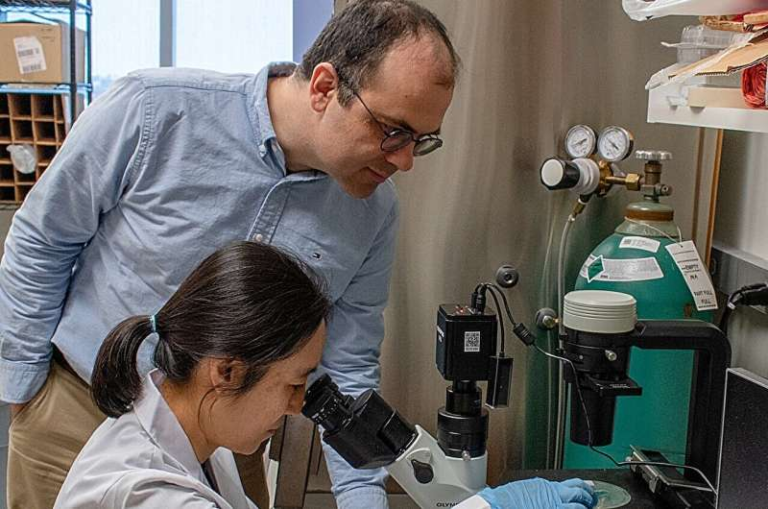
Two newly published studies led by researchers from the CUNY Graduate School of Public Health and Health Policy (CUNY SPH) show that meconium can serve as a powerful, low-cost, and minimally invasive biomarker for tracking prenatal exposure to both toxic metals and nutritionally essential metals. The findings shed light on how exposure patterns differ across urban and suburban settings, as well as among diverse racial, linguistic, and socioeconomic groups in New York City.
Together, these studies provide important insights into environmental health, prenatal development, and ongoing concerns around environmental justice.
Why Meconium Matters for Prenatal Exposure Research
Meconium begins forming in the fetal gut during the second trimester and continues to accumulate through the third trimester. Unlike blood or urine samples, which capture exposure at a single moment in time, meconium reflects cumulative exposure over months of pregnancy.
From a research standpoint, this makes meconium especially valuable. It is easy to collect shortly after birth, does not require invasive procedures, and can be analyzed for a wide range of substances using modern laboratory techniques. These advantages make it an attractive tool for large-scale studies focused on prenatal environmental exposure.
The CUNY SPH studies build on this idea by demonstrating that meconium can reliably capture differences in metal exposure linked to geography, maternal background, and social conditions.
Comparing Urban and Suburban New York: What the First Study Found
The first study, published in the Journal of Perinatology, focused on newborns delivered at two hospitals in New York State—one located in Brooklyn, representing an urban environment, and the other in Orange County, representing a more suburban setting.
Study Design and Methods
- 157 newborns were included in the analysis.
- Researchers measured 10 metals in meconium samples.
- These metals included toxic elements such as lead and cadmium, as well as essential nutrients like iron, zinc, copper, chromium, and molybdenum.
- Metal concentrations were measured using inductively coupled plasma mass spectrometry (ICP-MS), a highly sensitive analytical technique.
Key Findings
- Meconium samples from the Brooklyn hospital showed significantly higher levels of lead and cadmium, both of which are known to be harmful even at low levels during fetal development.
- Samples from the suburban Orange County hospital contained higher concentrations of essential metals, including copper, chromium, iron, and molybdenum.
- While differences between the two locations were clear, overall metal levels in both groups were relatively low.
To better understand how these results fit into a broader context, the researchers conducted a scoping review of existing studies that measured metals in meconium worldwide. When compared to data from North America, Europe, and Asia, the New York cohorts were found to have metal concentrations similar to those reported in low-pollution regions.
Metal Exposure, Race, and Language in New York City
The second study, published in Exposure and Health, shifted the focus to environmental disparities within New York City itself.
Study Design and Population
- The study analyzed 301 mother–newborn pairs.
- Participants were recruited from three public hospitals located in Brooklyn, Queens, and Manhattan.
- These hospitals primarily serve immigrant, low-income, and racially diverse communities.
- As in the first study, researchers analyzed 10 metals in meconium samples.
Overall Exposure Levels
The reassuring news is that overall concentrations of toxic metals, including lead and cadmium, were low and comparable to those seen in low-pollution areas worldwide. This suggests that, despite New York City’s long industrial history, prenatal exposure levels in this cohort were not unusually high.
Disparities by Maternal Background
At the same time, the study revealed important disparities:
- Newborns of Asian mothers had meconium lead levels approximately 150% to 200% higher than those of non-Hispanic White mothers.
- Babies born to Spanish-speaking mothers had significantly higher lead levels than those born to English-speaking mothers.
The researchers suggest these differences may reflect cumulative lifetime exposure, including environmental conditions in mothers’ countries of origin, as well as exposures linked to occupation, diet, and housing after immigration.
Environmental Justice Areas and Housing Factors
New York City officially designates certain neighborhoods as Environmental Justice Areas, meaning they face higher pollution burdens combined with social and economic vulnerability.
In this study:
- Most participants lived in Environmental Justice Areas.
- Many resided in older, private housing, which is often associated with lead exposure risks.
However, the analysis did not find significant associations between meconium lead levels and:
- Housing type (public vs. private)
- Building age
- Environmental Justice Area designation
The researchers caution that this does not necessarily mean these factors are irrelevant. Instead, the lack of association may be due to limited statistical power and the fact that many participants lived in similarly high-burden neighborhoods, making differences harder to detect.
Why Low-Level Exposure Still Matters
A critical takeaway from both studies is that there is no established “safe” level of prenatal exposure to metals like lead and cadmium. Even low concentrations have been linked to neurodevelopmental delays, behavioral issues, and long-term health effects.
The authors also emphasize that there are currently no standardized reference ranges for metal concentrations in meconium—either for toxic metals or for essential nutrients. This makes continued research especially important.
Broader Context: Metals, Pregnancy, and Development
Metals can enter the body through air, water, food, consumer products, and occupational exposures. During pregnancy, some metals can cross the placenta and accumulate in fetal tissues, potentially affecting brain development, growth, and metabolism.
Essential metals such as iron, zinc, and copper are vital for fetal development, but imbalances—either too little or too much—can still pose risks. Meanwhile, toxic metals like lead and cadmium have no known biological benefit and are associated with harm even at very low doses.
By capturing exposure over much of pregnancy, meconium offers researchers a unique window into this complex exposure landscape.
What Comes Next
The CUNY SPH research team highlights the need for:
- Larger, more representative studies
- Long-term follow-up of children to link meconium metal levels with health and developmental outcomes
- Better understanding of modifiable environmental and policy factors that can reduce exposure, particularly in communities facing the greatest environmental burdens
These studies reinforce the idea that prenatal exposure is shaped not just by where someone lives during pregnancy, but by a lifetime of environmental experiences.
Research References
https://doi.org/10.1038/s41372-025-02504-w
https://doi.org/10.1007/s12403-025-00709-0