New CAP-LIFT Cannula Redefines Hip Arthroscopy With a More Precise and Safer Surgical Approach
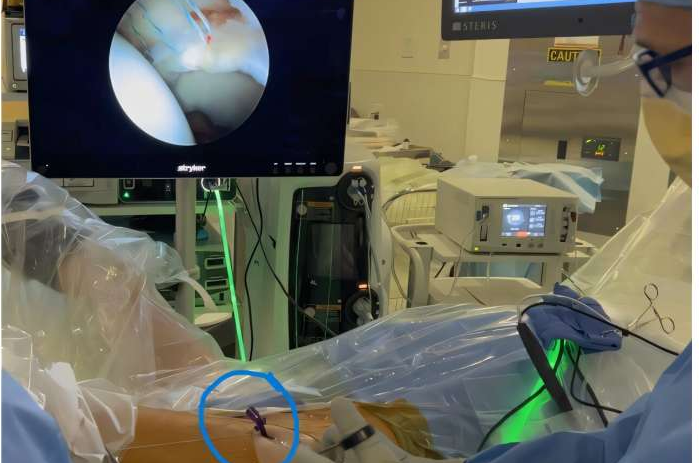
The field of hip arthroscopy has been steadily evolving for years, but a newly introduced surgical device—the CAP-LIFT cannula—is drawing an unusual amount of attention for its potential to genuinely change how surgeons operate inside one of the body’s most difficult joints to access. Developed through a collaboration between mechanical engineering researchers at the University of Colorado Boulder and orthopedic surgeons at the University of Colorado Anschutz School of Medicine, this device aims to address limitations that have existed in hip surgery since the earliest arthroscopic techniques. What makes this breakthrough uniquely noteworthy is that it doesn’t just tweak a traditional tool—it reimagines the design altogether.
The CAP-LIFT cannula officially launched in October and has already been used in over 100 surgeries within its first few weeks, giving surgeons across different states an early look at how it performs in real operating-room conditions. According to those involved in the project, the early feedback has been overwhelmingly positive, with many surgeons pointing out improvements in access, motion, and stability during procedures.
To understand why this matters, it helps to know what role a cannula plays in hip arthroscopy. A standard arthroscopic cannula is essentially a rigid tube inserted from the skin into the joint, creating a controlled passageway for surgical tools and cameras. Think of it as a tunnel. The challenge is that the hip joint sits deep, is heavily surrounded by soft tissue, and offers limited room to maneuver. A conventional cannula is a full-circumference tube—a closed cylinder—which restricts the movement of tools inside it. It forces the surgeon to work around tight constraints while navigating delicate structures. This limitation is one of the main reasons hip arthroscopy is widely considered one of the most technically demanding minimally invasive surgeries.
The CAP-LIFT cannula changes this basic geometry by introducing a slotted design, using only about 120 degrees of material instead of a full wraparound tube. In simpler terms, it’s like replacing a complete straw with a precisely engineered partial straw. This opening gives the surgeon a much wider range of motion, making it easier to manipulate tools, adjust angles, and reach tissue without bumping into the inner walls of the instrument. The change might sound small, but in the context of deep-joint work, it can dramatically reduce the amount of effort and wrist rotation required during surgery.
But the redesign doesn’t stop there. Traditionally, surgeons rely on a second instrument called a sled, a long stainless steel guide used to help place tools through the cannula and maintain consistent access to the joint. Handling this sled often requires a second pair of hands—sometimes more—especially when switching tools or making adjustments. Every time a sled is removed or reinserted, there is a risk of scraping or damaging tissue, tendons, or muscle around the joint. These micro-injuries can lead to swelling, unnecessary postoperative pain, or longer recovery times.
The CAP-LIFT completely eliminates this issue through an anchoring system that merges the sled and cannula into a single integrated device. Once placed, it stabilizes itself without shifting, meaning surgeons don’t have to repeatedly pull instruments in and out to maintain access. Reducing external help in the operating room also cuts down on procedural delays and streamlines the workflow. Surgeons can focus more precisely on the work inside the joint rather than coordinating around tool-holding assistants or worrying about losing their access point.
From a structural standpoint, the anchoring design is especially important because the hip is a deep ball-and-socket joint with tight capsular structures. Even slight movement of surgical tools can cause issues. The CAP-LIFT functions like a precisely fixed tunnel: more secure, more predictable, and less likely to drift with pressure or repositioning. For the patient, this translates to safer tool passages and fewer opportunities for unintended damage.
The medical device company Smith & Nephew, a major manufacturer in orthopedic technology, acquired the CAP-LIFT design in 2022 and has since supported its nationwide rollout. The developers—research professor Jacob Segil and orthopedic surgeon Dr. Omer Mei-Dan—have emphasized that their greatest satisfaction comes from seeing the tool already benefit real patients within weeks of launch. Multiple surgeons have now begun incorporating the device into femoroacetabular impingement corrections, labral repairs, diagnostic hip scopes, and other minimally invasive hip procedures.
The timing of this innovation coincides with major growth in the field. According to research published in the Iowa Orthopaedic Journal, hip arthroscopy has experienced a 600% increase in usage over the past 15 years. Better imaging, more refined surgical indications, and improved instrumentation have all contributed to this surge. As the field becomes more common, the need for equipment that reduces risk and increases precision becomes even more pressing.
How Hip Arthroscopy Works
To give additional context, hip arthroscopy is performed through small incisions around the hip, through which the surgeon inserts the cannula, a camera, and specialized tools. Because the hip is deep and surrounded by heavy musculature, access is far more restricted than in joints like the knee or shoulder. Surgeons operate while viewing a monitor that displays the camera feed from inside the joint. Common reasons for this surgery include repairing the labrum, reshaping bone deformities, removing loose bodies, and addressing cartilage damage.
Traditional arthroscopy depends heavily on smooth, predictable instrument entry. That is exactly where many complications arise. Instruments can snag, shift, or cause abrasion if the cannula moves even slightly. The CAP-LIFT’s dual-fixation approach directly addresses this long-standing problem.
Why the Slotted Design Matters
A partial-circumference cannula does more than simply open up space. It improves triangular instrument positioning, which is essential for tasks like shaving, suturing, and cutting. In conventional designs, the walls of a cylindrical cannula can obstruct tool handles and limit angles of approach. By carving out a fully engineered slot, CAP-LIFT gives surgeons the freedom to rotate and angle tools without compromising stability. This makes the procedure not only more comfortable for the surgeon but also potentially reduces the total time under traction—an important factor in minimizing complications such as nerve irritation.
What This Means for the Future of Arthroscopy
Innovations in surgical instruments often get overshadowed by major advances in implants or imaging, but tools like this can lead to substantial improvements in surgical efficiency and patient outcomes. While long-term data is still needed to measure complication rates, recovery time, and procedure length with and without CAP-LIFT, early adoption indicates strong trust from experienced surgeons.
Because the hip is known for its difficulty, any tool that simplifies access without sacrificing stability can influence how training programs teach new arthroscopists. If widely adopted, the CAP-LIFT cannula could become a new standard instrument and potentially inspire similar redesigns in other areas of minimally invasive surgery.
Full Research Paper
The Dual-Fixed Slotted Cannula for Hip Arthroscopy: Surgical Technique