New Imaging Technique Reveals How Aging, Genetics, and Cell Structure Are Deeply Connected

A new study from Yale University has uncovered how much information is actually hidden inside ordinary tissue images—and the findings are surprisingly extensive. Researchers have developed a machine-learning imaging technique that can identify connections between aging, genetic variants, gene activity, and the physical appearance of cells in normal human tissue. This work shows that something as routine as a pathology slide contains far more biological information than experts previously believed.
The study, led by Ran Meng, a postdoctoral researcher in Yale’s Department of Molecular Biophysics and Biochemistry, together with senior author Mark Gerstein, demonstrates that histology images can reveal a person’s gene expression patterns, genetic differences, and even an estimate of chronological age. These results suggest that cellular structures—especially the nuclei—carry extremely rich signals that machine-learning models can interpret with surprising accuracy.
Below is a detailed breakdown of what the researchers found, why it matters, and how it fits into the bigger picture of aging and genetic science.
What the Yale Team Actually Did
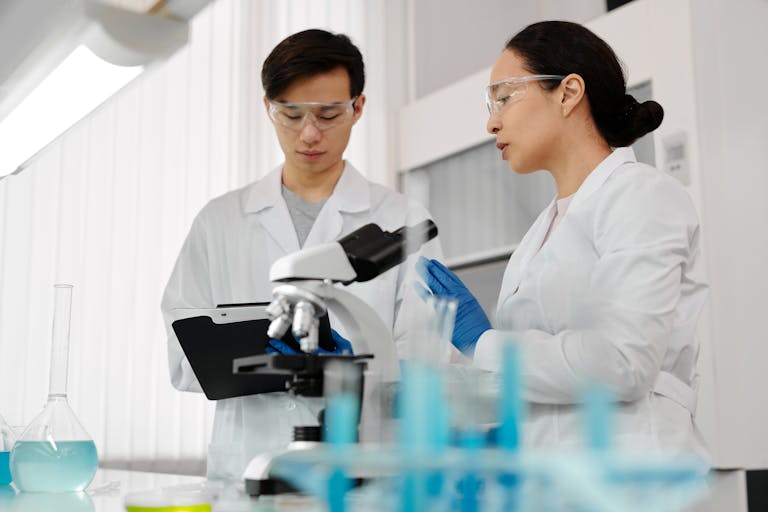
The research team used standard histology slides, the same kind routinely used in hospitals and diagnostic labs. They paired these images with genetic information and RNA expression data from 838 healthy donors, covering 12 different human tissues and more than 10,000 microscopic images.
Using this dataset, they trained machine-learning models to look for patterns in cellular appearance that correlate with:
- Genetic variants
- Gene expression levels (whether genes are switched on or off)
- Chronological age
The approach was highly computational, enabling the team to analyze massive image files and identify subtle patterns that are invisible to the human eye.
Key Findings From the Study
1. Tissue images can reveal genetic differences
The models were able to identify 906 specific locations in the human genome that strongly correlate with the shape and structure of cell nuclei across different tissues. These are essentially genetic markers that influence how cells physically appear.
This supports the idea that genetics influences tissue morphology far more subtly—and more consistently—than previously recognized.
2. Gene expression can be predicted from microscope images
One of the most impressive capabilities of the models is predicting gene expression levels directly from histology slides. Some tissues provided especially strong predictive accuracy:
- Lung
- Heart
- Testis
Because each tissue type expresses genes differently, the models had to learn complex visual patterns linked to biological activity.
3. A person’s age can be estimated through cell structure
Another model could estimate a donor’s chronological age using only tissue appearance. The most age-informative tissues were:
- Skin
- Tibial nerve
- Tibial artery
- Testis
These tissues tend to develop visible cellular changes as a person grows older, and those changes were captured well by the model.
4. The shape of cell nuclei is a major biological indicator
Among all the features examined, nuclear size, shape, and structural arrangement carried the most informative signals. These details helped the model distinguish between younger and older tissue samples and link specific morphological traits to genetic variants and gene activity.
Why This Research Matters
A new window into the genotype-phenotype connection
One of the biggest challenges in genetics is understanding how genotype (a person’s genetic makeup) influences phenotype (observable traits). Phenotype includes everything from cell appearance to complex behaviors and disease risk.
This study pushes that frontier forward by showing that microscopic images can serve as a bridge between the two. It demonstrates that routine tissue slides carry encoded genetic and aging information that machine-learning systems can decode.
Potential for improved diagnostics
If refined and validated for clinical use, this technique could:
- Improve early detection of age-related diseases
- Reveal abnormal tissue patterns before symptoms appear
- Reduce reliance on expensive molecular tests
- Enhance routine pathology workflows
Because histology slides are already part of standard medical practice worldwide, integrating AI-based interpretation would not require entirely new technologies—just smarter analysis.
Insight into aging biology
Many researchers are trying to understand the biological mechanisms behind aging. This study suggests that:
- Aging leaves consistent structural signatures in tissue
- These signatures are detectable across multiple organs
- The patterns can be quantified with machine learning
This contributes to the growing field of aging clocks, which already includes DNA methylation clocks and blood-based biomarkers.
Additional Background: How Aging Manifests at the Cellular Level
To help put the study’s findings into context, it’s useful to understand how aging affects cells more broadly. Aging involves a mixture of structural, genetic, and functional changes, including:
- Nuclear abnormalities such as irregular shapes or sizes
- Accumulation of DNA damage
- Reduced cell division rates
- Deterioration of extracellular structures
- Changes in gene expression patterns
As cells age, their nuclei often develop distinct alterations, which is why the Yale team found nuclear morphology so informative. These subtle shifts are usually too faint for pathologists to quantify manually, but machine-learning models can analyze them precisely.
Additional Background: Why Histology Is Becoming a Goldmine for AI
The rise of AI in medical imaging has already transformed fields like radiology and dermatology. Histology—examining thin slices of tissue under a microscope—is the next major frontier. This field benefits from:
- High resolution images
- Rich structural information about cells
- A long history of digitized slide storage
- Large public datasets, such as those used in this research
When AI models analyze histology, they can detect patterns far beyond human visual abilities. This makes histology a powerful tool for linking visually detectable features to molecular and genetic processes.
Where This Research Could Lead Next
The study focused exclusively on healthy human tissue, meaning the next logical step is examining diseased tissue—especially cancer, neurodegenerative disorders, and inflammatory conditions.
Future work might include:
- Predicting disease risk from tissue samples
- Identifying early warning signs before illness develops
- Connecting tissue appearance with lifestyle factors
- Developing personalized “morphological age” scores
As image-analysis tools improve, medical professionals may eventually be able to extract multiple layers of biological information from a single routine slide.
Conclusion
This Yale study demonstrates that standard tissue images contain far more information than anyone expected. With machine-learning techniques, researchers can use these images to predict genetic variants, gene activity, and a person’s age, all by analyzing subtle characteristics of cell structure—especially the nuclei.
By uncovering 906 genome regions linked to tissue appearance, developing models that predict gene expression from images, and accurately estimating chronological age from microscopic slides, the researchers have opened a new pathway for understanding how aging and genetics manifest in the physical structure of human tissues.
The implications extend from basic science to diagnostics, aging research, and future clinical applications. This work emphasizes how much biological insight lies in plain sight—hidden within the everyday images seen through the microscope.
Research Paper:
Machine-learning models based on histological images from healthy donors identify imageQTLs and predict chronological age
https://doi.org/10.1073/pnas.2423469122