New Mouse Study Shows How Combined Gene Mutations Better Recreate Hirschsprung Disease
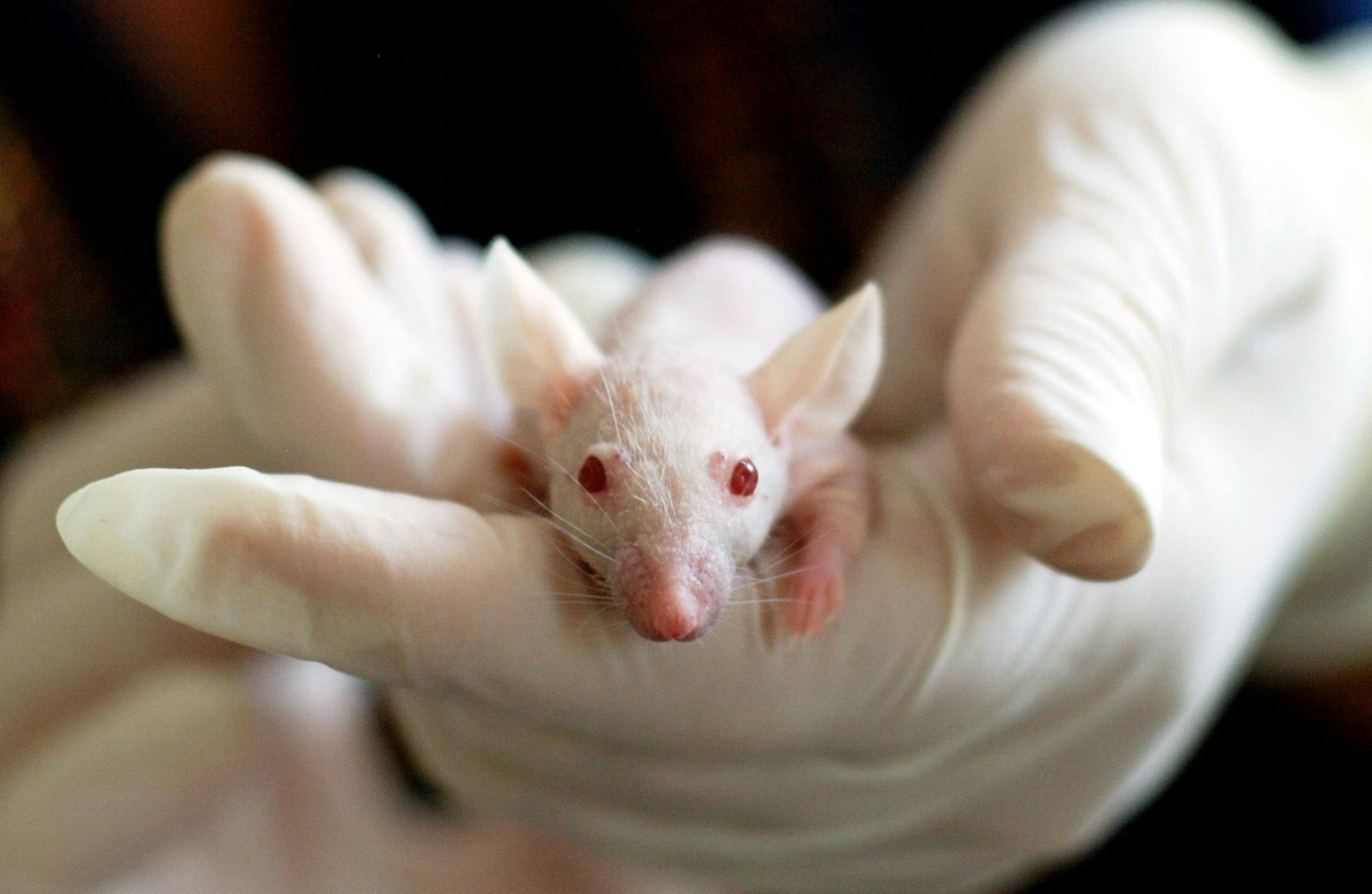
Hirschsprung disease is a rare but serious condition that affects newborns, often revealing itself within the first days of life when a baby cannot pass stool. At the heart of the disorder is a failure of the gut’s own nervous system to develop properly. Now, a new study from NYU Langone Health offers a much more accurate way to study this disease, using mice that reflect how Hirschsprung disease actually appears in humans — not just genetically, but also biologically and clinically.
This research, published in Proceedings of the National Academy of Sciences (PNAS), moves away from older, overly simplistic animal models and instead focuses on how multiple subtle gene mutations work together to disrupt gut nerve development. The result is a mouse model that mirrors key features of the human condition far more closely than anything before it.
Understanding Hirschsprung Disease and the Gut’s “Second Brain”
To understand why this study matters, it helps to know a bit about the enteric nervous system (ENS). Often called the body’s “second brain,” the ENS is a complex network of nerves embedded in the walls of the digestive tract. It controls how food and waste move through the intestines, operating largely on its own without direct input from the brain.
During fetal development, nerve cells migrate along the length of the gut and mature into a functioning enteric nervous system. In Hirschsprung disease, this process fails. Portions of the intestine — most commonly the lower colon — are left without nerve cells, a condition known as aganglionosis. Without these nerves, the affected segment cannot relax, causing severe intestinal blockage.
Hirschsprung disease is also known for a few distinct characteristics. It is about four times more common in males than females, and in most patients, the disease affects only specific regions of the colon rather than the entire digestive tract.
Why Previous Animal Models Fell Short
For decades, researchers have known that genetics play a major role in Hirschsprung disease. Two genes in particular — RET and EDNRB — are the most strongly associated with the condition. In earlier animal studies, scientists typically created mouse models by completely disabling, or “knocking out,” one of these genes.
While those models did disrupt enteric nervous system development, they also introduced problems. The mice often showed nerve defects throughout the entire intestine, including the small intestine, which is not typical in humans. Even more importantly, male and female mice were affected at roughly equal rates, failing to reproduce the strong sex bias seen in people.
In short, these models were useful but not realistic enough. They treated Hirschsprung disease as if it were caused by a single catastrophic genetic failure, when in reality, the disease usually arises from combinations of smaller genetic changes.
A New Approach Using Combined, Partial Mutations
The NYU Langone research team took a different path. Instead of eliminating RET or EDNRB entirely, they engineered mice with partial disruptions in both genes. Some mice had only one copy of RET removed, while EDNRB remained partially functional in both copies. Other combinations were also tested.
One specific genetic setup stood out. Mice with a single copy of RET deleted and both copies of EDNRB weakened showed disease patterns that closely resembled human Hirschsprung disease. These mice developed normal enteric nerves in the small intestine, while defects were largely restricted to the colon. Just as importantly, male mice were significantly more likely to be affected than females.
This combination-based model demonstrated something crucial: Hirschsprung disease is not simply about losing one essential gene. It is about how multiple genes interact, each contributing to the final outcome.
A Surprising Discovery About Nerve Cell Development
Perhaps the most unexpected finding came when researchers examined the intestines of the affected mice during development. Hirschsprung disease has long been described as a condition where nerve cells fail to reach the gut. But in these mice, the intestines were actually filled with immature nerve progenitor cells — even more than in healthy animals.
This raised an important question. If the precursor cells were present, why did mature nerve cells fail to form?
To answer this, the team analyzed gene activity within these developing cells. RET and EDNRB regulate many downstream genes, but one stood out: SOX2OT. Levels of this gene were dramatically increased in the mice with combined mutations.
SOX2OT plays a role in controlling how neural progenitor cells differentiate and mature. The researchers believe that when RET and EDNRB signaling is weakened, SOX2OT activity becomes excessive. This, in turn, may block progenitor cells from completing their development into functional enteric neurons, leaving the gut without a working nervous system despite an abundance of precursor cells.
This finding shifts the way Hirschsprung disease is understood. Rather than being caused solely by missing cells, the disorder may also involve cells that are present but trapped in an immature state.
Why This Matters Beyond Hirschsprung Disease
The implications of this research go well beyond one rare condition. Hirschsprung disease is considered a complex genetic disorder, meaning it does not follow simple inheritance patterns. This study reinforces the idea that many human diseases arise from multiple modest genetic changes acting together, not from a single dramatic mutation.
This approach has already been widely used in cancer research, where scientists study how combinations of mutations drive tumor growth. Applying the same logic to developmental disorders could open new doors, not only for understanding disease mechanisms but also for designing better treatments.
A more accurate mouse model also allows researchers to test therapies that might encourage immature nerve cells to complete their development, rather than focusing solely on replacing missing cells.
A Closer Look at the Genes Involved
The RET gene plays a central role in guiding nerve cell migration and survival during development. Variants in RET are found in a large percentage of Hirschsprung disease patients. The EDNRB gene is involved in signaling pathways that help neural crest cells populate the gut.
Importantly, most patients do not completely lose these genes. Instead, they carry partial loss-of-function variants, exactly the kind of genetic scenario recreated in this new mouse model. That alignment between human genetics and experimental design is what makes the study especially powerful.
What Comes Next
The NYU Langone team plans to use this model to explore additional questions, including how gene interactions vary across different regions of the gut and why males are more susceptible than females. Understanding these subtleties could eventually lead to earlier diagnosis or new therapeutic strategies that target the underlying developmental pathways rather than just treating symptoms.
By embracing genetic complexity instead of avoiding it, this research provides a clearer, more realistic window into how Hirschsprung disease develops — and how similar strategies might help unravel other challenging human disorders.
Research paper:
Ryan D. Fine et al., Joint disruption of Ret and Ednrb transcription shifts cell fate trajectories in the enteric nervous system in Hirschsprung disease, Proceedings of the National Academy of Sciences (2025).
https://doi.org/10.1073/pnas.2507062122