Scientists Discover a Key Enzyme That Controls Weight Gain and Cholesterol Levels
Obesity has become one of the most serious global health challenges of our time. It significantly increases the risk of heart disease, metabolic-associated fatty liver disease (MASLD), type 2 diabetes, and several other chronic conditions. As calorie-dense diets and sedentary lifestyles become more common worldwide, researchers are racing to better understand the biological mechanisms that drive fat accumulation and disrupted cholesterol balance. A newly published study has uncovered an important piece of that puzzle: a previously unknown enzyme that appears to regulate both weight gain and cholesterol levels at the molecular level.
Researchers from University Hospitals and Case Western Reserve University have identified a novel enzyme called SCoR2, which plays a central role in how the body produces and stores fat. Their findings, published in the journal Science Signaling, suggest that blocking this enzyme could prevent weight gain, reduce liver damage, and lower “bad” cholesterol—at least in animal models. The discovery opens the door to a potential new class of drugs aimed at treating obesity, cardiovascular disease, and fatty liver disease at the same time.
Why Obesity and Cholesterol Are So Closely Linked
Obesity is not just about excess body weight. It is deeply tied to how the body handles lipids, including fats and cholesterol. When lipid metabolism is disrupted, fat can accumulate in organs such as the liver, leading to MASLD, while cholesterol imbalances raise the risk of atherosclerosis and heart disease. Despite many available treatments that target appetite or cholesterol absorption, relatively few therapies directly address the core biochemical pathways that regulate fat production itself.
This is where the new discovery becomes especially interesting. Instead of focusing on calorie intake or absorption, the study examines how fat synthesis is controlled at the protein level inside cells.
Nitric Oxide and Its Role in Metabolism
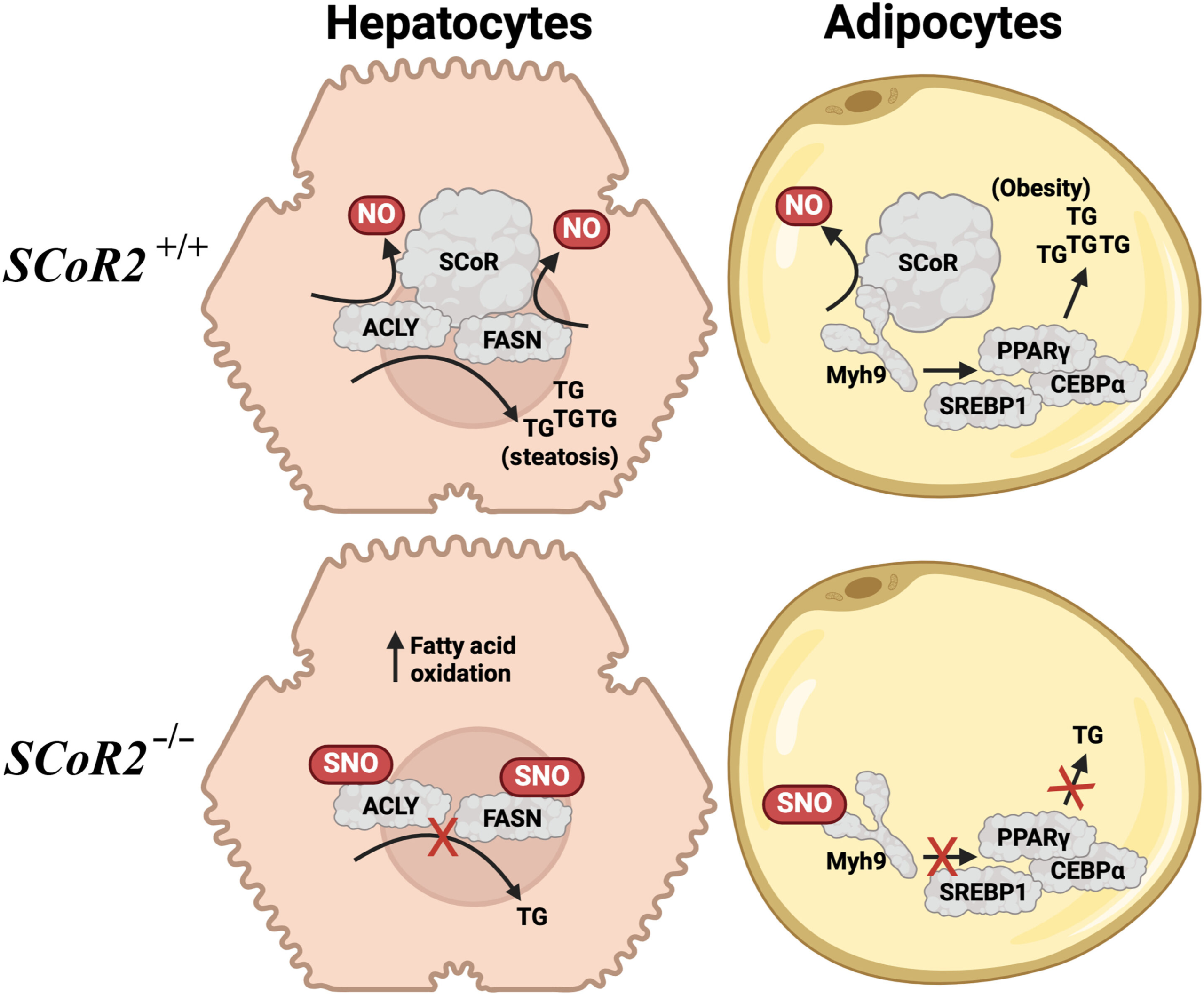
A key part of this research centers on nitric oxide, a small gas molecule with wide-ranging effects in the body. Nitric oxide is involved in blood vessel relaxation, immune responses, and cellular signaling. One of its lesser-known but crucial roles is its ability to bind to proteins through a process known as S-nitrosylation. When nitric oxide binds to certain metabolic proteins, it can change their activity—sometimes turning them off.
The researchers found that nitric oxide normally acts as a brake on fat and cholesterol production. In the liver, nitric oxide inhibits proteins responsible for making fat and cholesterol. In fat tissue, it suppresses the genetic programs that produce enzymes needed for fat synthesis. When nitric oxide is present and bound to these proteins, lipid production slows down.
The Discovery of SCoR2
The newly identified enzyme, SCoR2, functions as a protein denitrosylase. In simple terms, it removes nitric oxide from proteins. When SCoR2 removes nitric oxide from fat-regulating proteins, it releases the brake on lipid production. As a result, fat synthesis is turned on, and fat storage increases.
This discovery established SCoR2 as a key regulator of lipogenesis, the process by which the body produces fat. The researchers demonstrated that SCoR2 is not just involved but is actually required for normal fat production.
What Happens When SCoR2 Is Blocked
To understand the full impact of SCoR2, the research team tested what would happen if the enzyme were disabled. They did this in two ways: by genetically inhibiting SCoR2 and by using a newly developed drug designed to block its activity.
In mouse models, the results were striking. Animals in which SCoR2 was inhibited showed a strong resistance to weight gain, even under conditions that normally promote obesity. In addition to reduced body fat, these mice were protected from liver injury, a major concern in obesity-related MASLD.
Perhaps equally important, blocking SCoR2 also led to a significant reduction in LDL cholesterol, commonly referred to as “bad” cholesterol. This suggests that the enzyme sits at a crossroads between fat metabolism and cholesterol regulation, influencing both systems simultaneously.
A Potential New Class of Metabolic Drugs
One of the most promising aspects of this research is the therapeutic potential of targeting SCoR2. The drug developed by the researchers represents a first-in-class approach. Rather than suppressing appetite or blocking fat absorption, it works by preserving nitric oxide’s inhibitory effects on fat and cholesterol synthesis.
By keeping nitric oxide bound to metabolic proteins, the drug effectively prevents the body from switching on excessive fat production. This mechanism could offer a more direct and possibly more durable way to manage obesity and its related conditions.
The research team has indicated that the next major step is advancing this drug into clinical trials, a process expected to take about 18 months. If successful, human trials will determine whether the benefits seen in animal models translate to people.
Why This Matters for Fatty Liver Disease
MASLD, previously known as non-alcoholic fatty liver disease, is closely linked to obesity and abnormal lipid metabolism. Excess fat accumulation in the liver can lead to inflammation, fibrosis, and eventually liver failure. Currently, there are limited effective drug treatments specifically approved for MASLD.
By reducing fat synthesis directly in the liver and preventing lipid buildup, SCoR2 inhibition could offer a dual benefit: protecting liver health while also addressing obesity and cholesterol levels. This multi-target effect is one reason the discovery has generated strong interest within the metabolic research community.
Broader Context: Enzymes and Metabolic Control
This study highlights how enzymes act as molecular switches that control complex physiological outcomes. Small changes at the protein level can have wide-reaching effects on body weight, organ health, and cardiovascular risk. It also reinforces the idea that obesity is not simply a behavioral issue but a biochemical and genetic condition influenced by tightly regulated cellular pathways.
Previous research has linked related enzymes to cholesterol regulation through proteins such as PCSK9, which affects how cholesterol is cleared from the bloodstream. The new findings on SCoR2 fit into this broader understanding of how finely tuned lipid metabolism really is.
Important Limitations to Keep in Mind
While the results are encouraging, it is important to note that all findings so far come from animal studies. Mouse models are valuable for understanding biological mechanisms, but they do not always predict human outcomes perfectly. Safety, dosage, and long-term effects will need to be carefully evaluated in clinical trials before any SCoR2-targeting drug can be considered for widespread use.
Still, the discovery provides a compelling new direction for metabolic research and drug development.
Looking Ahead
The identification of SCoR2 adds a powerful new piece to our understanding of how the body regulates fat and cholesterol. If future studies confirm its effectiveness and safety in humans, targeting this enzyme could reshape how obesity, cardiovascular disease, and fatty liver disease are treated.
Rather than tackling these conditions separately, SCoR2 inhibition suggests the possibility of a single therapeutic strategy that addresses multiple metabolic disorders at once. For a world grappling with rising obesity rates, that is a development well worth watching.
Research paper:
https://www.science.org/doi/10.1126/scisignal.adv0660