Scientists Identify Five Distinct Structural Eras in the Human Brain Across a Lifetime
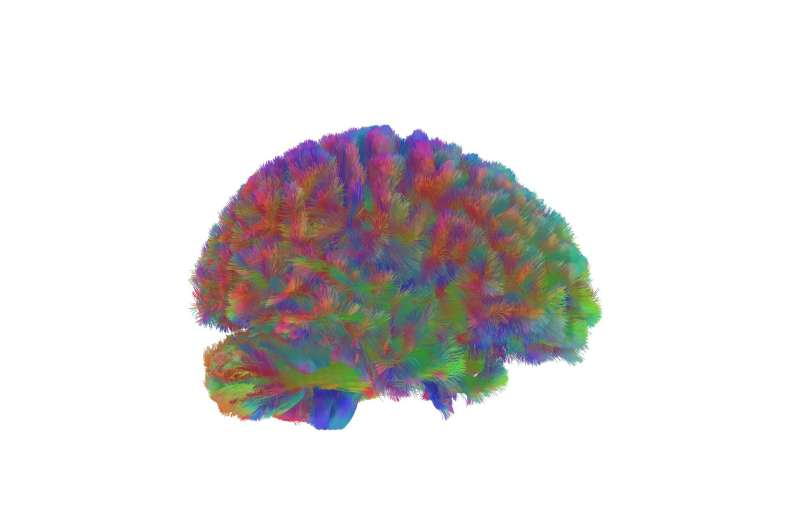
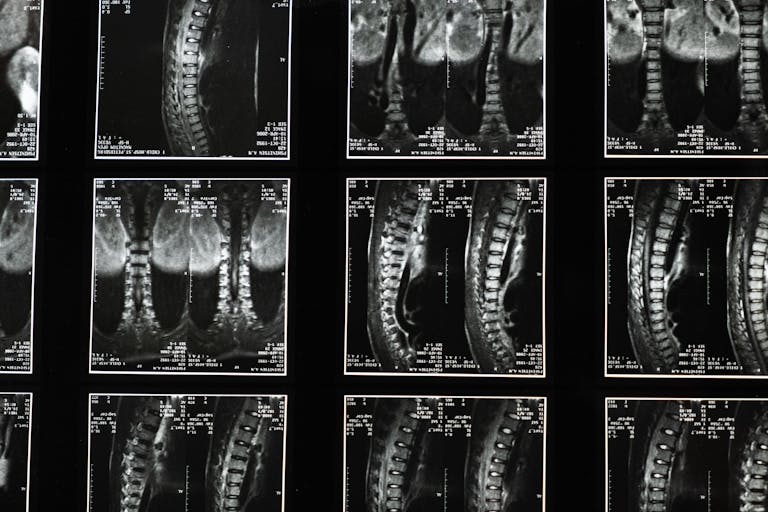
Neuroscientists from the University of Cambridge have mapped out a detailed structural timeline of how the human brain changes from birth to old age, revealing five major eras that define how our brains are wired throughout life. Their findings come from a large-scale analysis of 3,802 MRI diffusion scans collected from people aged 0 to 90, and the results highlight four key turning points—around ages 9, 32, 66, and 83—that mark clear shifts in how the brain’s neural connections are organized.
This study, published in Nature Communications, is one of the most comprehensive attempts to capture how the architecture of the brain evolves, stabilizes, reorganizes, and ultimately declines. Instead of viewing brain development as a smooth incline followed by a long, gradual decline, the researchers describe it as a sequence of structural epochs, each reflecting a characteristic style of neural wiring.
Below is a straightforward breakdown of the findings, along with deeper context to help readers understand why these structural changes matter.
Childhood: The First Era of Brain Wiring (Birth to About Age 9)
According to the researchers, the earliest era of the human brain is dominated by network consolidation. Babies are born with an immense overproduction of synapses—connections between neurons—which sets the stage for rapid learning and sensory exploration. As the years progress, the brain begins eliminating the less active synapses, keeping only the ones that are frequently used. This process strengthens the foundations of cognition.
During this period, both gray matter and white matter expand in volume. As a result, cortical thickness rises and reaches its peak, while cortical folding settles into a stable pattern. These developments contribute to the brain’s flexibility in childhood, a phase when cognitive capacity leaps forward but vulnerability to mental health conditions can also increase.
By age 9, the researchers identified the first major turning point—an era shift when the brain’s wiring transitions into a different structural stage that supports more complex thinking, emotional development, and learning challenges.
Adolescence: The Era of Increasing Neural Efficiency (Ages 9 to 32)
The second era, spanning adolescence and young adulthood, is defined by increasing efficiency in the brain’s networks. White matter continues to grow and refine, enabling quicker communication between distant brain areas. Increased “neural efficiency” means that different regions can exchange information rapidly and through shorter pathways.
This era is also the only period in which neural efficiency continually increases. It supports improved reasoning, planning, emotional regulation, and learning abilities. The researchers found that the culmination of these changes produces the strongest topological turning point in the entire human lifespan at around age 32.
The structural shift at this age marks the official transition from adolescent-style rewiring to a more stable adult configuration. Interestingly, this suggests that brain maturation continues much later than traditionally assumed—well into the early thirties—despite the biological onset of puberty occurring much earlier.
Adulthood: The Brain’s Longest Structural Plateau (Ages 32 to 66)
At 32, the third era begins: adulthood. This is the longest and most stable epoch of the brain’s life. For more than three decades, the brain’s architecture experiences no major structural turning points. Instead, the networks become increasingly segregated, meaning brain regions develop more distinct roles and communicate within specialized modules.
This segmented connectivity aligns with earlier research showing that intelligence and personality generally reach stable patterns during adulthood. While cognitive performance can still improve in various ways, the underlying structural wiring remains relatively consistent.
The stability of this era is important because it establishes the baseline from which age-related changes begin to emerge. It also highlights why interventions in midlife—such as brain health routines, cognitive challenges, and lifestyle practices—can have long-term effects.
Early Aging: Subtle Declines Begin Around Age 66
According to the Cambridge team, a mild but meaningful turning point appears at around 66 years old, marking the beginning of the early aging era. Unlike the dramatic transitions seen earlier in life, this shift is more gradual. Brain networks begin reorganizing, but without major structural upheavals.
However, this phase does correspond with reductions in white matter integrity, affecting the speed and quality of communication between brain regions. This is also the age when people experience heightened risk for health conditions like hypertension, which can further influence brain function.
Although the structural changes here are milder than in earlier eras, they carry significant implications. Subtler reorganizations in the brain’s wiring may underlie early signs of age-related memory loss, slower processing, or decreased cognitive flexibility.
Late Aging: Increased Reliance on Local Networks (Around Age 83 and Beyond)
The final era begins near age 83, where the brain undergoes another turning point. Limited data exists for this age group, but the available scans show a clear signature: a shift from global to local connectivity.
In other words, instead of drawing on widespread networks across the brain, older adults rely more heavily on a handful of local clusters. This reflects declining long-range communication pathways and further white matter deterioration.
This era correlates with known vulnerabilities in advanced age, such as heightened risk of dementia, reduced executive function, and slower cognitive processing.
Why These Five Eras Matter
The researchers emphasize that understanding these structural epochs gives scientists a more accurate framework for studying neurodevelopment, mental health, and aging. Many cognitive and psychological conditions are associated with disruptions in brain wiring. For example:
- Learning difficulties often appear around the childhood-to-adolescence transition.
- Mental health disorders frequently emerge during adolescence when network efficiency is changing rapidly.
- Neurodegenerative diseases become more prominent in the early and late aging eras when global connectivity begins to decline.
By identifying when the brain is most vulnerable or most adaptable, this research could influence education, treatment, brain health interventions, and preventive care.
These findings also underscore that aging is not simply a long downward slide, nor is development a simple upward climb. Instead, the human brain appears to follow an era-based structural journey, with clear moments of reconfiguration that shape how we think, learn, remember, and respond to challenges.
Additional Context: How Diffusion MRI Maps Brain Wiring
The study used diffusion MRI, a technology that tracks the movement of water molecules in tissue. Because water tends to flow along the brain’s white matter fibers, diffusion MRI can reveal how different regions are physically connected. This method allows researchers to build detailed tractography maps of neural pathways.
These maps were then analyzed using 12 different graph-theoretic metrics, such as:
- network efficiency
- modularity
- clustering
- path length
- connectivity strength
By applying dimensionality-reduction techniques, the researchers were able to visualize how these metrics shift together across the lifespan, eventually revealing the four turning points and five structural epochs.
Link to the Research Paper
Topological Turning Points Across the Human Lifespan
https://doi.org/10.1038/s41467-025-65974-8