Shingles Vaccine May Be Linked to Slower Biological Aging in Older Adults, New Study Suggests
The shingles vaccine has long been recommended to protect older adults from a painful viral infection, but new research suggests it may offer an additional and unexpected benefit: slower biological aging. According to a recent study from the USC Leonard Davis School of Gerontology, older adults who received the shingles vaccine showed signs of aging more slowly at a biological level compared to those who were unvaccinated.
This finding adds to a growing body of research exploring how vaccines might influence overall health beyond simply preventing specific diseases. While the results do not prove cause and effect, they raise intriguing questions about the broader role of vaccination in supporting healthier aging.
Understanding the Study and Its Scope
The study analyzed data from the U.S. Health and Retirement Study, a nationally representative, long-running research project that tracks the health and economic circumstances of older Americans. Researchers focused on more than 3,800 participants who were aged 70 or older in 2016.
By comparing individuals who had received the shingles vaccine with those who had not, the researchers examined how vaccination status related to multiple biological markers associated with aging. Importantly, the analysis controlled for a wide range of factors, including sociodemographic characteristics, health conditions, and lifestyle-related variables, to reduce the influence of confounding factors.
Even after accounting for these differences, vaccinated individuals consistently showed slower biological aging on average than their unvaccinated peers.
What Is Biological Aging, and Why Does It Matter?
Biological aging is different from chronological aging. Chronological age simply counts the number of years a person has lived, while biological aging reflects how well the body’s systems are functioning. Two people of the same chronological age can have very different biological profiles depending on genetics, environment, lifestyle, and health history.
In this study, researchers measured seven distinct domains of biological aging:
- Inflammation, which reflects chronic immune system activation
- Innate immunity, the body’s first line of defense against infections
- Adaptive immunity, which develops targeted responses to specific pathogens
- Cardiovascular hemodynamics, related to blood flow and heart function
- Neurodegeneration, involving markers linked to brain aging
- Epigenetic aging, which tracks changes in how genes are switched on or off
- Transcriptomic aging, which reflects changes in gene expression at the RNA level
These individual measures were also combined into a composite biological aging score, offering a broader view of how the body ages as a whole.
Key Findings From the Research
The results showed clear and consistent differences between vaccinated and unvaccinated participants. On average, those who had received the shingles vaccine demonstrated:
- Lower levels of inflammation
- Slower epigenetic aging
- Slower transcriptomic aging
- Lower overall composite biological aging scores
These patterns suggest that the vaccine may be associated with healthier immune function and reduced biological wear and tear over time.
One particularly interesting finding involved how long ago participants had been vaccinated. Individuals who received their shingles vaccine four or more years before their blood samples were collected still showed slower epigenetic, transcriptomic, and overall biological aging compared with unvaccinated participants. This suggests that the observed associations may be long-lasting rather than short-term effects.
Why Inflammation May Be the Key
A major focus of the study was the role of inflammation in aging. Chronic, low-level inflammation—often referred to as inflammaging—is known to contribute to many age-related conditions, including cardiovascular disease, frailty, and cognitive decline.
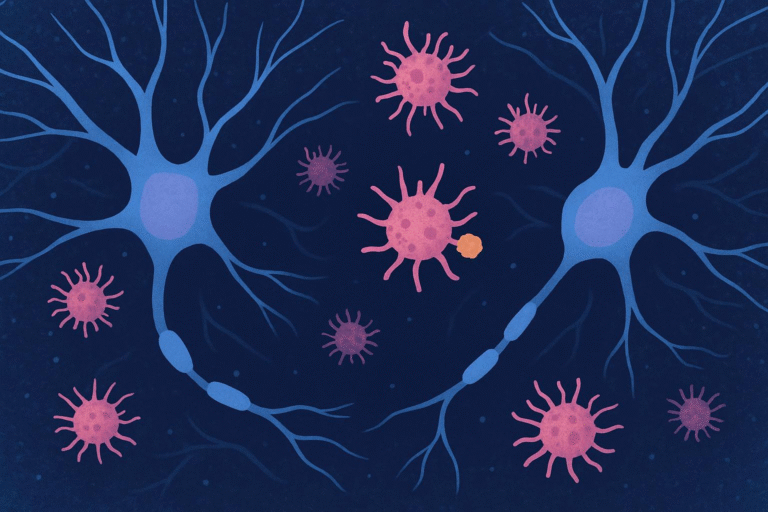
Shingles is caused by the reactivation of the varicella-zoster virus, the same virus responsible for chickenpox. Once a person has chickenpox, the virus remains dormant in the body and can reactivate later in life, particularly as immune function declines with age.
The researchers suggest that preventing this viral reactivation through vaccination may help reduce persistent immune system stress, thereby lowering background inflammation and slowing certain biological aging processes. While the exact biological mechanisms are not yet fully understood, reduced inflammation is considered a plausible pathway linking shingles vaccination to healthier aging markers.
Shingles, Aging, and Why Older Adults Are at Risk
Shingles, also known as herpes zoster, typically causes a painful, blistering rash and can lead to serious complications. The risk increases significantly after age 50 and is even higher among individuals with weakened immune systems.
One of the most feared complications is postherpetic neuralgia, a condition that causes long-lasting nerve pain even after the rash has healed. Shingles vaccination has already been shown to substantially reduce both the risk of shingles itself and the likelihood of developing this chronic pain condition.
The new findings suggest that vaccination may also have system-wide benefits, potentially influencing immune aging and molecular processes linked to long-term health.
How This Fits Into Broader Vaccine Research
This study builds on earlier research linking adult vaccinations—particularly shingles and influenza vaccines—to lower risks of dementia and other neurodegenerative conditions. While those studies also cannot prove causation, together they point toward a possible connection between immune protection and brain health.
The idea that vaccines might influence aging-related pathways is gaining attention among gerontologists and immunologists. Instead of acting only as shields against specific infections, vaccines may also help stabilize immune function, reduce harmful inflammation, and support healthier aging trajectories.
Important Limitations to Keep in Mind
Despite the promising findings, the researchers emphasize several limitations. First, the study is observational, meaning it cannot definitively show that the shingles vaccine causes slower biological aging. Healthier individuals may be more likely to get vaccinated, a phenomenon known as healthy-user bias.
Second, most participants in the study likely received Zostavax, an older shingles vaccine that has since been replaced in many countries by Shingrix, a newer and more effective formulation. Whether Shingrix produces similar or stronger associations with biological aging remains an open question.
Finally, the researchers note the need for longitudinal and experimental studies to better understand causality, timing, and mechanisms.
What This Could Mean Going Forward
If future research confirms these findings, shingles vaccination could become part of a broader public health conversation about healthy aging strategies, not just disease prevention. Even now, the vaccine remains an important tool for reducing the burden of shingles and its complications in older adults.
At the very least, this study adds another compelling reason to take adult vaccination seriously and highlights how interconnected immune health and aging truly are.
Research Paper:
Association between shingles vaccination and slower biological aging: Evidence from a U.S. population-based cohort study
https://academic.oup.com/biomedgerontology/advance-article/doi/10.1093/gerona/glag008/8430804