USC Researchers Map Subtle Brain Wiring Differences in Children and Young Adults With Autism
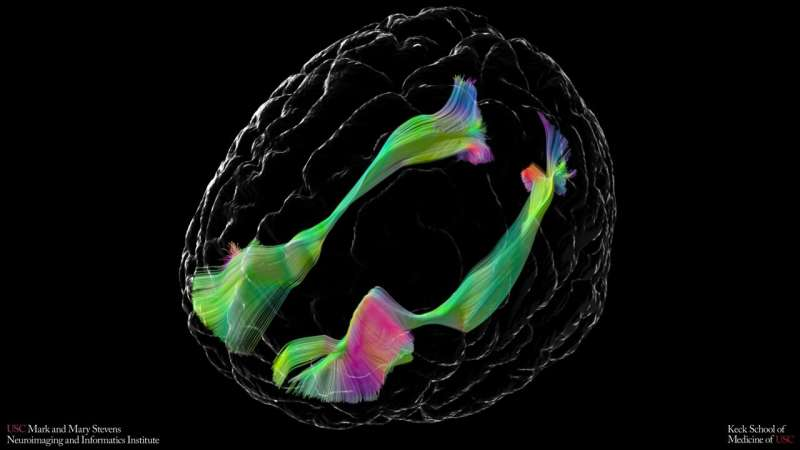
Scientists at the University of Southern California have released one of the most detailed looks yet at how brain wiring differs in autistic children and young adults, offering fresh insight into the biological complexity of autism. The study focuses on white matter, the brain’s communication system, and reveals that differences linked to autism are widespread but highly localized, rather than uniform across the brain.
The research was carried out at the Mark and Mary Stevens Neuroimaging and Informatics Institute (Stevens INI) at the Keck School of Medicine of USC. It was published in the peer-reviewed journal Cerebral Cortex and represents one of the largest and most technically refined imaging studies of autism to date.
A Large and Diverse Study Population
The study analyzed brain scans from 365 participants between the ages of 5 and 24. This age range allowed researchers to examine brain structure across key developmental stages, from early childhood through young adulthood. The data were drawn from multiple cohorts, strengthening the reliability of the findings and reducing the risk that results were driven by a single dataset or scanning site.
Participants included autistic individuals as well as non-autistic controls, enabling direct comparisons in brain structure. By pooling data across cohorts, the researchers were able to study autism with a level of statistical power that many earlier imaging studies lacked.
Why White Matter Matters
White matter consists of bundles of nerve fibers that connect different regions of the brain. These pathways allow brain areas to communicate efficiently, supporting functions such as language, social interaction, sensory processing, attention, and motor control. In simple terms, gray matter handles local processing, while white matter acts as the brain’s information highway system.
Previous studies have suggested that autism is associated with white-matter differences, but results have often been inconsistent or contradictory. One major reason is that traditional imaging approaches tend to average measurements across entire tracts, potentially hiding smaller but meaningful variations.
A New Way to Look at Brain Wiring
To overcome these limitations, the USC team used advanced diffusion MRI techniques combined with cutting-edge computational tools developed at Stevens INI. Instead of treating each white-matter tract as a single structure, the researchers examined them segment by segment, mapping microstructural properties along the full length of each pathway.
This approach allowed the team to detect tiny, localized differences that earlier methods may have blurred or completely missed. The analysis focused on major commissural and association tracts, including pathways that connect the two brain hemispheres and those involved in higher-order cognitive and social functions.
What the Researchers Found
On average, autistic participants showed localized microstructural differences across many major white-matter tracts. These differences were not evenly distributed along the pathways. Instead, they appeared in specific segments of tracts associated with:
- Language and communication
- Social behavior
- Sensory processing
- Interhemispheric coordination
Rather than pointing to a single brain region or pathway, the findings suggest that autism involves complex patterns of structural variation spread across multiple networks. This reinforces the idea that autism cannot be reduced to one affected brain area or one simple biological explanation.
Moving Beyond Inconsistent Results
One of the most important contributions of this study is methodological. Traditional diffusion imaging studies often produced mixed results because they relied on coarse measurements of white matter. By using along-tract analysis, the USC researchers demonstrated that many previous inconsistencies may stem from limitations in how the brain was analyzed, not from contradictions in the underlying biology.
This study shows that how scientists look at the brain can be just as important as what they are looking for.
Autism as a Highly Diverse Condition
The findings align with a growing scientific consensus that autism is highly heterogeneous. No two autistic individuals are alike, and brain differences linked to autism are not uniform or universal. Instead, they vary by brain region, developmental stage, and individual characteristics.
Understanding this complexity is critical for moving toward meaningful biological markers of autism. Rather than searching for a single signature of autism, researchers are increasingly focusing on patterns of variation that may relate to specific traits, strengths, or challenges.
Why Developmental Timing Matters
Because the study spans childhood through young adulthood, it provides valuable clues about how white-matter differences may change over time. Brain wiring continues to mature well into early adulthood, and autism-related differences may evolve alongside this development.
The researchers plan to explore how these structural differences relate to language ability, social functioning, and sensory experiences, as well as how they shift across developmental stages. This could eventually help explain why certain traits become more or less pronounced as autistic individuals grow older.
The Role of Advanced Brain Mapping
This work builds on the Stevens INI’s reputation as a global leader in large-scale brain mapping and neuroinformatics. The institute specializes in developing tools that allow scientists to extract more meaningful information from existing brain data, rather than relying solely on new scans.
By applying refined analytics to large datasets, researchers can uncover patterns that were previously invisible, helping bridge the gap between brain structure and behavior.
Broader Context: White Matter and Neurodevelopment
White-matter differences are not unique to autism. They have also been studied in conditions such as ADHD, dyslexia, schizophrenia, and mood disorders. What makes this study stand out is its level of detail and its focus on localized changes rather than global averages.
These findings contribute to a broader understanding of how neurodevelopmental conditions reflect variations in brain connectivity, rather than damage or deficits in isolated regions.
What This Means Going Forward
While the study does not immediately change clinical practice, it lays important groundwork for future research. By identifying precise locations where brain wiring differs, scientists can begin to ask more targeted questions about how structure relates to function.
The research team is currently seeking funding to extend this work, with the goal of linking white-matter patterns to real-world outcomes and potentially informing more personalized approaches to care.
Research paper:
https://doi.org/10.1093/cercor/bhaf291