Warming Climate in the United States Is Driving a Sharp Rise in Heat-Related Deaths
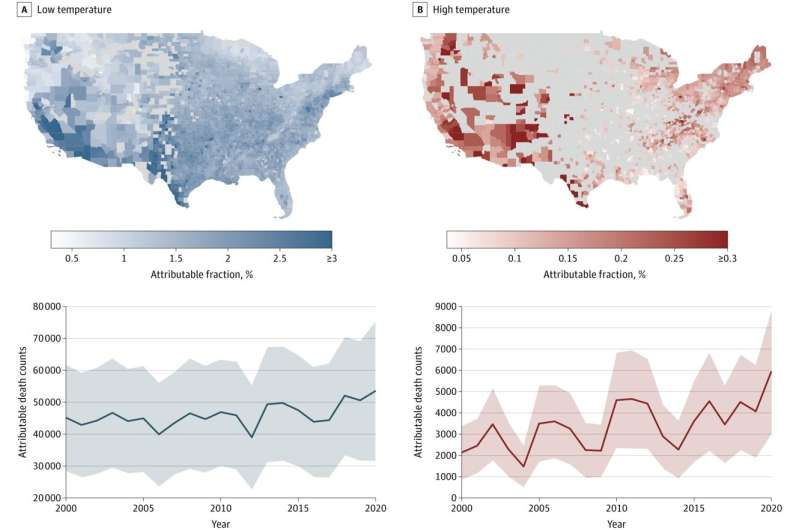
A major new analysis from researchers at the Yale School of Public Health reveals how non-optimal temperatures—both extreme heat and extreme cold—are increasingly shaping mortality patterns across the United States. Covering more than 54 million death records from every county in the 48 contiguous states between 2000 and 2020, the study provides one of the most comprehensive examinations to date on how temperature affects public health in the U.S. The findings make it clear that while cold weather still accounts for the bulk of temperature-related deaths, the danger from heat is rising much faster as the climate continues to warm.
The researchers found that cold-related deaths increased from about 44,000 per year in 2000–2009 to over 47,500 per year in 2010–2020, a modest 7% rise. In contrast, heat-related deaths climbed by 53%, rising from an annual average of 2,670 in the early 2000s to more than 4,000 in the following decade. These shifts reflect not only changing weather patterns but also the growing vulnerability of the U.S. population as it expands and ages.
The study used advanced statistical models that account for humidity, demographic differences, and regional temperature norms. After these adjustments, the researchers estimated that the risk of death increases 5.7% on unusually cold days (temperatures in the 5th percentile) and 1.1% on unusually hot days (temperatures in the 95th percentile), with effects typically appearing within one week of exposure.
Regional and Demographic Differences
One of the noteworthy findings is how temperature vulnerability differs across the country. The Western U.S. showed higher proportions of heat-related deaths, while the Southwestern U.S. saw a higher share of cold-related mortality—an interesting revelation given the region’s warm reputation.
Vulnerability also differed across demographic groups. The study found that older adults, women, and widowed or divorced individuals were especially susceptible to cold exposure. Meanwhile, younger and single adults showed a higher vulnerability to heat. These demographic splits may reflect differences in health status, housing stability, work environments, and social support systems.
Specific Causes of Death Linked to Temperature
The researchers identified clear associations between temperature extremes and particular causes of death. Cold exposure was linked to higher mortality from cardiovascular, respiratory, and metabolic diseases. Heat exposure correlated strongly with deaths from circulatory diseases, as well as external causes such as injuries and accidents—including transport incidents, falls, and drowning.
This reinforces the idea that temperature impacts health not only through direct physiological stress but also by affecting behavior and environment. For example, extreme heat has been shown to impair concentration, elevate irritability, and affect driving performance, possibly contributing to the rise in accidental deaths.
Why Temperature-Related Deaths Are Increasing
While climate change is a major part of the story—especially given that 10 of the warmest U.S. years on record have occurred since 2012—the increase in temperature-related mortality isn’t due to environmental factors alone. Population growth, urban development, and an aging population add layers of vulnerability.
Older adults are more susceptible to both heat and cold due to diminished physiological resilience. Urbanization also contributes through the urban heat island effect, which traps heat in cities, and through social factors such as increased isolation and reduced access to cooling resources.
Extreme Temperatures Are Becoming More Common
The study emphasizes what has become a consistent trend: climate extremes are becoming more frequent. The National Oceanic and Atmospheric Administration confirmed that 2024 was the hottest year ever recorded globally, continuing a sustained upward trajectory. More frequent extreme heat days mean a growing risk for heat-related illnesses and deaths, particularly among people without adequate access to cooling mechanisms.
A Straightforward Look at Temperature-Related Mortality
Because the study spanned two full decades and involved detailed analysis at the county level, it paints a clear and data-driven picture of how temperature affects health. One of the biggest strengths is its ability to show differences between regions that may assume they are not at risk. Counties that historically enjoyed moderate climates are now experiencing more extreme heat events without the infrastructure or public awareness needed to adapt.
This is significant because communities in traditionally warm regions, such as the American South, often have long-standing cultural, architectural, and infrastructural adaptations for heat. In contrast, parts of the Pacific Northwest or the Northeast may lack widespread air conditioning, resilient housing, or emergency heat-response plans, making even moderate heatwaves unexpectedly dangerous.
Broader Perspective: What We Know About Heat and Cold Risks
To give broader context, it’s helpful to understand why both heat and cold are so physiologically dangerous.
Why cold is deadly:
Cold causes blood vessels to constrict, increasing blood pressure and the risk of heart attacks and strokes. It also aggravates asthma, chronic bronchitis, and other respiratory diseases. Hypothermia can develop quickly in vulnerable populations, even in moderately cold conditions.
Why heat is deadly:
High temperatures strain the body’s ability to cool itself. This leads to dehydration, heat exhaustion, and, in severe cases, heatstroke, which can cause organ failure. Heat also thickens the blood, increases the risk of clotting, and puts major stress on the heart. People working outdoors or those without access to cooled environments are especially vulnerable.
Young people and accidents:
Heat affects the brain’s executive functions. Studies indicate that reaction time, decision-making, and coordination diminish in high heat, which may explain the spike in heat-associated accidental deaths highlighted in the report.
The Bigger Climate Picture
The U.S. is experiencing the consequences of a warming climate in real time. Heat waves are lasting longer, nights are staying warmer, and seasonal patterns are shifting. These conditions raise important questions about adaptation strategies at both community and national levels.
Communities can take measures such as establishing cooling centers, increasing access to air conditioning, updating building codes to improve insulation, and promoting awareness campaigns tailored to high-risk populations. Public health agencies are already beginning to introduce heat-alert systems, but the rapid increase in heat-related deaths indicates that more aggressive action may be necessary.
What This Means for the Future
As temperatures continue to rise, heat-attributable mortality is expected to climb unless significant adaptation and mitigation strategies are put into place. Cold-related deaths may remain high as well, although they tend to fluctuate based on regional weather patterns.
The study shows that temperature-related mortality is not a distant threat—it’s a present-day public health issue that demands attention. By understanding the risks, regional vulnerabilities, and demographic patterns, policymakers and communities can better prepare for the climate challenges ahead.
Research Reference:
Heat- and Cold-Related Mortality Burden in the US From 2000 to 2020 (JAMA Network Open, 2025)