How to Lose Weight Without Overthinking
Most people don’t struggle with weight loss because they’re lazy—they struggle because they’re overwhelmed. I’ve been there. You start with good intentions, then suddenly you’re tracking calories, cutting carbs, watching five different fitness videos, and wondering if you’re doing any of it right.
It’s exhausting. The truth is, weight loss doesn’t need to feel like solving a complicated math problem. The more rules you pile on, the harder it becomes to stick with anything long-term. What actually works is surprisingly simple: doing a few basic things consistently. Not perfectly—just consistently.
Once I stopped trying to optimize every little detail and focused on what I could realistically repeat every day, things finally started to click. If you’re tired of overthinking every meal and workout, you’re not alone—and you’re definitely not doing it wrong.
The Mindset Shift: Stop Chasing “Perfect” Plans
Why perfection keeps you stuck
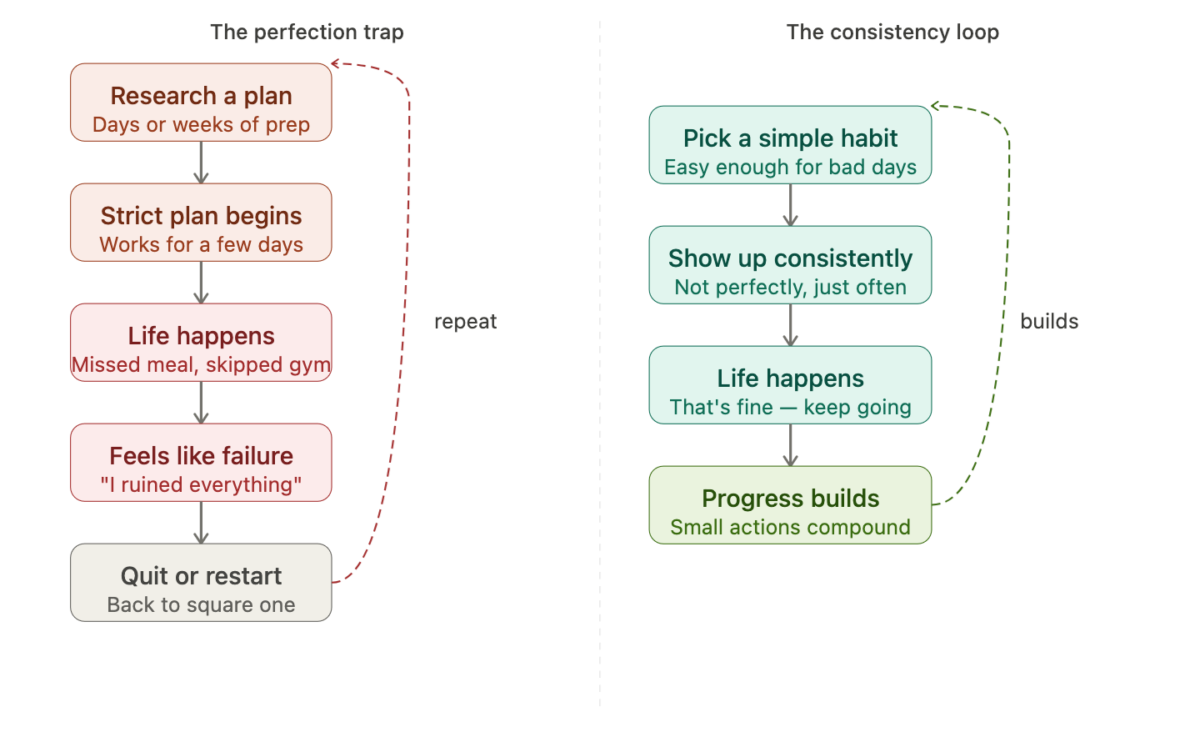
One of the biggest traps I see—and honestly, one I fell into myself—is the idea that there’s a “perfect” plan out there. You know the one: the exact calorie number, the flawless workout split, the ideal balance of macros. It feels like if you could just find that one plan, everything would fall into place.
But here’s what actually happens. You spend days researching, maybe even weeks. You finally pick something, follow it strictly for a few days, and then life happens. You miss a workout, eat something “off plan,” and suddenly it feels like you’ve failed. So you start over. Again.
That cycle isn’t a discipline problem—it’s a perfection problem.
When your plan only works under perfect conditions, it’s not a good plan. Real life is messy. You get busy at work, you go out with friends, you feel tired. A rigid system can’t handle that. And when it breaks, you feel like you’re the one who broke it.
I remember trying a super strict meal plan where every meal was pre-decided. It worked great… until I had a last-minute dinner with friends. I didn’t know how to “fit” that into the plan, so I just gave up for the day. That one decision spiraled into a whole weekend of feeling off track.
What I didn’t realize back then was this: a good system should bend with your life, not fight against it.
Consistency beats intensity every time
It’s tempting to go all-in. You start a new routine, and suddenly you’re working out six days a week, eating ultra-clean, drinking a gallon of water, and getting up at 5 a.m. It feels productive. It feels like you’re finally doing things “right.”
But that kind of intensity rarely lasts.
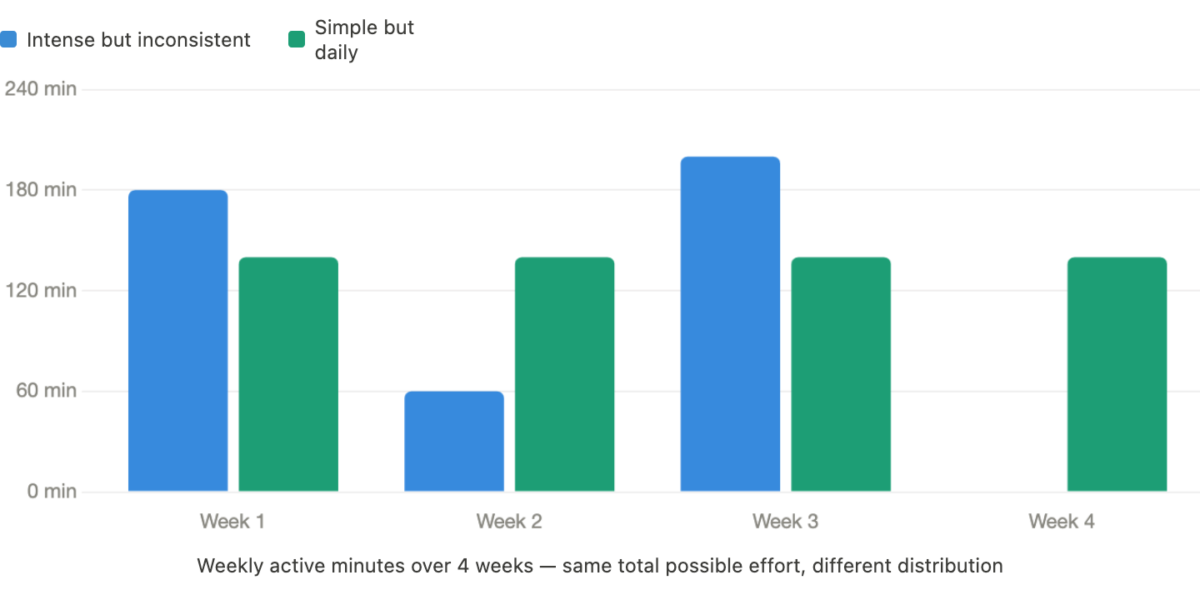
What actually drives results is something way less exciting: doing simple things over and over again, even when you don’t feel like it.
Think about it this way. If you walk for 30 minutes every day, that’s over 180 minutes a week. Compare that to someone who does two intense workouts and then skips the rest of the week. Who’s going to see more consistent progress? Most likely, the person who kept showing up.
I’ve seen this play out with food too. A friend of mine stopped obsessing over “perfect meals” and just focused on eating a balanced plate most of the time—some protein, some carbs, some veggies. Nothing fancy. Over a few months, he lost weight without ever feeling like he was on a strict diet.
That’s the power of consistency. It’s not flashy, but it works.
Small actions are easier to repeat
Here’s something I wish more people talked about: your habits need to be easy enough to repeat on your worst days, not just your best ones.
On a good day, you might feel motivated enough to cook a healthy meal, hit the gym, and go for a walk. But what about a stressful Tuesday when you’re tired and short on time?
If your plan requires a lot of effort, you’ll skip it. And the more you skip, the harder it becomes to get back on track.
Instead, I started asking myself a simple question: what’s the easiest version of this habit I can still stick to?
For example:
- Instead of a full workout, I’d do a 15-minute walk.
- Instead of cooking a complicated meal, I’d throw together something quick like eggs and toast with some fruit.
- Instead of tracking every calorie, I’d just make sure I wasn’t overeating.
These small actions might not feel like much in the moment, but they add up. And more importantly, they’re doable even when life isn’t perfect.
Reduce decision fatigue to make things easier
One thing that really surprised me was how much mental energy I was wasting on decisions. What should I eat? Should I work out now or later? Is this the “right” thing to do?
All that thinking creates friction. And when something feels complicated, you’re less likely to follow through.
That’s why simplifying your choices is so powerful.
For example, I started repeating meals more often. Not because I had to, but because it made life easier. If I already knew what I was going to have for breakfast—say, oatmeal with some fruit and peanut butter—I didn’t have to think about it. I just did it.
Same with workouts. Instead of constantly changing routines, I stuck to a simple plan. A few basic exercises, done regularly. No overthinking.
Less thinking means more doing.
And that’s really the goal here. Not to create the most optimized plan, but to create one you can actually follow without constantly second-guessing yourself.
Progress comes from showing up, not getting it perfect
At some point, I had to accept that I wasn’t going to do everything perfectly—and that was okay.
There were days I ate more than I planned. Days I skipped workouts. Days I just didn’t feel like it.
But instead of treating those moments as failures, I started seeing them as part of the process.
What matters isn’t what you do once in a while—it’s what you do most of the time.
If you eat well most days, move your body regularly, and keep things simple, you’re already on the right track. You don’t need to fix everything overnight. You just need to keep showing up.
And honestly, that shift alone can make weight loss feel a whole lot less overwhelming.
Simple Habits That Actually Work
Focus on what gives you the biggest return
When I stopped overthinking weight loss, I realized something pretty important: not all habits are created equal. Some things give you way more results for way less effort. And those are the ones worth focusing on.
You don’t need 20 different rules. You probably don’t even need 10. A handful of simple habits, done consistently, can take you surprisingly far.
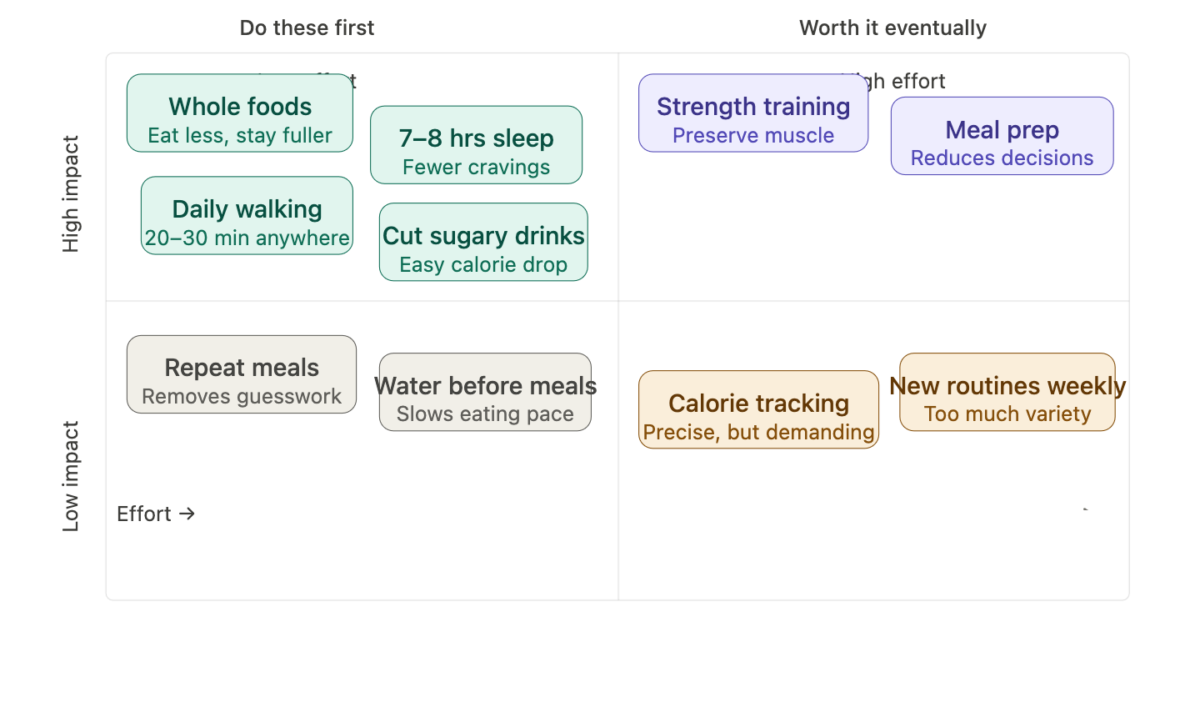
Let me walk you through the ones that actually made a difference for me and for people I’ve worked with.
Eat mostly whole, unprocessed foods
This sounds basic, but it’s honestly one of the biggest game changers.
When you eat foods that are closer to their natural form—things like chicken, rice, vegetables, fruits, eggs—you naturally end up eating fewer calories without trying too hard. These foods are more filling, so you don’t feel like you’re constantly hungry.
Compare that to ultra-processed foods like chips, sugary snacks, or fast food. They’re designed to be easy to overeat. You can go through a whole bag without even realizing it.
I noticed this when I swapped out my usual late-night snacks. Instead of grabbing cookies, I’d have something like yogurt with fruit. Same “snack moment,” but I felt satisfied way sooner.
You don’t have to be perfect here. If 70–80% of your food is whole and simple, you’re already doing great.
Keep portion sizes reasonable
You don’t need to weigh every gram of food or track every calorie to lose weight. That level of detail can be helpful for some people, but for most of us, it just adds stress.
A simpler approach? Pay attention to portions.
I like using visual cues. For example:
- A portion of protein about the size of your palm
- Carbs about the size of your fist
- Fats roughly the size of your thumb
It’s not exact, but it’s good enough.
I remember eating what I thought was a “healthy meal”—grilled chicken, rice, and veggies. Sounds great, right? But my portion of rice was basically two full cups. Once I adjusted that, without changing anything else, I started seeing progress.
Sometimes it’s not what you’re eating—it’s how much.
Move your body daily (keep it simple)
You don’t need a complicated workout program to start seeing results.
One of the most underrated tools for weight loss is just… walking.
Seriously.
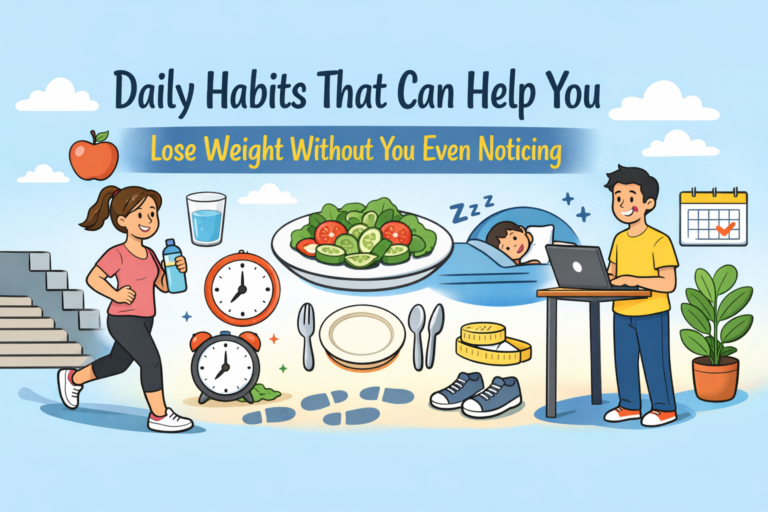
Walking is low effort, easy to recover from, and you can do it almost anywhere. When I started aiming for a daily walk—even just 20–30 minutes—it made a noticeable difference over time.
Of course, if you enjoy the gym, that’s great too. Strength training is especially helpful because it helps you maintain muscle while losing fat.
But the key is this: pick something you actually enjoy or at least don’t hate.
I’ve seen people force themselves into workout routines they dread, only to quit a few weeks later. Meanwhile, someone else is casually walking every day and making steady progress.
Consistency wins again.
Stay hydrated without overcomplicating it
This one is easy to overlook, but it matters more than you think.
Sometimes what feels like hunger is actually thirst. I’ve had moments where I thought I needed a snack, drank some water instead, and realized I was fine.
You don’t need a fancy hydration strategy. Just keep a water bottle nearby and sip throughout the day.
A simple habit I picked up: drink a glass of water before meals. It helps you slow down and prevents overeating.
Also, cutting back on sugary drinks can make a huge difference. Soda, sweetened coffee, juices—they add calories quickly without filling you up.
Sleep more than you think you need
This is one people love to ignore… until it catches up with them.
When you’re sleep-deprived, everything gets harder. You’re more likely to crave junk food, skip workouts, and feel low on energy.
I used to think I could get by on 5–6 hours of sleep. Technically, I could function—but I wasn’t making great choices.
Once I started aiming for 7–8 hours, I noticed a big shift. I had more energy, fewer cravings, and it was just easier to stick to my habits.
Weight loss isn’t just about food and exercise—it’s about recovery too.
Avoid all-or-nothing thinking
This one might be the most important habit of all.
A lot of people fall into the trap of thinking, “If I can’t do it perfectly, what’s the point?”
You eat one “bad” meal, and suddenly the whole day feels ruined. So you keep going. Then it turns into a week.
I’ve done this more times than I can count.
But here’s what helped me break that cycle: one choice doesn’t define your progress.
If you have a heavy lunch, your next meal doesn’t have to match it. You can just get back to your normal routine.
Think of it like this—if you miss one step while walking, you don’t turn around and go home. You just keep going.
Stick to a basic routine
You don’t need constant variety to make progress. In fact, too much variety can make things harder.
When you’re always trying new diets, new workouts, new strategies, you never give anything enough time to work.
There’s something really powerful about having a simple routine:
- A few go-to meals
- A consistent workout schedule
- A general structure to your day
It removes the guesswork.
I’ve had weeks where I basically ate the same breakfast and lunch every day. It might sound boring, but it made everything easier. I didn’t have to think—I just followed the routine.
And honestly, boring is underrated when it comes to results.
Making It Effortless: Build a Lifestyle, Not a Diet
Stop treating this like a temporary project
One of the biggest mindset shifts I had to make was this: weight loss isn’t something you “finish.”
For a long time, I treated it like a short-term project. I’d go all-in for a few weeks, try to get results as quickly as possible, and then slowly fall back into old habits.
Sound familiar?
The problem with that approach is that it’s not built to last. If your routine only works when you’re highly motivated, it’s not really a routine—it’s a phase.
Instead, I started thinking in terms of lifestyle. Not in a dramatic, all-or-nothing way, but in a practical sense. What kind of habits can I realistically maintain long-term?
That question changed everything.
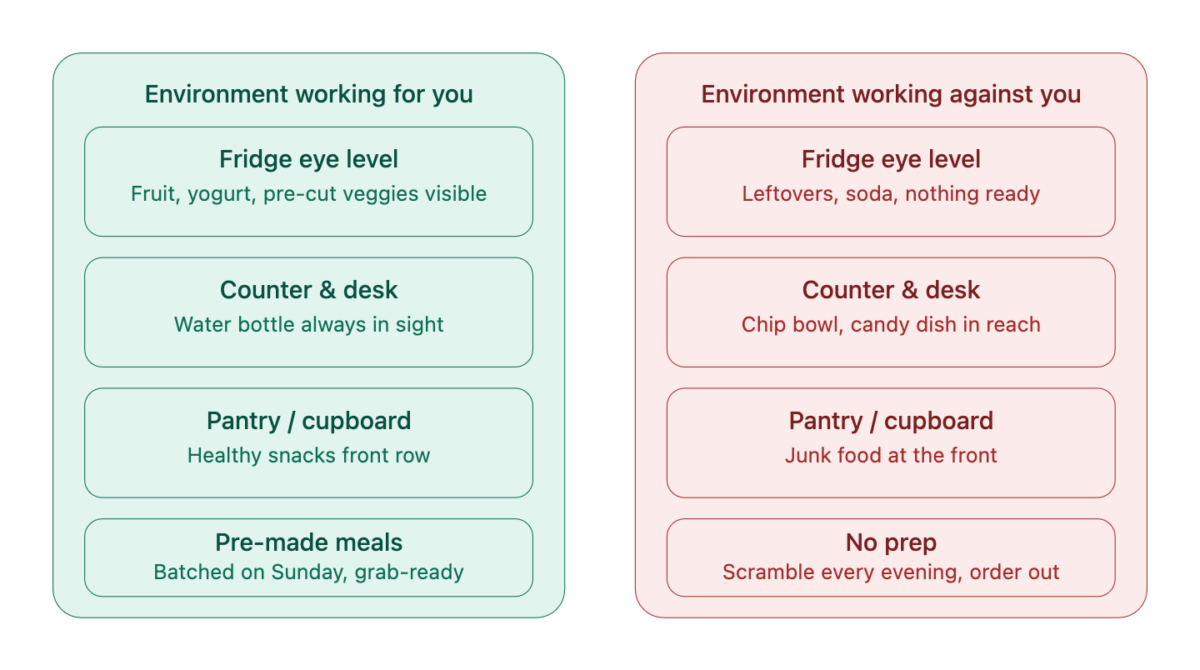
Use your environment to your advantage
Here’s something that doesn’t get talked about enough: your environment shapes your behavior more than your willpower does.
If your kitchen is full of snacks and junk food, you’re going to eat them. Not because you lack discipline, but because they’re right there.
I tested this on myself.
At one point, I kept a bag of chips on my desk. Guess what? I kept reaching for it without even thinking.
So I made a small change. I stopped buying chips regularly and kept easier, better options around—things like fruit, nuts, yogurt.
Did I suddenly become more disciplined? Not really. I just made the better choice the easier choice.
You can do the same:
- Keep healthy foods visible and easy to grab
- Put less healthy options out of sight or don’t keep them at home
- Prep simple meals ahead of time so you’re not scrambling
Make your environment work for you, not against you.
Repeat meals to reduce decision fatigue
We’ve already touched on this a bit, but it’s worth reinforcing.
You don’t need a brand-new meal every day.
In fact, having a few go-to meals can make your life so much easier.
For example, my breakfast became pretty predictable: eggs, toast, maybe some fruit. Lunch was often something simple like chicken with rice and veggies.
Dinner had more variety, especially if I was eating with family or friends, but even then, I kept it balanced.
The point isn’t to be rigid—it’s to reduce the number of decisions you have to make.
Fewer decisions = less stress = better consistency.
Set realistic expectations (this is huge)
Let’s be honest—most of us want fast results. I definitely did.
But chasing rapid weight loss usually leads to extreme habits, and those are hard to maintain.
A more realistic approach? Aim for slow, steady progress.
Maybe that looks like losing 1–2 pounds a week. Maybe it’s just feeling a bit more in control of your habits.
I remember a phase where my weight wasn’t dropping dramatically, but my clothes were fitting better and I had more energy. That was still progress, even if it didn’t look impressive on paper.
Progress isn’t always obvious—but it’s still happening.
Shift your identity, not just your habits
This might sound a little abstract, but it’s incredibly powerful.
Instead of thinking, “I’m trying to lose weight,” start thinking, “I’m someone who takes care of my body.”
It’s a subtle shift, but it changes how you approach decisions.
For example:
- Instead of forcing yourself to work out, you think, “This is just something I do.”
- Instead of restricting food, you think, “I choose foods that make me feel good.”
I noticed that when I started identifying as someone who stays active, it became easier to act that way. It wasn’t about motivation anymore—it was just part of who I was.
Your actions follow your identity.
Accept that it won’t always feel easy
Even with the best systems in place, there will be days when you don’t feel like sticking to your habits.
That’s normal.
The difference now is that you don’t rely on motivation alone. You have a structure. You have simple habits that don’t require a ton of effort.
On tough days, you don’t have to be perfect. You just have to do something.
Maybe that’s a short walk instead of a full workout. Maybe it’s choosing a slightly better meal instead of the “perfect” one.
Those small choices keep you moving forward.
Before You Leave
If there’s one thing I hope you take away from all this, it’s this: weight loss doesn’t need to be complicated to work.
You don’t need the perfect plan. You don’t need to track everything or follow extreme rules. What you need is a handful of simple habits that you can stick to—even on your busiest, messiest days.
Start small. Keep it realistic. And most importantly, stop overthinking every step.
Because the people who succeed aren’t the ones who do everything perfectly—they’re the ones who keep going, even when it’s not perfect.