Fluffy Electrically Charged Ice Grains in Plasma Are Revealing Entirely New Physics
Plasma is often described as the fourth state of matter, but despite being everywhere in the universe, it is usually imagined as something extremely hot. The Sun, lightning bolts, neon signs, and welding arcs all rely on plasma formed at very high temperatures. However, recent research from the California Institute of Technology (Caltech) shows that plasma does not always have to exist in fiery conditions. In fact, scientists have now demonstrated that icy, ultracold particles can coexist with hot plasma, and their behavior is turning some long-held assumptions about plasma physics upside down.
A team of Caltech researchers has successfully created a unique laboratory plasma in which tiny ice grains form naturally, become electrically charged, and move in complex ways that cannot be explained by gravity alone. These findings, published in Physical Review Letters, reveal new plasma dynamics that could help scientists better understand both astrophysical environments and industrial plasma systems here on Earth.
Creating an Icy Plasma in the Laboratory
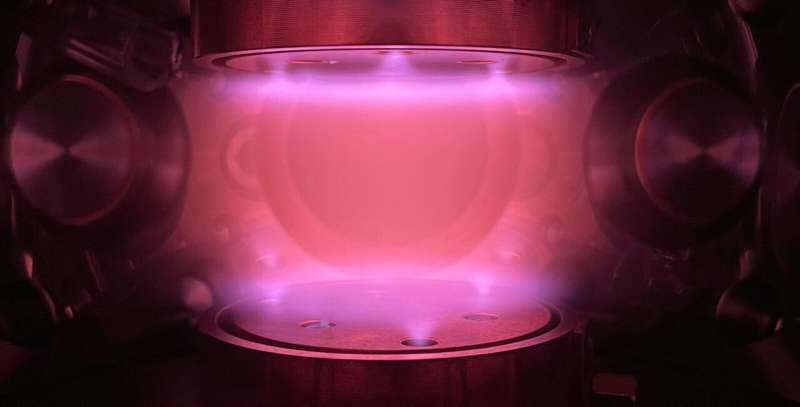
To recreate this unusual system, the researchers built a cryogenically cooled plasma chamber. Inside it, electrons and positively charged ions were generated between ultracold electrodes within a mostly neutral gas. Water vapor was then introduced into the chamber. Under these conditions, the vapor spontaneously froze into microscopic ice grains while still immersed in plasma.
This setup mimics conditions found in space, particularly in molecular clouds, where frozen dust grains coexist with energetic gas and newborn stars. Images from the James Webb Space Telescope have shown similar environments, but until now, scientists had not been able to study such systems in detail under controlled laboratory conditions.
Using a camera paired with a long-distance microscope lens, the team closely observed how the ice grains formed, evolved, and moved inside the plasma. What they saw was unexpected.
Fluffy, Fractal Ice Grains Instead of Solid Particles
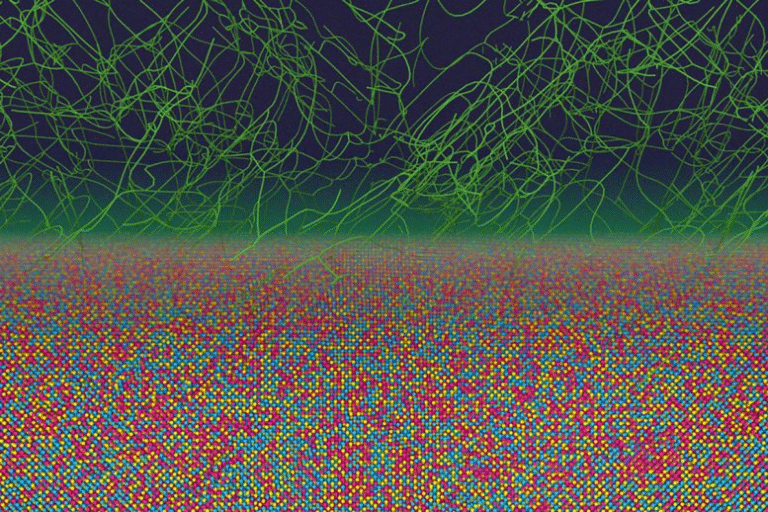
Instead of forming smooth, solid spheres, the ice grains developed into extremely fluffy, porous structures with branching shapes. These grains grew into fractal forms, meaning their irregular patterns repeated at different scales. This type of structure is very different from the solid plastic spheres typically injected into laboratory “dusty plasma” experiments.
The fluffiness of the grains turned out to be far more than a visual curiosity. Because the grains were so porous, they contained much less mass than a solid particle of the same size. At the same time, their large surface area allowed them to accumulate electrical charge very efficiently.
As the grains formed inside the plasma, they quickly became negatively charged. This happens because electrons, which are much lighter than ions, move faster and stick to the grains more easily. The result was ice particles with an exceptionally high charge-to-mass ratio.
When Electric Forces Overpower Gravity
In most dusty plasma experiments, gravity plays a major role. Solid grains tend to sink or settle toward the bottom of the chamber. But in this icy plasma, gravity became almost irrelevant.
Because the fluffy ice grains were so light and so strongly charged, electrical forces dominated their motion. The grains did not settle. Instead, they remained suspended throughout the plasma and displayed motion that appeared to defy gravity.
The researchers observed the grains bobbing up and down, spinning in place, drifting sideways, and forming swirling vortices. This complex motion persisted even as the grains grew much larger—some reaching sizes hundreds of times larger than the solid spheres used in previous experiments. Surprisingly, the fluffiness of the grains actually increased as they grew.
All of the grains carried the same negative charge, so they naturally repelled one another. This caused them to space themselves out evenly and prevented collisions, further stabilizing the cloud of ice particles inside the plasma.
Why Fluffiness Changes Plasma Physics
The microscopic structure of the ice grains turned out to be crucial. Their fluffy, fractal nature made them interact with the surrounding neutral gas much like a feather moving through air. Instead of cutting cleanly through the gas, the grains experienced strong drag and subtle aerodynamic effects.
At the same time, an inward-directed electric field confined the grains within the plasma. The result was a system where electric fields, particle charge, gas drag, and plasma dynamics all interacted in ways that had not been fully appreciated before.
This combination produced motion patterns that were difficult to predict and impossible to explain using simplified models based on solid particles.
Implications for Space and the Universe
One of the most exciting aspects of this research is its relevance to astrophysics. Many environments in space contain charged dust grains embedded in plasma, including Saturn’s rings, comet tails, and interstellar molecular clouds.
The new findings suggest that fluffy, charged grains may play a much larger role in shaping these environments than previously thought. Because of their high charge-to-mass ratio, such grains can act as intermediaries that transfer momentum from electric fields to neutral gas.
In simple terms, electric fields can push the grains, and the grains can then push the surrounding gas. Over large scales, this mechanism could help explain gas and dust flows across galaxies, contributing to large-scale cosmic motion that cannot be attributed to gravity alone.
Why This Matters for Industry and Technology
The implications are not limited to space. Plasma is widely used in semiconductor manufacturing, where it helps etch and deposit materials onto silicon chips. One persistent problem in these industrial systems is the spontaneous formation of dust particles inside plasma chambers.
These particles can settle onto microscopic features on chips, causing defects and rendering expensive components unusable. The Caltech study shows that dust particles formed in plasma may not behave like simple solid spheres. Instead, they can develop fractal structures with unusual motion and confinement properties.
Understanding how these grains form, grow, charge, and move could lead to better strategies for controlling or removing dust in industrial plasma systems, improving manufacturing yields and reducing waste.
Additional Background: What Is a Dusty Plasma?
A dusty plasma is a plasma that contains small solid or liquid particles in addition to electrons and ions. These particles can become electrically charged and strongly influence plasma behavior. Dusty plasmas are found in both natural and artificial environments, from planetary rings to fusion reactors.
The Caltech experiment highlights an important point: the shape and structure of dust particles matter just as much as their size or charge. Fractal particles behave very differently from smooth spheres, and future plasma research will need to account for this complexity.
A New Direction for Plasma Research
This study opens the door to exploring plasma systems that bridge the gap between hot ionized gas and cold solid matter. By showing that icy, fluffy grains can dominate plasma dynamics, the researchers have expanded the definition of what plasma physics can include.
As laboratory techniques improve, similar experiments may shed light on long-standing mysteries in space science and help refine plasma-based technologies on Earth.
Research Paper Reference:
Dynamics of Fractal Ice Grains in Cryogenic Plasmas, Physical Review Letters (2025)
https://journals.aps.org/prl/abstract/10.1103/PhysicalReviewLetters.XXXXXX