Radiofrequency Upgrades at NSLS-II Are Strengthening Accelerator Stability and Long-Term Reliability
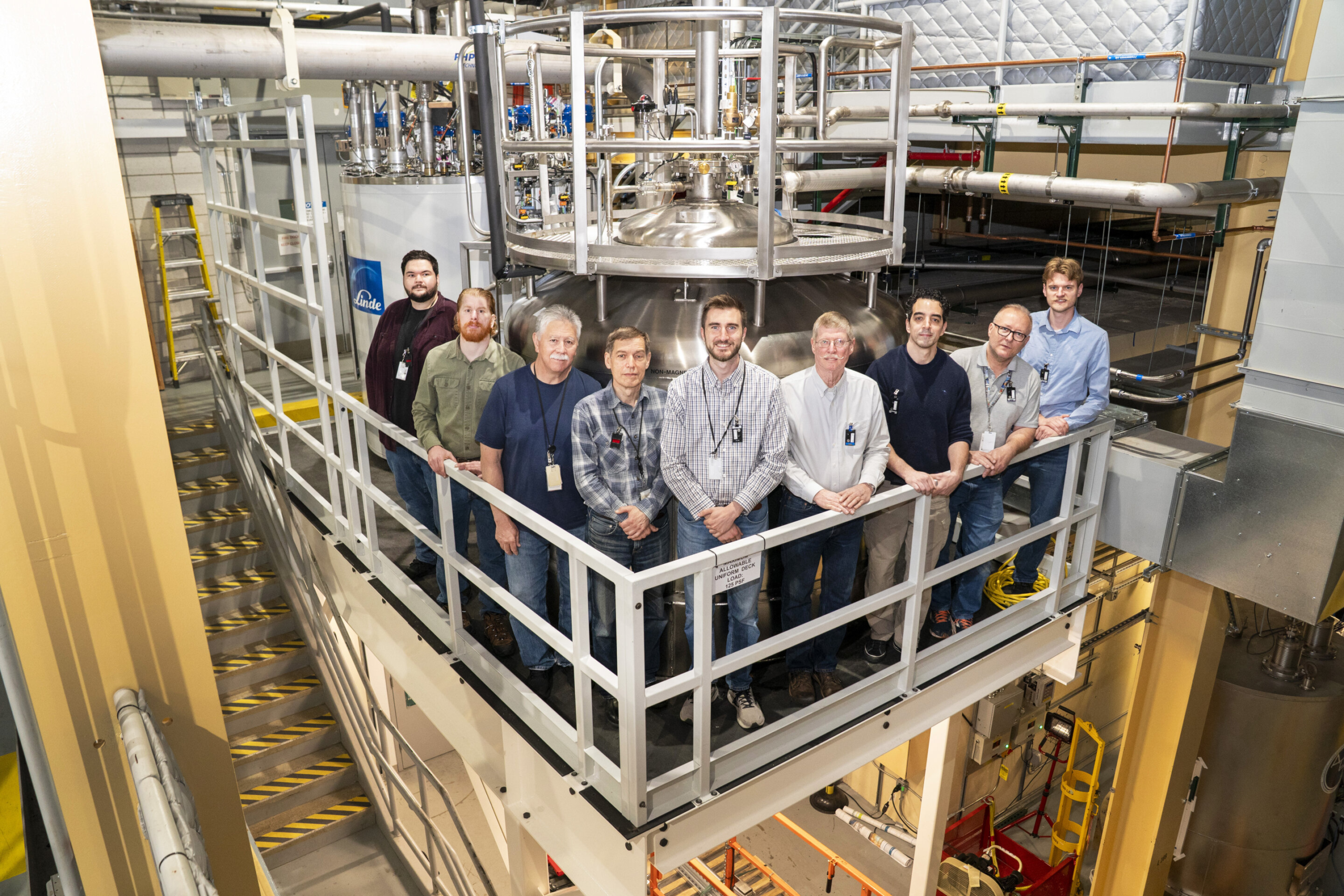
Running a modern synchrotron light source is never the work of a single group. It requires the coordinated effort of hundreds of engineers, scientists, technicians, and operators, all focused on keeping an incredibly complex machine stable and productive. At the National Synchrotron Light Source II (NSLS-II) at Brookhaven National Laboratory, one team plays a particularly critical behind-the-scenes role: the radiofrequency (RF) group. Recent upgrades led by this team are now ensuring that the accelerator remains reliable, efficient, and future-ready as the facility moves beyond its first decade of operations.
NSLS-II is a U.S. Department of Energy Office of Science user facility that produces extremely bright X-rays for experiments across physics, chemistry, biology, materials science, and energy research. At the heart of the facility is a nearly half-mile-long electron storage ring, where electrons circulate at close to the speed of light. As these electrons bend around the ring and pass through specialized magnetic structures, they emit intense X-rays that scientists use for their experiments.
However, producing X-rays comes at a cost. Each time electrons emit radiation, they lose a small amount of energy. Without intervention, the beam would quickly degrade. This is where the RF system becomes indispensable.
How RF Systems Keep the Electron Beam Alive
The RF system restores energy to the circulating electrons using hollow RF cavities that are precisely tuned to a specific frequency. Every time electrons pass through these cavities, they receive a carefully controlled energy boost that keeps the beam stable, bright, and tightly focused.
At NSLS-II, these cavities are made from niobium and are operated at cryogenic temperatures. When cooled to around −452 degrees Fahrenheit, just a few degrees above absolute zero, niobium becomes superconducting. In this state, electrical resistance nearly disappears, which dramatically improves energy efficiency and beam stability. Superconducting cavities also allow unwanted high-frequency oscillations to be safely damped, preventing disruptions that could affect experiments.
As NSLS-II has now surpassed ten years of continuous operation, attention has shifted toward maintaining aging infrastructure while also preparing the facility for future scientific demands. In 2025, the RF group took on both challenges at once through a series of major upgrades.
Moving Beyond Klystrons and Avoiding Obsolescence
One of the most significant changes involves the gradual replacement of klystrons, a technology that has powered RF systems in accelerators for decades. Klystrons are vacuum tubes that amplify high-frequency radio waves, and they have a long and impressive history. First developed in the 1930s by the Varian brothers, klystrons helped launch microwave technology and eventually became essential components in radar systems, television broadcasting, and particle accelerators.
At NSLS-II, klystrons have been used to provide RF power for nearly a decade, accelerating electrons to 3 gigaelectron volts and replenishing the energy lost to X-ray production. While highly reliable, klystrons are now becoming increasingly difficult to source. As manufacturers shift away from this technology and market demand declines, production has slowed or stopped altogether. This problem became especially clear during pandemic-related supply chain disruptions, when NSLS-II found itself without spare klystrons on hand.
Relying on equipment that is drifting toward obsolescence poses a serious operational risk. To address this, the RF team developed a modern alternative: solid-state RF transmitters. Instead of relying on a single large vacuum tube, the new system combines hundreds of individual transistor-based amplifiers, each capable of delivering up to 1,000 watts of output. Together, these modules can match the roughly 300-kilowatt output of a traditional klystron.
This approach offers several advantages. Solid-state systems are inherently modular, meaning that the failure of a single transistor does not shut down the entire system. Maintenance is easier, reliability is higher, and replacement parts are far more accessible. Most importantly, the transition protects NSLS-II from future supply shortages and ensures that RF power will remain available for years to come.
Keeping Things Cold with Redundant Cryogenic Systems
Powering superconducting RF cavities is only part of the story. Keeping them cold enough to function is just as critical. Until recently, NSLS-II relied on a single helium refrigerator and liquefier, commonly known as a cold box, to maintain the required cryogenic temperatures.
For nearly a decade, this single system performed reliably. However, as the facility matured, it became clear that relying on one unit created a single point of failure. If the cold box were to fail unexpectedly, NSLS-II could face months of downtime, severely impacting scientific users.
The solution was to install a second cold box, providing both redundancy and flexibility. With two systems available, one unit can be taken offline for maintenance while the other continues cooling the RF cavities. This change also allows for regular, scheduled maintenance instead of rushed repairs during short shutdown windows.
Installing the new cold box was far from a plug-and-play upgrade. The RF team designed and installed an entirely new cryogenic piping network that allows the two systems to operate independently or together. In addition, they developed specialized programmable logic control (PLC) software to manage the complex cryogenic processes. This software includes more than 80 individual control loops, each using proportional and integral control functions to maintain precise operating conditions.
Why These Upgrades Matter for Science
Together, the RF power upgrade and the cryogenic expansion significantly improve day-to-day reliability at NSLS-II. Fewer unexpected shutdowns mean more consistent beam delivery, which directly benefits the scientists who rely on stable X-ray sources for long experiments and delicate measurements.
These upgrades also position NSLS-II for future enhancements. As synchrotron science continues to push toward higher brightness, greater stability, and more demanding operating modes, robust RF and cryogenic systems become increasingly important. By modernizing now, the facility avoids costly retrofits later.
A Closer Look at Superconducting RF Technology
Superconducting RF technology is now standard in many advanced accelerators worldwide, from light sources to particle physics facilities. Compared to normal-conducting cavities, superconducting systems offer higher efficiency, lower operating costs, and superior beam stability. The trade-off is complexity, particularly in cryogenics, which is why redundancy and smart control systems are so important.
NSLS-II’s upgrades reflect broader trends across accelerator science, where facilities are moving away from aging vacuum-tube technologies and toward modular, solid-state solutions paired with sophisticated digital controls.
Preparing for the Next Decade
The RF group at NSLS-II continues to monitor existing systems, investigate future upgrades, and respond to operational anomalies as they arise. Their work may not always be visible to users, but it is essential to keeping the light source productive and reliable.
By replacing aging RF power technology, eliminating single points of failure in cryogenic cooling, and investing in advanced controls, NSLS-II is ensuring that its accelerator infrastructure can support cutting-edge science well into the future.
Research reference:
https://doi.org/10.1103/RevAccelBeams.20.100101