The Shortest Light Pulse Ever Created Lets Scientists Watch Electrons Move in Real Time
Electrons quietly control almost everything around us. They decide how chemical reactions unfold, how electricity flows through materials, how energy moves inside living cells, and how future quantum technologies might work. The challenge is that electrons move incredibly fast—on timescales so short that they have remained largely invisible to direct observation. Now, researchers have crossed a major scientific milestone by creating the shortest light pulse ever recorded, giving scientists an unprecedented tool to observe electron motion as it happens.
A research team at ICFO – The Institute of Photonic Sciences in Barcelona has successfully generated a 19.2-attosecond soft X-ray light pulse, setting a new world record. To put that into perspective, an attosecond is one quintillionth of a second (0.000000000000000001 seconds). This pulse is not only the shortest ever created in the soft X-ray range but is also shorter than the atomic unit of time, a fundamental benchmark in physics that describes how long an electron takes to orbit a hydrogen atom.
This breakthrough effectively creates the fastest camera ever built, capable of capturing electron dynamics in real time.
Why Watching Electrons Matters
Electrons are the main drivers of physical and chemical change. When a molecule absorbs light, when a chemical bond breaks, or when a material switches from being an insulator to a conductor, electrons are the first to respond. These changes happen on attosecond timescales, far beyond the reach of conventional experimental tools.
Until now, scientists could only infer electron behavior indirectly. With this new ultrashort pulse, researchers can directly observe how electrons rearrange themselves around atoms during reactions, phase transitions, or energy transfer processes. This opens the door to understanding fundamental mechanisms in chemistry, materials science, biology, and quantum physics at their natural speed.
What Makes This Light Pulse So Special
The newly created pulse lasts just 19.2 attoseconds, making it the shortest and brightest soft X-ray pulse ever produced. Soft X-rays are particularly valuable because they interact strongly with core electrons in atoms. This allows scientists to identify specific elements—such as carbon, nitrogen, or oxygen—and track how electrons move around them.
This ability is often described as fingerprinting, because different atoms respond in unique ways when exposed to soft X-rays. With an ultrashort pulse, these fingerprints can now be captured at the exact moment electronic changes occur.
The result is a powerful tool that combines extreme temporal resolution with element-specific sensitivity.
How the Researchers Achieved This Record
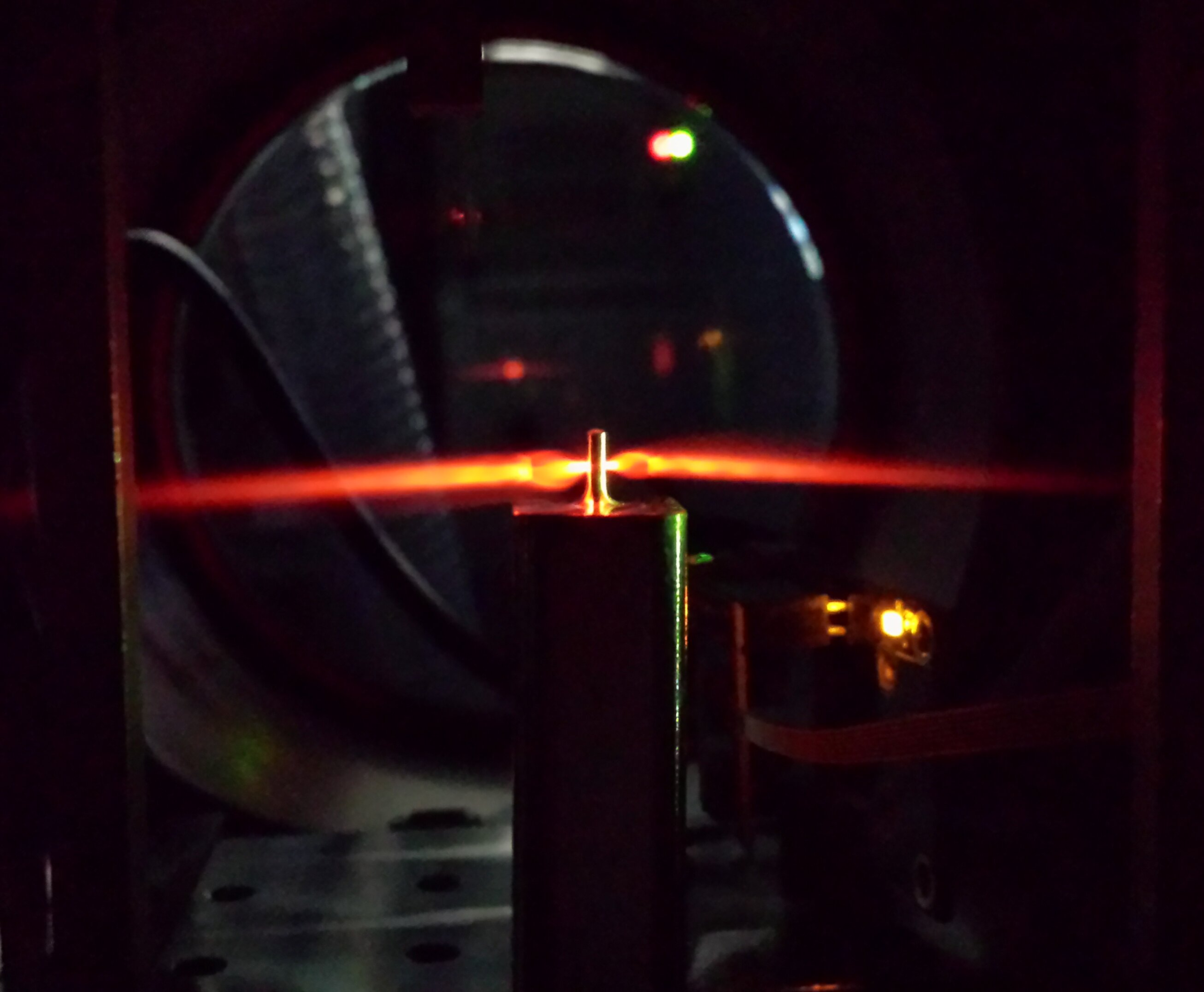
Creating such a short pulse required multiple technological advances working together. At the heart of the experiment is a process known as high-harmonic generation (HHG). In this method, intense, few-cycle infrared laser pulses are fired into a jet of neon gas. The interaction between the laser and the gas causes electrons to be pulled away from atoms and then driven back, releasing bursts of high-energy light in the form of X-rays.
To isolate a single pulse rather than a train of pulses, the team had to push HHG to its limits. This required:
- Advanced laser engineering to generate extremely stable and powerful few-cycle pulses
- Innovative high-harmonic generation techniques to produce soft X-rays efficiently
- State-of-the-art attosecond metrology, including new pulse retrieval methods that accurately measure durations below 20 attoseconds
One of the major challenges in earlier experiments was accurately confirming how short these pulses really were. The ICFO team overcame this by developing improved analysis methods that allowed them to precisely characterize the pulse duration, removing previous uncertainties.
A Milestone Years in the Making
This achievement did not happen overnight. The foundation was laid as far back as 2015, when the same research group first succeeded in isolating attosecond pulses in the soft X-ray regime. At the time, those pulses were already groundbreaking, allowing scientists to study how electrons interact with crystal lattices in solids and how molecular rings open during chemical reactions—processes relevant to polymer formation and material design.
However, limitations in pulse measurement techniques meant that the true minimum duration of these pulses could not be fully confirmed. With today’s improved methods, the team was able to revisit and refine their approach, ultimately demonstrating the shortest pulse of light ever measured.
What This Means for Science and Technology
The implications of this breakthrough are far-reaching. By enabling direct observation of electron motion, this technology could lead to major advances in several fields:
- Chemistry: Understanding exactly how and when chemical bonds form or break
- Materials science: Observing electron-driven phase transitions in real time
- Energy research: Improving photovoltaics by tracking how electrons move after light absorption
- Biology: Studying ultrafast electron transfer in complex biomolecules
- Quantum science: Probing and controlling electronic processes in quantum materials and devices
In essence, this new light source allows scientists to study the root causes of physical and chemical behavior, rather than just the outcomes.
A Closer Look at Attosecond Science
Attosecond science is a relatively young field, emerging in the early 2000s. Early attosecond pulses were typically in the extreme ultraviolet range and lasted several hundred attoseconds. Over the years, researchers have steadily pushed toward shorter durations and higher photon energies.
Crossing into the soft X-ray regime below the atomic unit of time represents a major leap forward. It places experimental capabilities squarely within the timescale of fundamental electronic motion, aligning measurement tools with the natural speed of electrons themselves.
This achievement also highlights how precision laser science, nonlinear optics, and quantum measurement techniques can converge to unlock entirely new experimental regimes.
Looking Ahead
With the technical foundations now established, researchers expect rapid progress in the coming years. Future experiments may use these pulses to study increasingly complex systems, from correlated quantum materials to biological molecules in realistic environments.
The creation of a 19.2-attosecond soft X-ray pulse does not mark an endpoint—it marks the beginning of a new era in ultrafast science, where electrons are no longer too fast to see.
Research paper:
https://doi.org/10.34133/ultrafastscience.0128