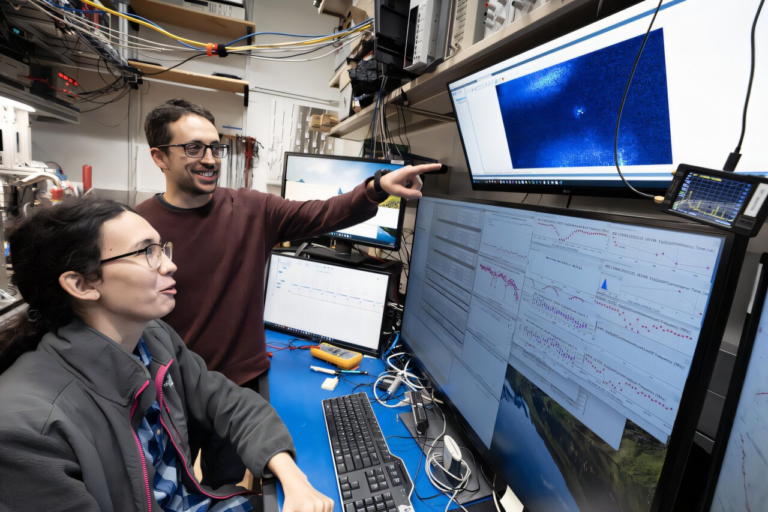
University of Houston Scientists Develop a Single-Shot X-Ray Method That Captures Three Image Contrasts at Once

Researchers at the University of Houston (UH) have introduced a new X-ray imaging method that could significantly change how doctors, scientists, and engineers look inside objects and living tissue. The breakthrough allows three different types of X-ray image contrast to be captured in one single exposure, something that has not been practically achievable until now. This development could have wide-ranging implications for medical diagnostics, disease monitoring, security screening, and materials analysis, all while reducing radiation exposure and system complexity.
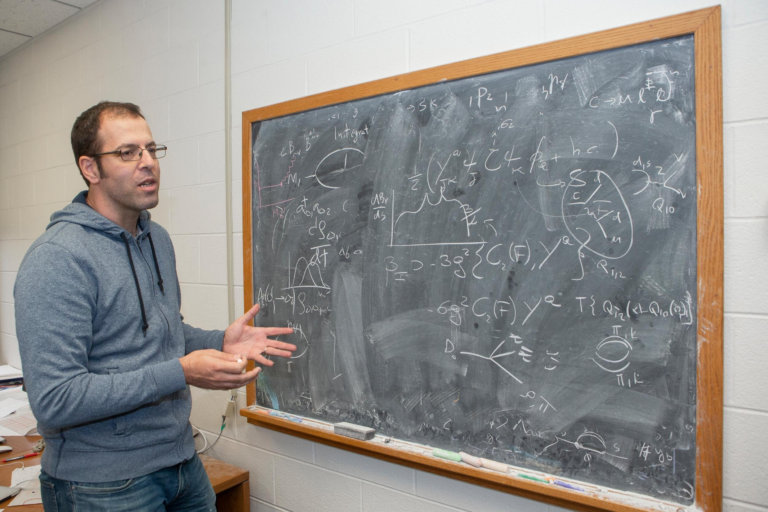
The research was led by Jingcheng Yuan, a physics researcher, and Mini Das, Moores Professor at UH’s Cullen College of Engineering and the College of Natural Sciences and Mathematics. Their work is set to be published in the scientific journal Optica, with a preprint already available on arXiv. The system they propose is also patent pending, signaling its potential commercial and clinical relevance.
Why Traditional X-Ray Imaging Has Limits
Most conventional X-ray and CT imaging systems rely on a single form of contrast known as attenuation contrast. This measures how much X-ray radiation is absorbed as it passes through different materials or tissues. Dense structures like bones absorb more X-rays and appear clearly, which is why standard X-rays work well for fractures.
However, attenuation contrast struggles when it comes to soft tissues or subtle structural changes. Early-stage cancers, fine lung structures, and small material defects often do not differ enough in density to stand out. As a result, important diagnostic information can remain hidden.
Over the past several years, researchers have explored alternative contrast mechanisms, such as phase contrast and dark-field imaging, to address these gaps. While promising, these approaches typically require complex system designs, multiple mechanical movements, or many repeated exposures, all of which increase imaging time, radiation dose, and technical difficulty. These challenges have made clinical translation slow and limited.
A New Approach That Removes Motion and Multiple Exposures
The UH team tackled these problems by designing a single-shot, motion-free X-ray system capable of capturing three contrast types simultaneously:
- Attenuation contrast, which shows how much X-rays are absorbed
- Differential phase contrast, which reveals how X-rays bend as they pass through structures
- Dark-field contrast, which captures how X-rays scatter due to microscopic structures
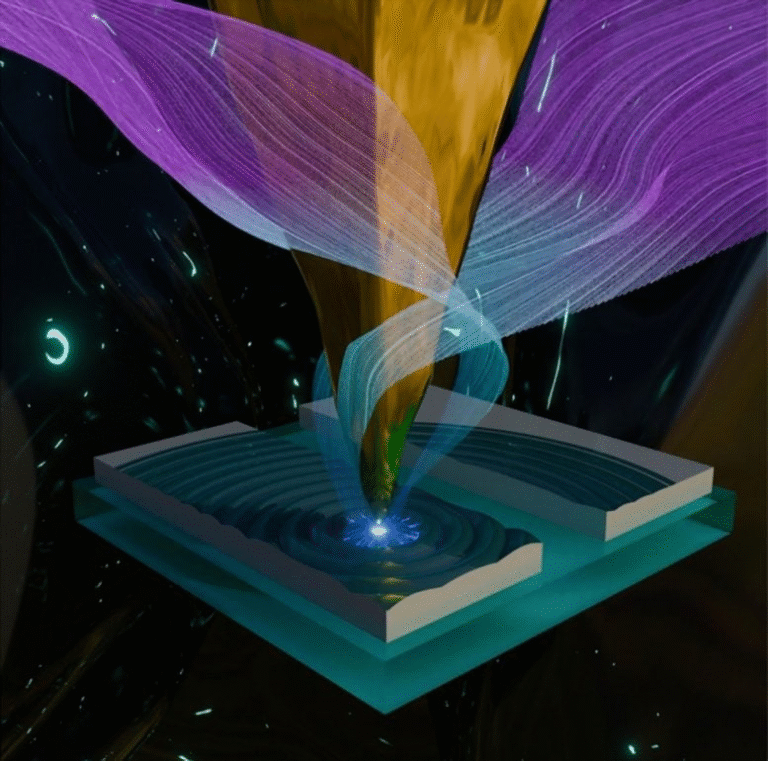
The key to this system is the strategic placement of a single slatted plate, also called a mask, between the X-ray source and the detector. Instead of relying on multiple masks, moving components, or repeated scans, this single-mask configuration encodes all three types of information into one exposure.
Advanced physics-based models developed by the researchers then allow the different contrast signals to be mathematically separated and reconstructed from the captured image.
Understanding the Three Contrast Types
Each of the three contrast mechanisms contributes unique and complementary information:
Attenuation contrast remains the foundation of X-ray imaging and provides information about overall density differences. It works well for bones and large structural variations but is limited for soft tissues.
Differential phase contrast, a method Mini Das introduced in a 2024 paper, focuses on how X-rays slightly change direction as they move through materials. This bending effect enhances edges, boundaries, and shape variations, making it easier to detect structures that would otherwise blend together in conventional images.
Dark-field contrast captures small-angle scattering of X-rays caused by microscopic structures. This makes it particularly useful for visualizing features far smaller than the detector’s resolution, such as lung air sacs, porous materials, or tiny defects inside engineered components.
Together, these contrasts provide a much richer picture than attenuation alone.
Demonstrated Results and Early Experiments
To demonstrate the system’s capabilities, the researchers tested it on sample objects, including a dried fish, a commonly used imaging test object. From a single exposure, they were able to generate separate images showing attenuation contrast, dark-field contrast, and a combined signal that highlights both large-scale structure and fine microstructural detail.
These results clearly showed that information typically requiring multiple scans and system adjustments could be obtained all at once, without motion or additional radiation dose.
Major Benefits for Medical Imaging
One of the most promising areas for this technology is medical diagnostics. Because the method requires only a single exposure, it can significantly reduce radiation dose, which is especially important for children, small animals, and patients requiring repeated imaging.
Dark-field imaging, in particular, shows strong potential for diagnosing lung diseases such as chronic obstructive pulmonary disease (COPD). Current imaging techniques struggle to detect early microstructural changes in lung tissue, even though these changes are critical for early diagnosis and monitoring disease progression.
The method may also help in lung cancer imaging, tracking how tumors respond to therapy, and potentially in low-dose breast cancer screening, an area where traditional X-ray mammography has relied on the same contrast mechanism for over a century.
Practical Design and Clinical Translation
Another important aspect of this breakthrough is its cost-effective and adaptable design. Unlike many advanced X-ray systems that require highly specialized components, the UH method could be integrated into existing X-ray and CT scanners with only minor modifications.
This significantly lowers the barrier for real-world adoption in hospitals and research facilities. According to the research team, this practical approach makes clinical translation not just possible, but realistic.
Next steps include adapting the system for small-animal imaging studies, an essential stage before broader clinical use, and further exploration of specific medical applications.
Applications Beyond Medicine
The implications of this technology extend well beyond healthcare. Industries that rely on detecting internal defects or microstructures could benefit greatly from single-shot multi-contrast imaging.
Potential applications include:
- Materials science, where micro-cracks or porosity need to be identified
- Petroleum and rock analysis, where internal structure influences extraction efficiency
- Security screening, where subtle differences in materials can indicate hidden threats
- Real-time monitoring of chemical or structural changes in engineered components
Because the method is fast, low-dose, and information-rich, it is well suited for environments where speed and safety are critical.
A Broader Vision for X-Ray Imaging
Mini Das’s work in this field is driven by a long-standing goal to improve X-ray contrast mechanisms. Her earlier research in breast CT development highlighted a fundamental problem: poor soft-tissue contrast limits reliable cancer detection. This realization led her to explore ways of combining physics, optics, and engineering to expand what X-ray imaging can reveal.
The new single-shot, multi-contrast system represents a significant step in that direction, offering a way to move beyond the limitations of traditional radiography without introducing impractical complexity.
Research Reference
Single-Shot, Single-Mask X-ray Dark-field and Phase Contrast Imaging
Optica (2025)
https://doi.org/10.1364/optica.578430
arXiv preprint: https://arxiv.org/abs/2506.02427