Hammocks Trace Their Global Popularity Back to Indigenous Cultures of the Americas
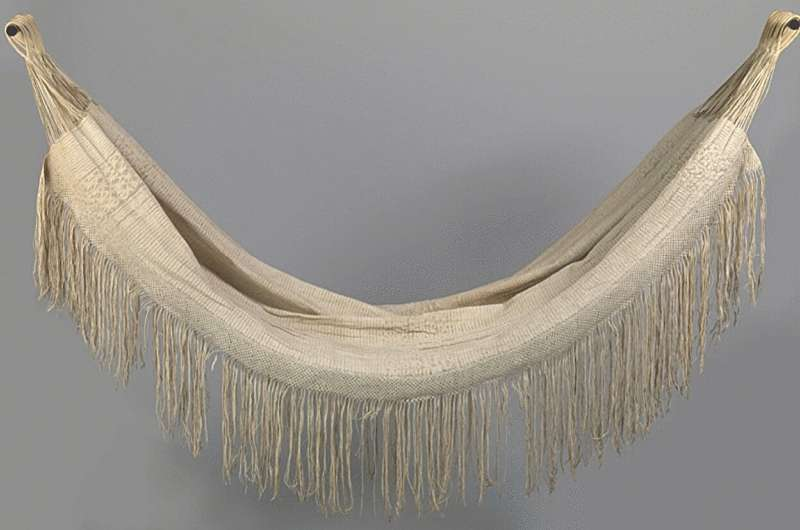
If you’ve ever stretched out in a hammock and thought of it as the ultimate symbol of leisure, this research adds a deeper layer to that simple pleasure. Hammocks are not a modern invention, nor are they a European one. They are a sophisticated Indigenous technology that originated thousands of years ago in South America and the Caribbean, long before European colonization reshaped the Atlantic world.
Recent scholarship highlights how hammocks were developed, refined, and culturally embedded by Indigenous communities, and how Europeans later adopted them almost immediately after contact. Far from being a casual piece of outdoor furniture, the hammock played central roles in daily life, spirituality, hospitality, and social organization.
Indigenous Origins of the Hammock
Hammocks originated among Indigenous peoples living in tropical regions of South America and the Caribbean, where heat, humidity, insects, and flooding shaped daily life. These communities engineered hammocks as an effective solution to their environment.
Archaeological evidence suggests that the oldest preserved hammock is around 4,000 years old, although researchers strongly believe the technology itself is much older. Textiles simply do not preserve well in tropical climates, meaning much of this history has been lost to time.
Traditionally, hammocks were woven by women, who were often the primary fiber workers in Indigenous societies. Using materials like cotton and other plant fibers, they created durable, breathable bed-slings that could be easily hung, transported, cleaned, and repaired.
Why Hammocks Worked So Well in Hot Climates
From a practical standpoint, hammocks were perfectly suited to tropical environments. Sleeping above the ground reduced exposure to insects, dampness, and crawling animals. The suspended design allowed air to circulate freely, keeping the body cooler at night.
Compared to the ground-based bedding used by European colonizers, hammocks proved far more comfortable and hygienic. This functional advantage played a major role in how quickly Europeans embraced the technology once they encountered it.
Hammocks as a Tool of Hospitality and Alliance
One of the most interesting findings from the research is how hammocks were introduced to Europeans. Indigenous communities did not merely show hammocks as curiosities; they actively offered them as part of hospitality rituals.
Providing a hammock to a guest was a gesture of trust, alliance, and friendship. Early colonizers learned how to use hammocks because they were invited to sleep in them while visiting Indigenous settlements. This social exchange helped hammocks spread rapidly through colonial spaces.
As a result, colonists adopted hammocks almost immediately during early expeditions in the Americas.
Rapid Adoption by European Colonizers
Once Europeans recognized the advantages of hammocks, they integrated them into daily life with surprising speed. Hammocks became especially useful during military campaigns and exploratory voyages, where portability and ease of setup mattered.
Historical records show that figures such as Sir Walter Raleigh used hammocks during their travels. Over time, hammocks were embraced across colonial society, from elites to enslaved people, becoming a common feature in settlements throughout the Atlantic world.
This widespread adoption challenges the long-held belief that European technologies were always superior. Instead, hammocks serve as a clear example of Indigenous innovation shaping colonial life, rather than the other way around.
Deep Cultural Meanings Beyond Sleep
While Europeans mainly valued hammocks for their comfort and convenience, Indigenous cultures attached rich layers of meaning to them.
Hammocks were not just for sleeping. They functioned as private personal spaces within otherwise communal societies. People used them to talk quietly, craft objects, rest, or play music. In this way, hammocks helped define individual space and identity.
Linguistic evidence also reveals symbolic connections. In at least one early Kalinago-French dictionary, the word for hammock was closely related to the word for placenta. This reflects how hammocks were intertwined with the human life cycle.
Hammocks and the Cycle of Life
From birth to death, hammocks played a powerful role. Babies were placed in hammocks almost immediately after being born, moving from one protective enclosure to another. This symbolism reinforced the hammock as a container of life and care.
At the other end of life, hammocks were often used as burial shrouds, wrapping the deceased as they were laid to rest. In this sense, hammocks marked both entry into and departure from the world.
They also had spiritual importance. In some Indigenous traditions, hammocks were used during healing ceremonies and trance rituals, where shamans communicated with spirits. This spiritual dimension highlights how hammocks were woven into belief systems, not just daily routines.
Rethinking Indigenous Technology
The researchers behind this study argue that hammocks have often been overlooked because they do not fit narrow definitions of technology. Unlike weapons, ships, or machines, hammocks are soft, domestic, and associated with care work.
Yet they clearly qualify as intentional transformations of natural materials designed to solve complex problems. By recognizing hammocks as technology, historians are forced to reconsider how much Indigenous knowledge contributed to the Atlantic world.
Hammocks join a long list of Indigenous innovations that Europeans readily adopted, including chocolate, tobacco, and birchbark canoes. These technologies shaped global trade, exploration, and everyday life.
Hammocks in the Modern World
Today, hammocks are often marketed as symbols of relaxation, travel, and leisure. They appear in backyards, beaches, and camping gear catalogs worldwide. What is often missing from this narrative is their deep Indigenous history.
Modern hammocks may use synthetic fibers or industrial production, but their fundamental design remains unchanged. The same principles that made hammocks effective thousands of years ago still apply today.
Understanding this history encourages greater appreciation not just for the object itself, but for the cultures that created it.
Why This History Matters
There is a common misconception that Indigenous cultures were only victims of colonization, rather than active contributors to global knowledge and technology. While the damage of colonization is undeniable, it also obscured the extent of Indigenous influence.
Hammocks are a reminder that Indigenous peoples were innovators, engineers, and thinkers, whose ideas shaped the modern world in lasting ways. Recognizing these contributions helps correct historical blind spots and gives credit where it is long overdue.
The next time you lie down in a hammock, it is worth pausing to reflect on the ingenuity behind it and the cultures that developed it long before it became a symbol of leisure.
Research paper reference:
https://doi.org/10.1057/s41280-025-00379-w