Knock, Knock Mapping Comedic Timing With a Computational Framework
Live comedy often feels spontaneous, messy, and driven by instinct. A joke lands, the audience laughs, the comedian reacts, and the moment is gone. But beneath that apparent looseness, researchers have found something far more structured. A new study published in PNAS Nexus introduces a computational method that maps the hidden timing and repetition patterns inside stand-up comedy performances, revealing just how carefully engineered live shows really are.
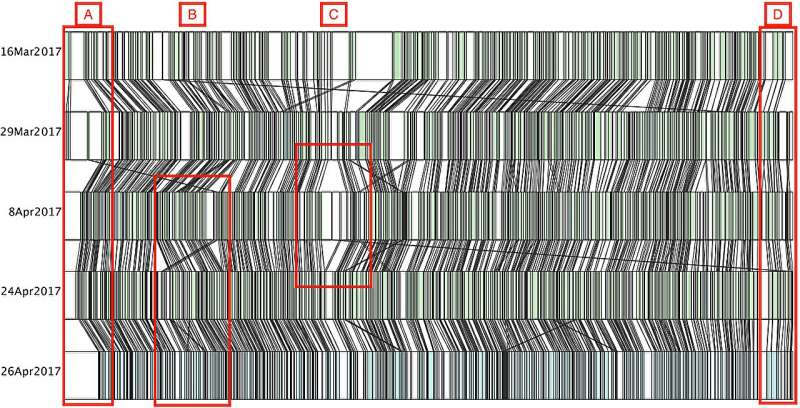
The research, led by Vanessa C. Pope and her colleagues, presents a framework called Topology Analysis of Matching Sequences (TAMS). This method uses algorithms to detect repeated material across multiple performances of the same show and then maps where those repeated segments appear in time. The result is a visual and quantitative way to understand how live performances evolve, stabilize, and adapt over months on tour.
A computational lens on live performance
At its core, TAMS is designed to identify matching sequences of speech across different performances. The researchers worked with audio recordings of stand-up comedy shows, converting them into transcripts that preserved timing information. The algorithm then scanned these transcripts to find sections that matched exactly or near-exactly across shows.
Once these matches were identified, TAMS mapped them along the timeline of each performance. This allowed the researchers to see not just what material was repeated, but where it appeared in the show and how consistently it was timed. In effect, the framework turns a live performance into a structural map, highlighting repetition, variation, and evolution.
The study focused on two professional stand-up comedians touring in the United Kingdom between 2017 and 2018. One comedian was well-established, performing a mature show that had already been refined through many performances. The other was an emerging comedian still actively developing material on stage.
What repetition reveals about comedy
One of the most striking findings is how much material remains consistent across performances. For the established comedian, an average of 39.66% of each performance transcript matched exactly with another show from the tour. This high level of repetition reflects a polished act, where jokes, transitions, and even delivery timing have been refined into a stable structure.
In contrast, the emerging comedian showed a much lower match rate. Only 14.22% of their performance transcript matched material from other shows. This difference highlights the experimental nature of developing new material, where jokes are tested, altered, or discarded based on audience response.
Rather than framing repetition as a lack of creativity, the researchers emphasize that it is a sign of professional skill. Repeated material forms the backbone of a show, allowing comedians to maintain pacing, manage audience energy, and reliably deliver laughs.
Content pillars and performance architecture
Using TAMS, the researchers identified dense clusters of repeated material that appeared consistently at the same points in a show. These clusters were labeled content pillars. Content pillars represent sections of tightly timed, well-rehearsed material that anchor the performance.
The analysis also showed that new material tends to be introduced at predictable points, most often near the start of the show. This placement allows comedians to test fresh ideas while still relying on proven material later to ensure a strong finish.
In some cases, the framework detected internal repetition within a single performance, where a comedian revisits earlier material in a new context. In others, it revealed unexpected insertions, where one performance deviated sharply from the norm by adding a new segment or skipping an established one.
Perhaps most surprisingly, TAMS identified repeated patterns in things that might otherwise be dismissed as mistakes. Hesitations, filler sounds, and apparent errors appeared consistently across performances, suggesting that these moments are often intentional or at least integrated into the performer’s delivery style.
Tracking how a show evolves over time
Because the dataset spanned several months, the researchers were able to track how a comedy show evolves during a tour. Successful jokes tended to become more stable, appearing in more performances and settling into consistent timing. Less successful material either changed significantly or disappeared altogether.
This gradual crystallization of material demonstrates how live comedy is shaped through feedback loops between performer and audience. TAMS provides a way to document this process quantitatively, showing how creativity and refinement unfold together over time.
The study also highlights the balance between structure and flexibility. While large portions of a show may be highly consistent, comedians still leave room to respond to audience reactions, room dynamics, and unexpected interruptions. TAMS makes it possible to see where that flexibility exists within an otherwise stable framework.
Why timing matters in live performance
Timing is central to comedy. A pause that lasts half a second longer can change how a joke lands. By mapping timing so precisely, TAMS captures an aspect of performance that is often discussed intuitively but rarely measured.
This approach borrows ideas from music analysis, where timing, repetition, and structure are routinely studied. By applying similar tools to spoken performance, the researchers bridge the gap between quantitative analysis and live art.
The authors argue that this kind of analysis underscores the human skill involved in performance, especially at a moment when generative AI is increasingly used to produce text and mimic speech. While AI can generate jokes, it struggles to replicate the deeply embedded timing, repetition, and audience-aware adjustments that define live comedy.
Beyond stand-up comedy
Although the study focused on stand-up comedy, the researchers emphasize that TAMS is not limited to jokes and punchlines. The framework can be applied to other forms of repeated speech and performance, including theater, dance, music, and even political speeches.
Any performance that involves repeated material delivered over time could potentially be analyzed using this method. By revealing hidden structures, TAMS offers a new way to study performance as both an artistic and technical practice.
A new way to see live art
What this research ultimately shows is that live performance is neither chaotic nor purely instinctive. It is a carefully balanced system where repetition, timing, and variation work together. By making these patterns visible, TAMS gives scholars, performers, and audiences a deeper appreciation of what goes into a successful live show.
Rather than reducing art to numbers, the framework highlights the craft behind creativity. It shows that the magic of a great performance is not accidental, but built through deliberate structure, practice, and adaptation over time.
Research paper:
Timing structures in live comedy: A matched-sequence approach to mapping performance dynamics, PNAS Nexus (2026)
https://academic.oup.com/pnasnexus/article/5/1/pgaf394