Parenting Stress Plays a Bigger Role Than Gender Identity in Predicting Child Development, Says New Research

A new large-scale study has offered one of the clearest insights so far into how children of transgender and nonbinary parents are developing emotionally and behaviorally. The results point strongly to a central idea: what matters most for a child’s well-being is parenting stress, not a parent’s gender identity. This finding, backed by detailed data from 138 families, reinforces a growing body of research showing that the quality of parenting and family dynamics has a far greater impact on child outcomes than the gender identity of the caregiver.
This study, published in the journal Infant and Child Development, was led by Samantha Tornello, an associate professor of human development and family studies at Penn State. It is currently the largest research project examining the developmental outcomes of children raised by transgender and nonbinary parents. It included trans women, trans men, and nonbinary adults, all of whom were at least 18 years old and raising a child between the ages of 1 and 12. The average child in the sample was around age six.
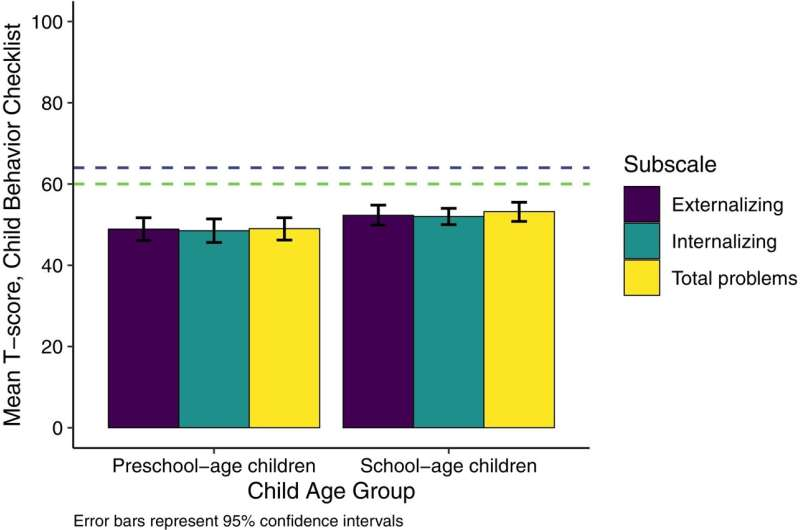
Credit: Infant and Child Development.
To understand both the parents’ and the children’s well-being, researchers used established psychological measurement tools. Parents completed standardized surveys including the Parenting Stress Index, the Center for Epidemiological Studies Depression Scale, and the Multidimensional Scale of Perceived Social Support. These assessments measured parenting techniques, overall stress levels, depressive symptoms, and perceived support from friends, family, and significant others. Meanwhile, children’s emotional and behavioral adjustment was measured using the Child Behavior Checklist, a widely recognized tool that evaluates internalizing behaviors like anxiety or withdrawal, as well as externalizing behaviors like aggression, impulsivity, or rule-breaking.
The results were consistent across different genders within the parent group. Children of transgender and nonbinary parents scored within typical, non-clinical ranges for both internalizing and externalizing behaviors. This means they were not showing signs of unusual emotional or behavioral difficulties. Their outcomes aligned closely with children from the general population, suggesting that having a transgender or nonbinary parent does not place children at any elevated developmental risk. The study emphasized that these children were experiencing everyday childhood development, not patterns that would cause concern or warrant clinical intervention.
One of the more interesting findings was that although many transgender and nonbinary parents reported higher levels of depressive symptoms, this did not translate into higher levels of emotional or behavioral problems in their children. In previous research involving cisgender parents, parental depression is frequently linked with increased depression or behavioral struggles in children. But in this study, that expected pattern was noticeably absent. The researchers suggested that transgender and nonbinary parents might be using distinctive parenting strategies that help buffer their children from the effects of external stressors, including discrimination or identity-based prejudice.
These parenting approaches appear to be more child-centered, especially regarding gender development. Earlier studies by the same team found that transgender and nonbinary parents tend to show greater flexibility toward traditional gender roles and are more open to allowing their children to express themselves freely. According to the study’s co-author, Rachel Riskind, this flexibility may contribute to a protective environment in which children feel supported, even when their parents face social or emotional challenges.
Across the entire sample, one factor consistently predicted child outcomes: parenting stress. Parents who experienced higher stress levels—whether due to external discrimination, financial challenges, or daily parenting responsibilities—were more likely to have children who showed elevated internalizing or externalizing behaviors. However, even in these situations, children remained within typical developmental ranges. The study underscores that reducing parenting stress can benefit families across all gender identities and family structures.
What This Means for Families and Professionals
These findings have significant implications for adoption policies, custody cases, healthcare access, and family support programs. The evidence clearly indicates that children’s well-being is connected to family processes, such as how parents manage stress and implement effective parenting techniques, rather than the gender identity of the parent. For professionals—including teachers, healthcare providers, mental-health practitioners, and legal experts—this study provides data-driven guidance that decisions should be made based on evidence, not assumptions or stereotypes.
The research contributes to an increasingly well-documented reality: children raised by LGBTQ+ parents, including transgender and nonbinary parents, develop similarly to those raised by cisgender parents. Family structure, in itself, is not predictive of child well-being. Instead, emotional support, stability, consistent parenting practices, and stress management play the decisive roles.
Extra Insight: What Parenting Stress Actually Means
While this study focuses specifically on transgender and nonbinary parents, the concept of parenting stress is universally relevant. Parenting stress is the tension parents experience when the demands of parenting exceed their perceived ability to cope. High levels of this stress—not the structure of the household—are linked across research to difficulties in child behavior. This includes:
- Increased behavioral problems
- Lower emotional regulation in children
- Higher parental frustration
- Reduced consistency in discipline and nurturing
Reducing parenting stress can involve improving access to childcare, mental-health resources, parental leave policies, and community support systems. For transgender and nonbinary parents, this support may also include protection against identity-based discrimination, access to inclusive healthcare, and recognition of diverse family structures.
Additional Background on Research Involving LGBTQ+ Parents
Decades of studies have shown that children raised by LGBTQ+ parents generally develop just as well as children raised by heterosexual or cisgender parents. Much like the current study, these earlier works consistently reveal that parenting quality, emotional warmth, and stability matter more than who the parents are. This is true across different cultural contexts, though supportive policies and inclusive environments often help reduce parental stress and, in turn, support better outcomes for children.
The current study stands out because of its larger sample size focused specifically on transgender and nonbinary parents, an area where research has historically been limited. With 138 participating families, it represents a major step forward in providing clear, data-driven insights.
A Clear Message Moving Forward
This research encourages a shift in perspective. Rather than focusing on a parent’s gender identity, society should focus on how to ensure parents have the support, resources, and environments needed to raise healthy children. These findings reaffirm that all kinds of families can thrive when given stability, acceptance, and sufficient support.
Research Reference:
Parenting Stress, Rather Than Gender Identity, Predicts Child Adjustment Among Children of Nonbinary and Binary Transgender Parents