Why Archaeologists Are Rethinking Whether “Culture” Still Works as a Scientific Concept
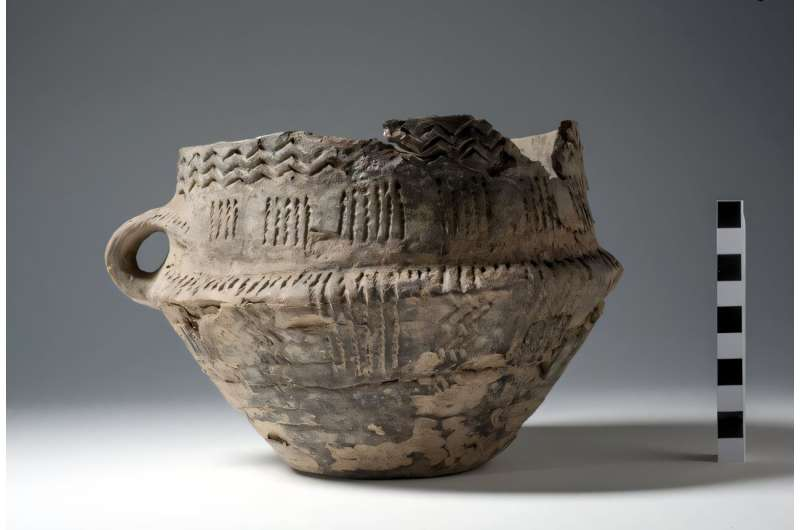
The word culture is everywhere in archaeology. It appears in textbooks, museum labels, and well-known terms such as the Neolithic Funnel Beaker Culture, which describes some of the earliest farming communities in Central and Northern Europe. Yet despite how familiar the term sounds, archaeologists have long felt uneasy about using it. A recent interdisciplinary study from Kiel University takes a deep, critical look at this discomfort and asks a direct question: has “culture” become obsolete as an archaeological concept, or does it still have value if handled carefully?
The short answer offered by the researchers is clear and nuanced. Culture is not obsolete, but it is complicated, historically burdened, and in need of careful reflection.
Why the Term “Culture” Became a Problem in Archaeology
The trouble with the concept of culture in archaeology can be traced back to the early 20th century. During this period, German archaeologist Gustaf Kossinna promoted the idea that archaeological cultures — identified through pottery styles, tools, or settlement patterns — directly corresponded to distinct ethnic or racial groups.
Kossinna used this approach to argue for the historical dominance and superiority of so-called Germanic peoples. His ideas were later taken up enthusiastically by Nazi ideology, which used them as pseudo-scientific justification for racism, territorial expansion, and genocide.
Because of this history, the term culture became deeply suspect after the Second World War. Many archaeologists recognized that equating material remains with fixed peoples or identities was not only scientifically weak but also politically dangerous. Yet despite this discomfort, the term never disappeared from the field.
Why Archaeologists Never Fully Abandoned “Culture”
Even today, archaeologists routinely describe past societies using cultural labels. Terms like Funnel Beaker Culture remain useful as shorthand for shared material practices, such as distinctive pottery shapes, burial customs, or farming techniques.
According to archaeologist Johanna Brinkmann, this creates a clear contradiction. On one hand, the concept of culture is widely recognized as problematic. On the other hand, it continues to structure how archaeologists organize and interpret the past.
This contradiction became the starting point for a new study conducted by Brinkmann and philosopher Vesa Arponen as part of the ROOTS Cluster of Excellence at Kiel University. Their goal was not to defend or discard the concept outright, but to understand why it persists and how it is actually used in archaeological thinking.
The Three Pillars Supporting the Concept of Culture
The researchers argue that archaeological ideas of culture rest on three distinct pillars, each with its own assumptions and problems.
The first pillar is the ethnocentric, romanticist, and nationalistic tradition associated with Kossinna. This approach treats culture as something that neatly maps onto ethnic or racial groups. Brinkmann and Arponen consider this pillar scientifically untenable and unsuitable for modern research. While largely rejected today, its historical influence still lingers in terminology and classification systems.
The second pillar is based on cultural-evolutionary thinking. In this view, culture is understood as an ongoing process in which skills, technologies, ideas, and behaviors are passed from one generation to the next. This approach does not rely on race or ethnicity but instead emphasizes learning, transmission, and change over time.
The third pillar, which the authors describe as culturalism, takes a different stance. Culturalism tends to be skeptical of broad evolutionary explanations, often criticizing them as reductionist or environmentally deterministic. Instead, it emphasizes unique, context-specific cultural forms, focusing on meanings, practices, and social interpretations that cannot be reduced to universal laws.
Importantly, modern archaeology does not rely on just one of these pillars. Instead, elements of all three continue to shape how the concept of culture is used — even when they conflict with one another.
Five Core Ideas That Keep “Culture” Alive
Beyond these theoretical pillars, Brinkmann and Arponen identify five key ideas that almost always appear when archaeologists talk about culture.
First is location. Archaeologists imagine people living in specific places, marked by settlements, houses, monuments, and landscapes.
Second is group identity. People are rarely treated as isolated individuals but as members of communities that can be studied anthropologically, socially, or archaeologically.
Third is transmission. Cultural practices are passed on, not only within families but also between neighboring groups and across generations.
Fourth is material culture. Objects such as tools, pottery, clothing, and buildings are central sources of evidence for understanding how people lived.
Fifth is ideas and meanings. Culture is not just about things; it also includes beliefs, values, symbols, and shared understandings of the world.
These five elements appear in all three pillars of the culture concept, even though each pillar interprets them differently. Together, they form the core of why culture remains such a powerful concept in archaeological research.
Is “Culture” Still Useful for Studying the Past?
The study argues that the concept of culture survives not because archaeologists are unaware of its problems, but because it captures something deeply intuitive about human societies. Humans live in groups, share knowledge, create objects, and pass down traditions. Archaeology, by its very nature, is concerned with tracing these patterns through material remains.
However, the authors emphasize that this usefulness comes with responsibility. Archaeologists must be explicit about which assumptions they are making when they use cultural labels and must avoid slipping back into ideas that link material evidence to fixed identities.
Why This Debate Matters Beyond Archaeology
Interestingly, Brinkmann and Arponen also connect their findings to modern social debates. The concept of culture plays a major role in contemporary discussions about identity, polarization, and social conflict. Terms such as culture war and cancel culture show how strongly culture continues to shape how people understand social divisions today.
Because of this, the archaeological debate is not just about the distant past. It also influences how we think about tolerance, difference, and coexistence in the present. Arponen’s work is closely linked to broader research on tolerance at Kiel University, highlighting how philosophical reflection and archaeological theory can inform one another.
A Broader Look at Culture in Archaeological Theory
Historically, archaeology has repeatedly reinvented its approach to culture. Early culture-historical archaeology focused heavily on classification and naming cultural groups. Later movements, such as processual archaeology, tried to move beyond cultural labels by emphasizing systems, ecology, and behavior. More recent approaches have reintroduced culture in flexible, critical ways, often drawing from anthropology and philosophy.
What Brinkmann and Arponen contribute is not a new definition of culture, but a reflective framework that helps archaeologists understand why the concept persists and how it can be used more responsibly.
The Bottom Line
Culture has not become obsolete in archaeology, but it is no longer a simple or innocent concept. Its past misuse has left a heavy legacy, yet its ability to organize complex information about human societies keeps it central to archaeological research. The challenge now is not whether to abandon culture, but how to use it thoughtfully, transparently, and critically.
By examining the foundations of the concept and acknowledging both its strengths and weaknesses, this research offers archaeologists — and anyone interested in human history — a clearer way forward.
Research paper:
Brinkmann, J., Arponen, V., et al. “Tackling an old dilemma anew: a reflective modular approach for analysing the concept of archaeological cultures in European Prehistoric Archaeology.” Germania: Anzeiger der Römisch-Germanischen Kommission des Deutschen Archäologischen Instituts (2025).
https://doi.org/10.11588/ger.2024.113886