Asteroid 2024 YR4 Becomes Earth’s First Real-World Planetary Defense Test With a Surprise Lunar Risk Still in Play
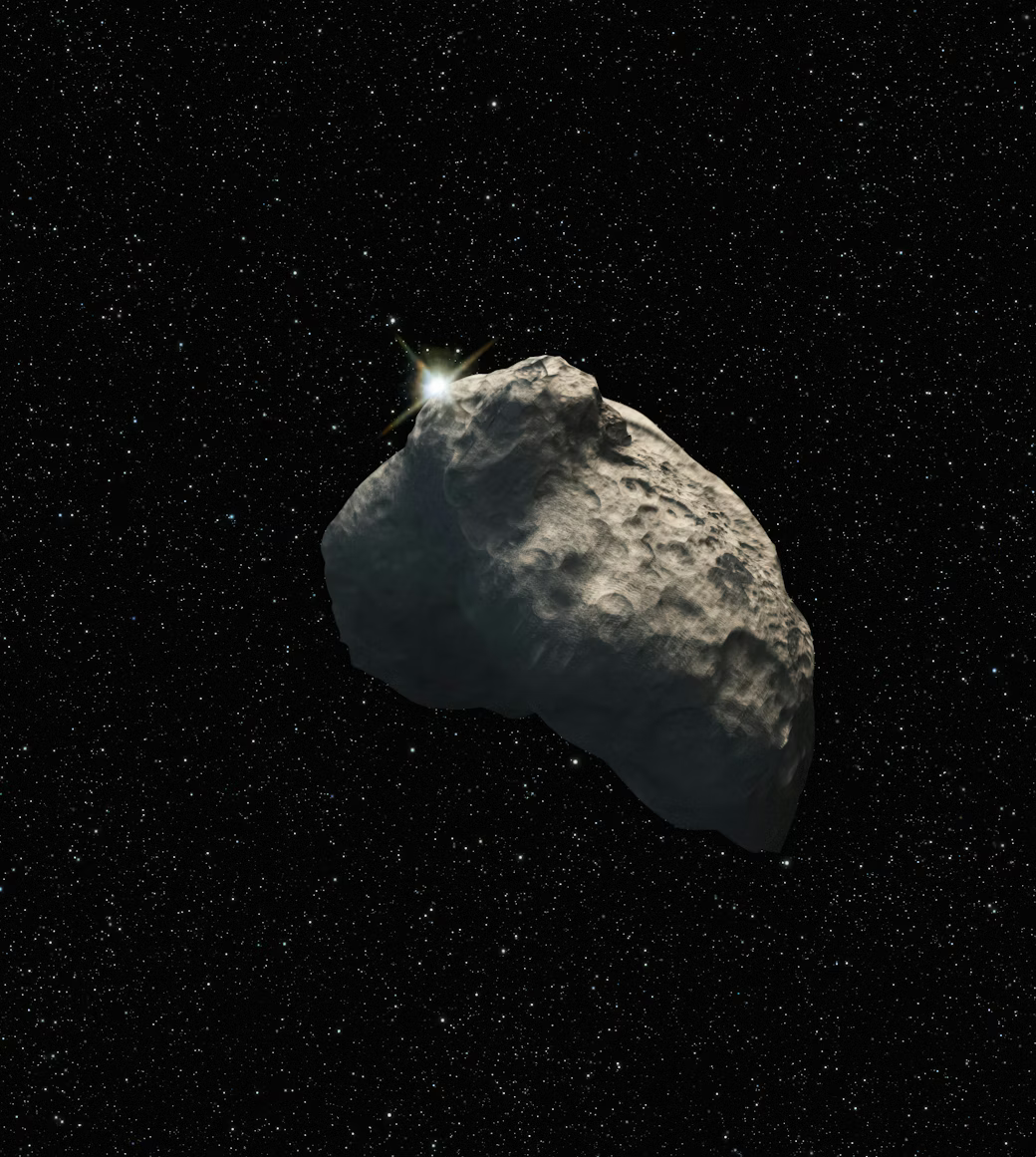
The discovery and subsequent tracking of asteroid 2024 YR4 turned into one of the most important real-life tests of global planetary defense systems. What began as a routine detection in late 2024 quickly escalated into a months-long international effort, complete with rising impact probabilities, high-alert classifications, emergency telescope time, and eventually a surprising twist: Earth turned out to be safe, but the Moon might not be.
Here is a clear and complete breakdown of everything known so far, including technical details, timeline, and why this asteroid has become such a significant case study for future impact preparedness.
Discovery and Initial Classification
Asteroid 2024 YR4 was first spotted on December 27, 2024, by the ATLAS telescope survey. At the time, it appeared to be just another near-Earth object—one of thousands detected every year. But soon after the initial orbit estimates were made, astronomers noticed that this asteroid’s trajectory required a much closer look.
As follow-up measurements accumulated, instead of the usual downward revision of risk, the probability of an Earth impact increased, which is highly unusual. Almost all newly discovered asteroids drop to Torino Scale 0 within days once better data is available. 2024 YR4 defied that trend.
Rising Concern and Its Unprecedented Torino Scale Rating
One of the most important tools used to classify the danger of near-Earth asteroids is the Torino Scale, a 0–10 system that accounts for both the probability of impact and the scale of expected damage. Here’s where 2024 YR4 stood out:
- It first reached Torino Scale 3 on January 27, 2025.
- This made it the first asteroid in history ever to reach a 3 rating.
- On February 18, 2025, its maximum calculated impact probability peaked at 3.1%, which is far higher than what astronomers are comfortable with.
For context, Torino Scale 3 means a “close encounter with a low, but concerning, chance of regional destruction.”
Only one asteroid had ever exceeded it in the scale’s entire history—Apophis, which briefly reached Torino Scale 4 in 2004. However, Apophis was larger, meaning its classification was always guaranteed to be higher if its impact chance were comparable. 2024 YR4’s classification was based on its size and the genuine uncertainty in its early orbit.
This brief period of elevated risk triggered something that had never happened before: the International Asteroid Warning Network issued its first official alert regarding a real potential impact threat.
How the World Responded
Planetary defense systems exist precisely for situations like this, and 2024 YR4 became the perfect trial run. The Torino 3 alert rapidly drew expanded attention and resources.
Major observatories, including:
- the Catalina Sky Survey,
- the Gran Telescopio Canarias, and
- the Very Large Telescope,
redirected powerful instruments toward the asteroid. In some cases, facilities even employed Director’s Discretionary Time, which is typically reserved for urgent or high-impact scientific opportunities.
Interest surged among astronomers, policymakers, and the general public. Fortunately, this surge in observation provided exactly the refined data necessary to resolve uncertainties.
What New Observations Revealed
In early March 2025, the world’s largest telescopes delivered detailed physical and orbital information about 2024 YR4. These included:
- A rotational period of 19.5 minutes, which is unusually fast for an asteroid of its size.
- A likely classification as either Sq-type or K-type, both categories of stony asteroids.
- Slight discrepancies in its measured albedo because results varied depending on the telescope and wavelength used.
This new data significantly improved orbital modeling. With clearer measurements, astronomers recalculated its trajectory through 2032.
The result:
The threat to Earth dropped to effectively zero.
By late February, its Torino rating fell back to 0, and by March the likelihood of Earth impact was officially ruled out.
But then came the twist.
The Risk Shifted—From Earth to the Moon
While the asteroid was no longer a threat to Earth, refined models showed something unexpected: the Moon might be at risk.
The updated trajectory shows a ~4% chance that 2024 YR4 could strike the Moon on December 22, 2032.
A lunar impact, especially from an asteroid estimated to be ~53–67 meters in diameter, could:
- excavate a significant crater,
- eject huge clouds of debris,
- potentially scatter fragments into Earth’s orbital environment,
- and pose hazards to satellites, spacecraft, and lunar installations.
Some studies suggest that debris from a lunar strike could create meteor storms visible from Earth or even threaten Earth-orbiting satellites, depending on ejection velocity and trajectory.
This is why the planetary defense community isn’t finished with 2024 YR4. Monitoring continues, and more observation windows in the coming years will further refine the Moon impact probability.
Why 2024 YR4 Matters for Planetary Defense
This asteroid has become a landmark case for multiple reasons:
1. It validated the early-warning system.
A real alert was raised, real resources were mobilized, and scientists were able to gather crucial data quickly.
2. It highlighted how dynamic early risk assessments can be.
While most asteroids get safer with better data, this one initially became riskier — something rare but important to prepare for.
3. It tested global coordination, communication, and response.
Agencies worked together exactly as intended under international protocols.
4. It showed that planetary defense goes beyond Earth protection.
The Moon is becoming more important to human activity — with lunar bases, orbiting satellites, and scientific installations planned within the next decade. An impact there could have real consequences.
5. It emphasized the need for rapid physical characterization.
Knowing an asteroid’s composition, spin, and structure is essential for any future deflection mission.
Additional Context: Understanding the Torino Scale
Since the Torino Scale is central to the 2024 YR4 story, here’s a clear recap:
- 0 (White): No hazard
- 1 (Green): Normal—almost always downgraded
- 2 (Yellow): Merits attention
- 3 (Orange): Concerning threat
- 4 (Orange): Regional threat
- 5–7 (Red): Serious threat
- 8–10 (Red): Certain impact
No asteroid has ever been classified above 4.
2024 YR4 reaching 3 was truly historic, especially because it held that classification long enough to trigger global action.
Additional Context: Why Fast-Rotating Asteroids Are Interesting
Asteroids that rotate faster than about 2 hours often cannot be loose “rubble piles” — they would fly apart. 2024 YR4 rotates in only 19.5 minutes, meaning:
- it is likely a monolithic rock,
- or it has strong structural cohesion,
- which influences how it would react to any attempted deflection.
Understanding these properties helps refine impact-mitigation strategies and orbital predictions.
What Happens Next?
The asteroid will continue to be observed periodically over the coming years. Each new observation will tighten the uncertainty window for its 2032 pass.
While Earth is confirmed safe, astronomers remain particularly interested in:
- precise Moon-proximity calculations,
- potential outcomes of a lunar impact,
- and long-term orbital evolution.
If future observations significantly change its lunar impact probability, the global community may consider further study or even mission planning.
For now, 2024 YR4 stands as the most realistic planetary defense rehearsal humanity has experienced so far.
Research Reference:
Rapid-response characterization of near-Earth asteroid 2024 YR4 during a Torino Scale 3 alert
https://arxiv.org/abs/2511.09405